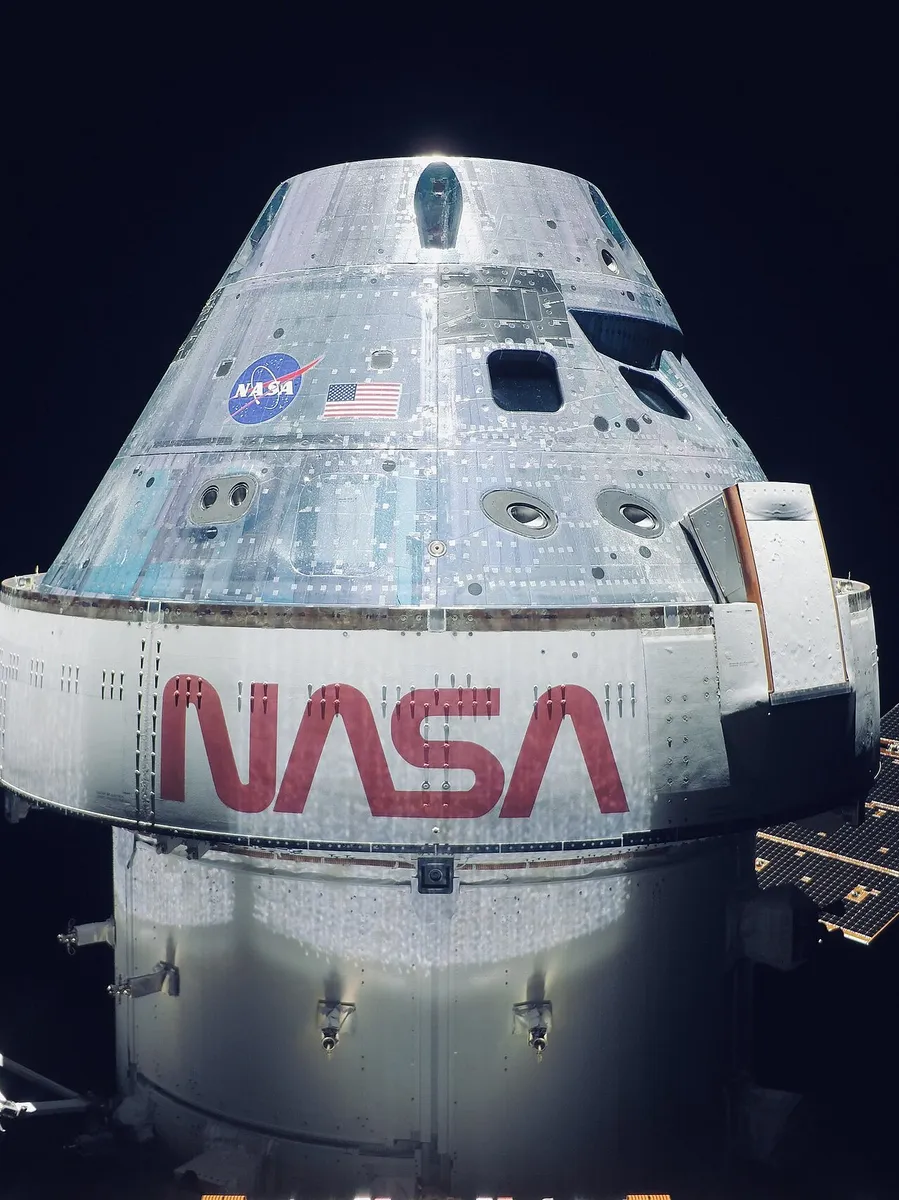
NASA rewrote the next flight of its Moon programme on Friday, turning Artemis III from a lunar mission into a docking rehearsal in orbit around Earth — and leaving open, for now, which company's vehicle will carry astronauts down to the surface.
The changes were presented at a news conference at the Kennedy Space Center, in Florida, on October 23, by NASA Administrator Jared Isaacman, Associate Administrator Amit Kshatriya and Artemis programme manager Jeremy Parsons. The agency still says it is aiming for a crewed landing in 2028.
What Artemis III becomes
Instead of heading for the Moon, Artemis III will stay in low Earth orbit. Four astronauts — three from NASA and one from Italy, according to Fortune — will fly a mission of roughly two weeks, launching on the Space Launch System from the Kennedy Space Center. Isaacman said the flight remains on track for next summer.
In orbit, the Orion capsule is to rendezvous and dock with test versions of both commercial landers: SpaceX's Starship and Blue Origin's Blue Moon Mark 2.
One long-standing piece of the plan is gone. Orion and the landers will no longer meet in a near-rectilinear halo orbit around the Moon; each company will instead fly the orbit that suits its own vehicle.
Frank Rubio, assigned to the crew, called the effort "incredibly ambitious". "As a rocket nerd, it's going to be pretty awesome," Kshatriya said of the double docking.
Neither lander owns a landing any more
Under the original contracts, SpaceX was assigned Artemis III and Artemis IV, and Blue Origin was assigned Artemis V. Under the revised agreements, both companies support Artemis III in low Earth orbit and neither is tied to a particular landing.
NASA says it will choose the first lander on readiness, with a second landing opportunity to follow. Each vehicle must fly an uncrewed demonstration mission and be certified by the agency before any crew climbs aboard.
The contracts also added work on both sides: two demonstrations of SpaceX's Cabin 1 crew cabin, and, for Blue Origin, human-in-the-loop testing plus hardware readiness milestones for training and flight operations.
Two routes to the same place
The two landers get to the Moon in very different ways, and the uncrewed demonstrations are what each has to prove.
SpaceX relies on gathering propellant in space: a series of tanker Starships launch to low Earth orbit and transfer propellant to a waiting depot, which then fuels the lander. The lander waits in Earth orbit for Orion, docks with it, and fires a trans-lunar injection burn that pushes the stack towards low lunar orbit. NASA is modifying Orion so Starship can shove the capsule that far.
Blue Origin defers propellant transfer altogether. Three transfer stages, built on existing Mark 1 and Mark 2 hardware, launch to low Earth orbit ahead of the lander; once the stack is assembled it heads for an elliptical polar orbit, with each stage separating as its propellant runs out.
In both architectures, two astronauts descend to the surface while two remain in Orion. The first surface missions are planned around two Moonwalks of about two hours each, for sample collection and for testing spacesuits built by Axiom Space.
The race in the background
"NASA has no intention of sitting idly by as all the pieces come together," Isaacman said. He described the competition with China's lunar programme as "much closer than it ever needed to be".
The practical effect of Friday's announcement is to move the hardest problem — refuelling a lander in space, or stacking transfer stages — out of the mission that carries the first crew, and into an uncrewed flight that can fail without costing a landing. A crewed descent in 2028 would be the first since Apollo 17, in December 1972.
Reporting from NASA, Fortune and CBS News.