Tesla closed the third quarter with almost exactly the revenue it had a year earlier — $28.05 billion, against $28.10 billion — and roughly a third of the operating profit. Operating income came in at $718 million, down 56%, for a margin of 2.6% against 5.8% in the same quarter of 2025. The results were released after the market closed on Wednesday, October 21, 2026.
What changed is not the cars. Gross margins went up: 19.6% overall, from 18.0%, and 18.1% in the automotive business excluding regulatory credits, from 15.4%. The gap opened further down the income statement, in what the company is spending to build businesses that do not yet sell anything.
Where the profit went
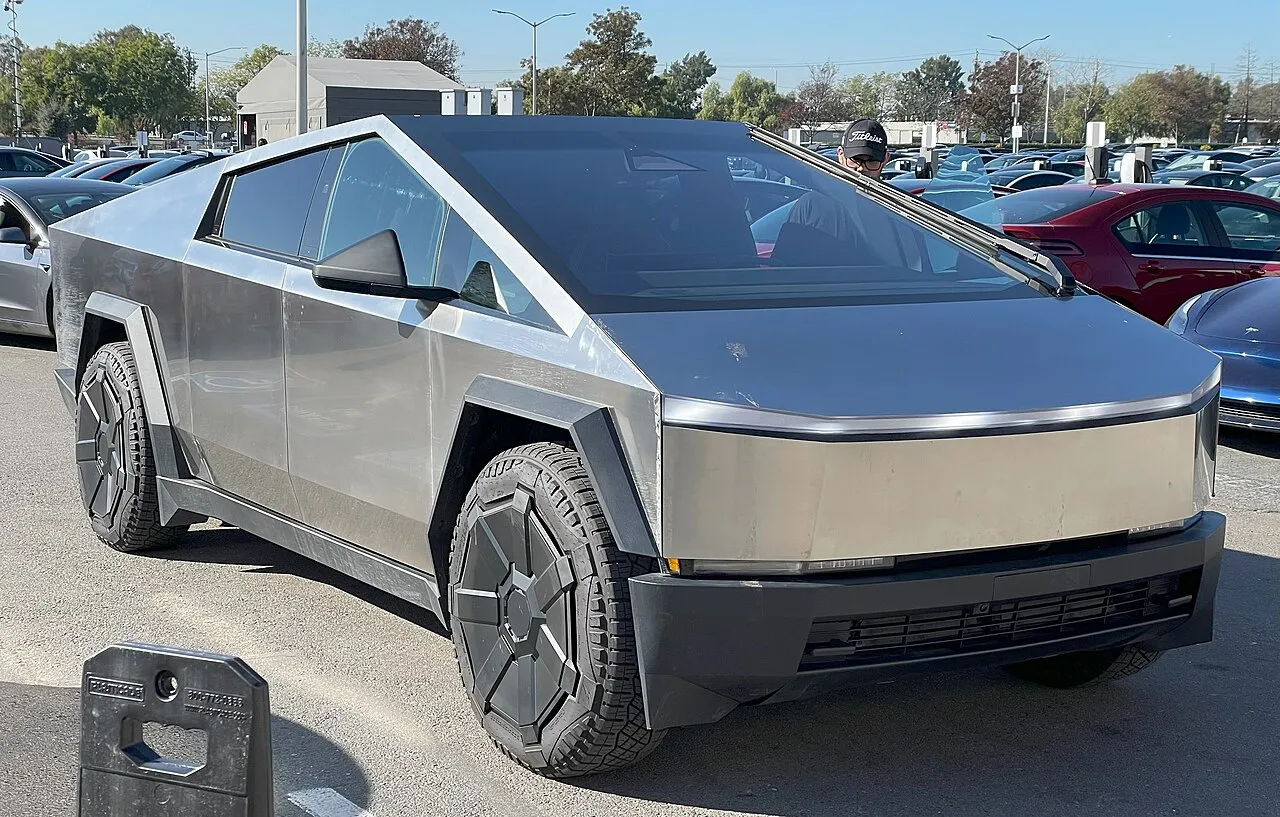
Operating expenses rose 39% to $4.78 billion. Research and development alone rose 69% to $2.76 billion, which Tesla attributes to artificial intelligence, the Optimus humanoid robot and the Cybercab. Capital expenditures nearly doubled, to $4.73 billion, bringing the year-to-date figure to $13.01 billion — still well short of the "more than $25 billion" the company guided to for 2026, a target the shareholder letter did not revisit.
Regulatory credits, long a reliable cushion, brought in $113 million, down from $417 million.
The bottom line: net income of $787 million under generally accepted accounting principles, down 43%, and diluted earnings per share of $0.22 against $0.39. On the adjusted basis Wall Street follows, earnings were $0.48 per share, above the roughly $0.45 expected but below the $0.50 of a year earlier. Free cash flow was $1.53 billion, against $3.99 billion a year earlier, after a negative quarter in the spring. Operating cash flow was $6.3 billion, and the company ended September with $45.4 billion in cash and investments, $1.9 billion more than in June.
Batteries, not demand
Deliveries totalled 486,532 vehicles, 2.1% below a year earlier but comfortably above the roughly 462,000 analysts had modelled. Production was lower than deliveries, at 464,391, meaning Tesla drew down inventory.
The company says the binding constraint on vehicle volumes was battery availability rather than orders, and that future deliveries will also depend on supply-chain readiness and on how many vehicles it keeps for its own fleet rather than selling.
The energy business, which has carried much of the growth story in recent years, missed: 13.7 gigawatt-hours of storage deployed, up 10% from 12.5 GWh but short of the roughly 15.9 GWh expected, with energy revenue down 16% to $2.88 billion. Services and other revenue rose 33% to $4.61 billion. Active subscriptions to Full Self-Driving reached 1.74 million, up 67%, a count that includes customers who paid upfront.
Tesla's pitch to investors is that hardware profits will eventually be joined by profits from software, AI and a vehicle fleet it operates itself. For now the hardware is carrying the quarter, and it is carrying less. The shares slipped in after-hours trading.
Reporting from Tesla's third-quarter shareholder materials, Electrek and Investing.com.