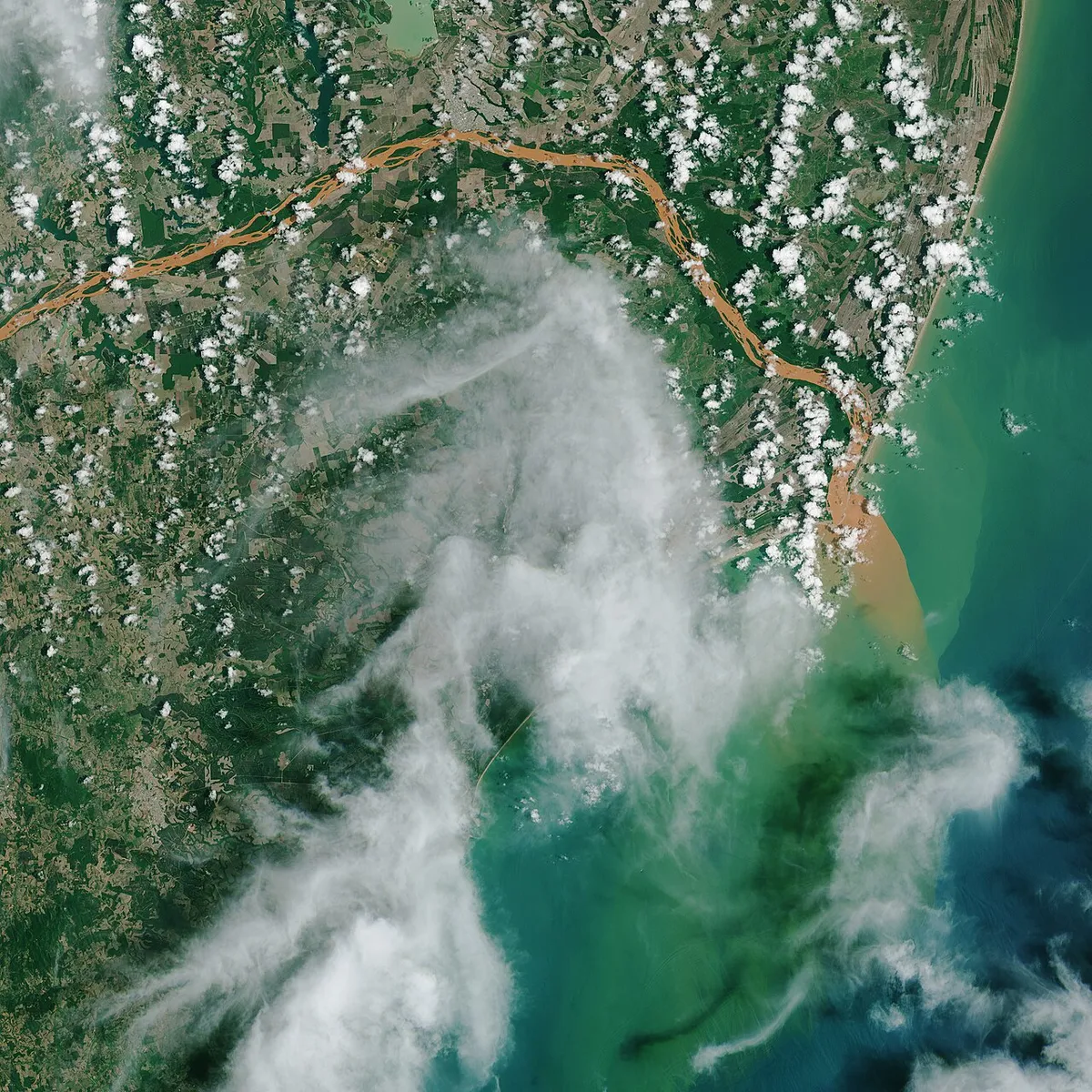
Professional and commercial fishing is allowed once again in the marine area off the mouth of the Rio Doce, on the northern coast of Espírito Santo state. The decision was taken by the Ministério da Pesca e Aquicultura (Ministry of Fisheries and Aquaculture, MPA) and the Ministério do Meio Ambiente e Mudança do Clima (Ministry of the Environment and Climate Change, MMA), and is set out in Interministerial Ordinance No. 75 of October 26. The reopened strip runs from Barra do Riacho, in Aracruz, to Degredo/Ipiranguinha, in Linhares, in waters up to 20 metres deep. Fish from the region may be sold and eaten again.
What Anvisa measured
The decision rests on a technical note by Anvisa, Brazil's health regulator, built on environmental monitoring data and data on fishing activity. Lead and mercury were not found above the maximum limits set by national and international standards in freshwater, marine or mangrove areas. Copper, chromium, iron, nickel, manganese and zinc were detected at average levels. According to the newspaper A Gazeta, the material analysed includes monitoring carried out by the Universidade Federal do Espírito Santo (Ufes).
The MPA says water and sediment in the Rio Doce remain under continuous monitoring through the PMQQS programme, with no non-compliance alerts.
The ordinance creates no new rules
The text restores the regime that applied before the ban. Closed seasons, restricted areas, protected species, minimum catch sizes, permitted methods and gear, and bycatch reduction measures all remain in force. Professional fishing requires registered fishers and vessels where the law demands it, and enforcement falls to the competent agencies. Payments under the Programa de Transferência de Renda (PTR, the income transfer programme for affected fishers) are unchanged.
The resumption will be followed by an integrated action plan coordinated by the MPA and the MMA, with the Ministério da Saúde (Ministry of Health), Anvisa and the participatory fisheries management bodies. The plan can be updated on the basis of monitoring results, new technical and scientific information and input from fishing communities — and the rules can be revised or suspended at any time.
Ten years of closure
Samarco's Fundão dam collapsed on November 5, 2015, in Mariana, in the state of Minas Gerais, releasing somewhere between 40 million and 55 million cubic metres of iron ore tailings. The mud buried the districts of Bento Rodrigues and Paracatu de Baixo, killed 19 people and contaminated the entire Rio Doce basin down to its mouth, in Espírito Santo.
In 2016, a court in Espírito Santo suspended fishing indefinitely at the request of the Ministério Público Federal (MPF, the federal prosecution service), which pointed to the absence of conclusive studies on contamination of fish, molluscs and crustaceans. Contacted by g1 and cited by A Gazeta, the MPF had not commented on the new ordinance by the time that report was published.
The ministry also notes that reopening fishing neither replaces nor waives the repair, recovery and monitoring obligations set out in the court settlement over the collapse.
The reopening comes less than a week before the tenth anniversary of the disaster, on November 5 — and the limit on the decision is the monitoring itself: the ordinance allows the activity to resume, but keeps open the mechanisms to suspend it again if the data change.
With information from Agência Brasil and the newspaper A Gazeta.