Brent crude settled on Friday at $116.72 a barrel, up $3.55 or 3.14% on the day and the highest close since 29 April. During the session the international benchmark traded above $117. WTI, the US benchmark, ended at $103.27, a gain of about 3.8%.
Over the week Brent rose roughly 6%. The move is almost entirely risk premium: no new supply disruption was confirmed over those five days, only a run of attacks, threats and signals that the conflict in the Gulf could escalate.
What pushed the price up
The Houthis attacked targets across several parts of Saudi Arabia through the week, including energy infrastructure. On Thursday the 22nd, Saudi Aramco ordered the evacuation of its headquarters in Dhahran and asked staff to work from home — the first time the company has taken that step since the war in Yemen resumed.
On Saturday the 24th, the Saudi-led coalition said it had intercepted two ballistic missiles aimed at Taif and Yanbu, along with a missile aimed at Riyadh and a drone downed over the Eastern Province, according to spokesman Turki al-Malki. Later, Saudi Civil Defence said debris from two intercepted missiles aimed at Mecca and Medina had fallen at points in the west of the country; Houthi spokesman Yahya Saree denied targeting the holy cities.
Expectations that the United States will resume strikes on Iran are also weighing on the market. The US ambassador to Turkey, Tom Barrack, said Washington could hit the country as soon as this weekend.
Hormuz at a standstill
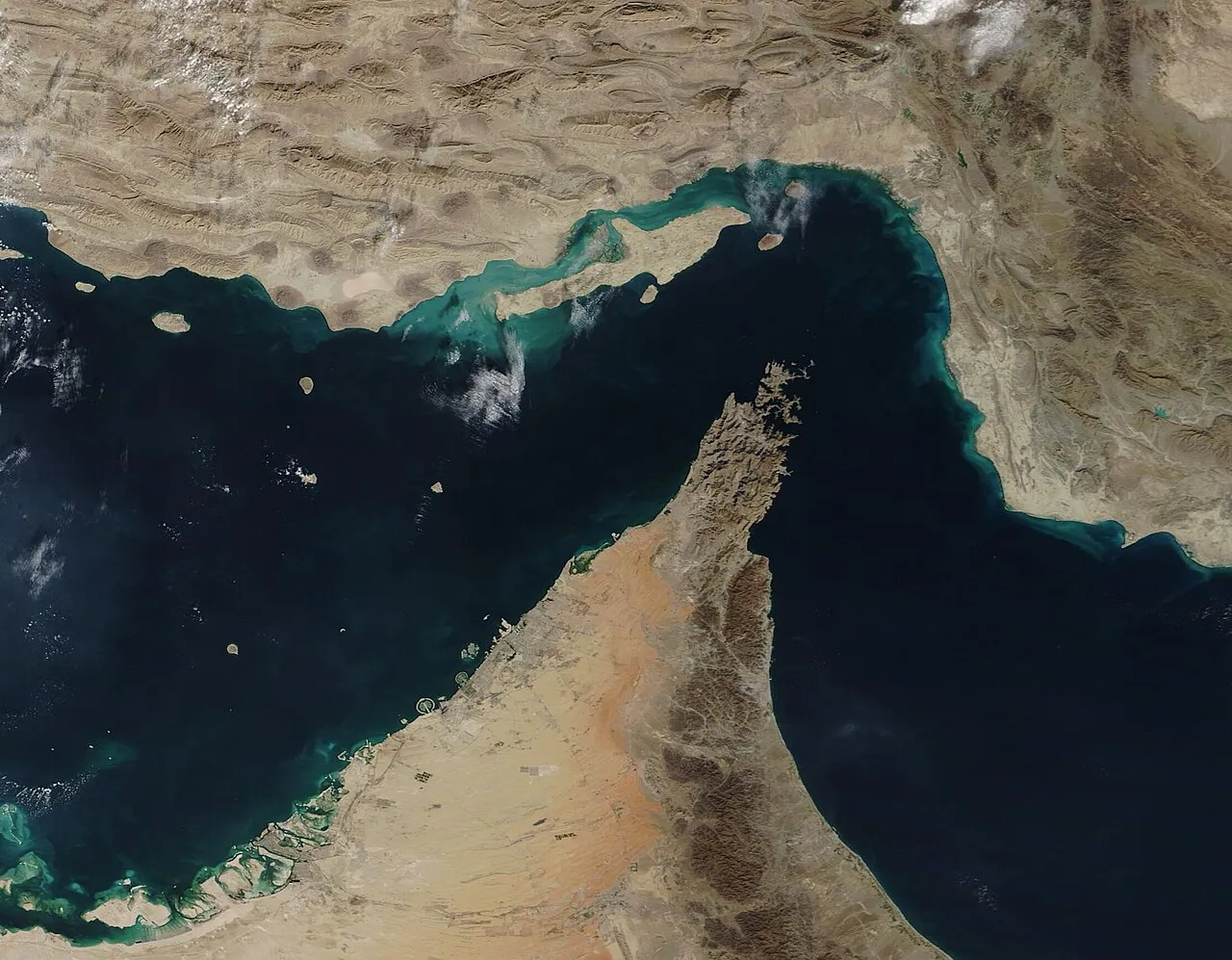
The Strait of Hormuz, which used to carry about a third of the world's seaborne oil, remains all but shut. Figures from IMF PortWatch, compiled by the Straits.live monitor, recorded four transits on 18 October, against a pre-crisis average of 85 a day. On Saturday evening, about a hundred AIS-visible vessels were holding position in the strait and the Gulf watch box.
Iran's Revolutionary Guard said two supertankers carrying more than 4.5 million barrels of crude struck naval mines on Friday after taking an unauthorised route south of the strait; both were left with disabled engine rooms and were abandoned by their crews. No maritime authority has confirmed that account. The Guard has gone as far as claiming seven vessels were hit in the region; the UKMTO, the British centre that monitors maritime traffic, confirmed two attacks during the week — among them a tanker struck by an unidentified projectile about seven nautical miles northeast of Limah, Oman, on the 22nd, which continued its voyage with no casualties.
Iranian officials say the strait will not reopen before their conditions are met. Iran's ambassador to Islamabad, Reza Amiri Moghadam, said on Saturday that the country would reopen Hormuz if the United States lifted its blockade. The chief of staff of Iran's armed forces, Ali Abdollahi, said US warships would not be allowed into the Gulf "under any circumstances".
What the banks are forecasting
The analyst Andrew Lipow noted that physical flows out of the strait have increased in recent days, but warned that the situation "could change at any minute" — it is that asymmetry that keeps the premium in the paper market even while the oil keeps loading.
Forecasts have been revised upward. HSBC raised its 2026 Brent estimate from $80 to $90 and reckons a prolonged stalemate could take the barrel to $120. The October monthly report from the Energy Information Administration (EIA) projects an average of $105 for the fourth quarter. In earlier views, Goldman Sachs was working with $90 for December and, in September, Morgan Stanley pointed to $105 and UBS to $100 for the quarter — all below the current price.
In Europe, Germany's EBV, which manages the country's strategic reserves, put diesel, heating oil and crude up for sale. In Libya, a pipeline valve was shut. And in the United Arab Emirates, oil from a tanker hit near the strait reached the beaches of Umm Al Quwain, which remain closed.
With information from FinanceFeeds, Gulf News, Oilprice and the Straits.live monitor, with data from IMF PortWatch.