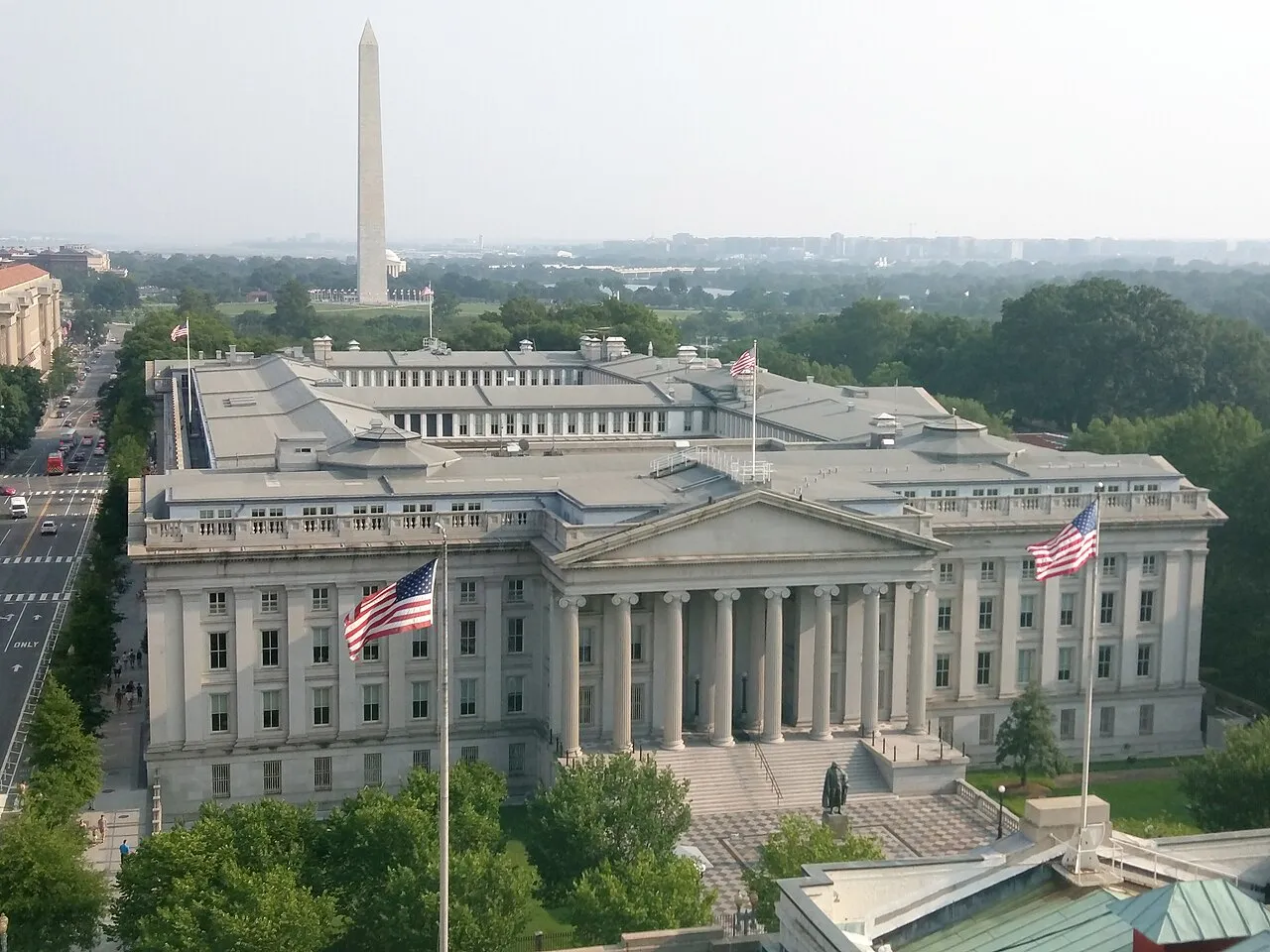
The Treasury Department on October 22, 2026, proposed the rules that would decide which American investments in Chinese technology companies are merely reportable and which are off limits altogether — the long-awaited machinery behind a law Congress passed almost a year ago.
The notice of proposed rulemaking carries out the Comprehensive Outbound Investment Security Act, known as the COINS Act, which lawmakers attached to the Fiscal Year 2026 National Defense Authorization Act in December 2025. It updates the Outbound Investment Security Program, the screening regime Treasury built after a 2023 executive order first restricted American money flowing into Chinese semiconductors, quantum computing and artificial intelligence.
Two lists, not one
The proposal sorts technologies into two buckets. For a set of "notifiable" technologies, a U.S. person doing a covered deal with a covered foreign person would have to tell Treasury about it. For a set of "prohibited" technologies, the transaction would be barred.
The sectors in scope are semiconductors and microelectronics, artificial intelligence systems, quantum information technologies, high-performance computing and supercomputing, and hypersonic systems. Treasury added biotechnology to the list.
The rule would apply to controlled foreign entities as well as to U.S. persons directly, and the notice also sets out definitions, excepted transactions, what a notification has to contain, a knowledge standard, penalties for violations, and a non-binding process through which a company can ask Treasury for feedback before it acts.
$50,000, and not your index fund
Two boundaries matter for anyone reading this as an investor rather than a compliance officer. The regime would reach only investments above $50,000, and it would leave out many purely financial positions, stock purchases among them. It is aimed at money that buys a stake in, or know-how for, a company building the listed technology — not at portfolio exposure.
The countries of concern named in the reporting around the proposal are China, Russia and North Korea; the 2025 statute itself widened the program's reach to Cuba, Iran, North Korea and Russia.
"Under President Trump's leadership, we are committed to putting America's national security first," Treasury Secretary Scott Bessent said in the announcement. Assistant Secretary Christopher Pilkerton said the proposed regulations are designed to address the risks the program was created to cover.
What it costs to get this wrong
The program already has teeth. In July 2026, Treasury fined a U.S.-based company $200,000 for failing to report a $92,500 investment made by a subsidiary in a Chinese artificial intelligence and robotics firm — a penalty more than twice the size of the deal that triggered it, and a useful measure of how the agency reads the notification duty.
Lawyers and analysts reading the proposal described it as a signal as much as a rulebook. Craig Singleton, of the Foundation for Defense of Democracies, said it "sends an important signal to markets" that Washington is tracking where American capital goes. Jason Chipman, of WilmerHale, said the rule "will require more substantial compliance programs to manage risk." Ryan Majerus, of King & Spalding, called it "just the first step in a fairly long process."
That last point is the practical one. Nothing in the proposal binds anyone yet: Treasury is taking public comments through regulations.gov, and the final regulations — with the effective date that actually starts the clock — will come later.
Reporting from the U.S. Department of the Treasury and the Associated Press.