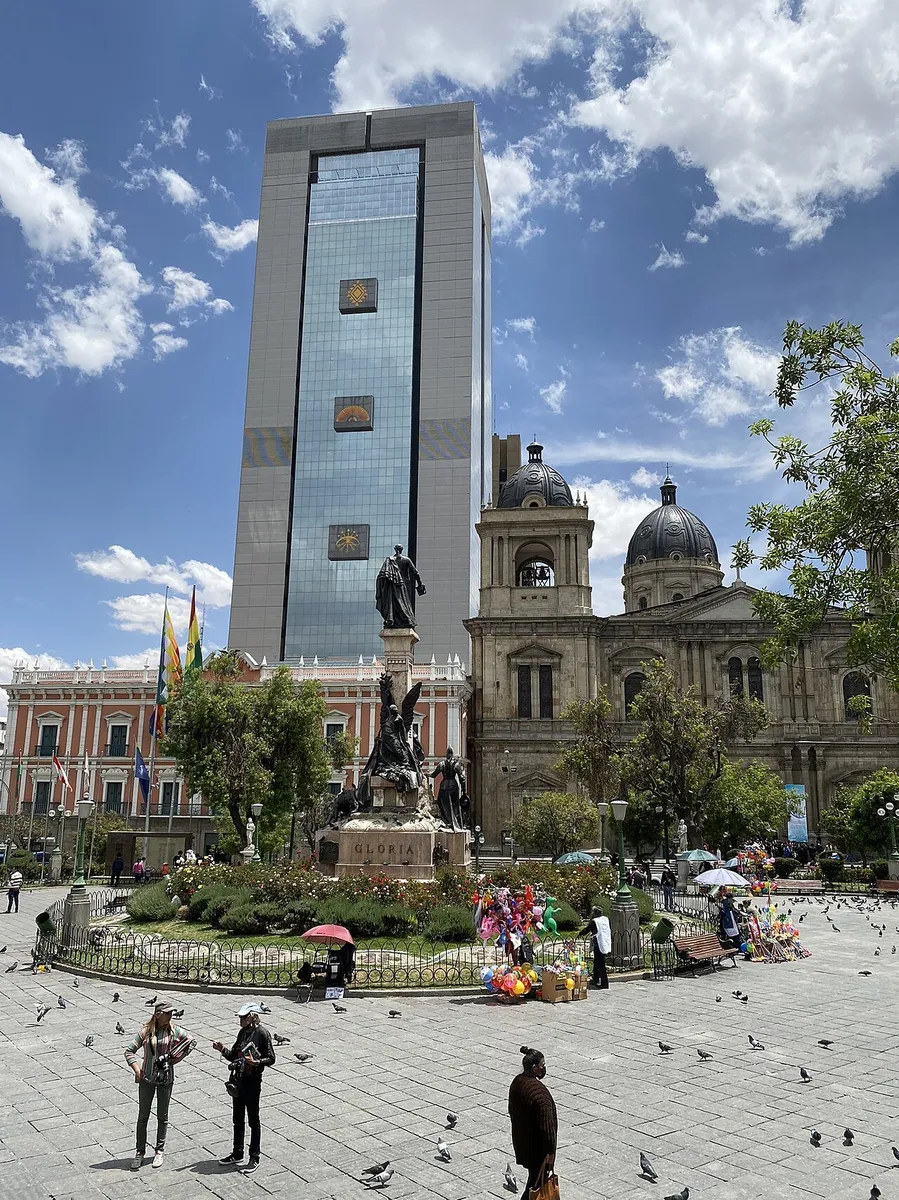
The presidents of Chile, José Antonio Kast, and of Bolivia, Rodrigo Paz, signed a joint declaration in La Paz on Friday, 16 October 2026, committing both governments to work toward restoring full diplomatic relations, suspended for decades. It was the first state visit by a Chilean head of state to Bolivia in 71 years; the last was made by Carlos Ibáñez del Campo in 1955.
Chile and Bolivia do not exchange ambassadors and deal with each other through consular offices. According to the Chilean outlet BioBioChile, the two presidents agreed to reactivate the Mecanismo de Consultas Políticas (Political Consultations Mechanism), the bilateral channel through which the historical disputes will be handled and normalisation pursued in stages. No date was set for the return of ambassadors.
"Differences cannot be an excuse for being paralysed," Kast said, according to the same outlet. The Chilean president invited Paz to make a state visit to Chile in 2027 — an invitation his Bolivian counterpart accepted — and said "seven decades will not pass before the next meeting of presidents."
What was signed
Foreign ministers Héctor Huanca of Bolivia and Francisco Pérez Mackenna of Chile signed terms of reference to modernise Economic Complementation Agreement No. 22 (ACE-22), the framework governing bilateral trade. The negotiation will run in two phases: the first on tariff preferences, rules of origin and trade facilitation; the second, possibly, on services, e-commerce, public procurement and labour and environmental clauses.
Alongside that came a memorandum of understanding on mining — covering geology, exploration, the sharing of geoscientific data, processing and critical minerals — a memorandum for a bioceanic fibre-optic corridor that would connect Bolivia to Pacific submarine cables through Chile's Arica y Parinacota region, and a joint declaration on energy integration that envisages assessing an electricity interconnection with a roadmap of stages and deadlines.
The Bolivian broadcaster Red Uno reported that the presidential declaration is organised around eight strategic axes and includes reviving dormant bilateral bodies: political consultations, the culture and education commission, the drugs commission, the follow-up mechanism for the ATIT land-transport agreement, and the working group on free transit. The text also mentions backing from CAF, the Development Bank of Latin America, for infrastructure and productive connectivity, and a binational table for managing transboundary water resources.
Energy: the pipeline that would run backwards
Among the projects mentioned is the reversal of the Sica Sica–Arica pipeline, which today carries Bolivian crude to the Pacific and which, running the other way, would allow fuel to reach Bolivia overland from the Chilean port. Kast said the project is advancing, though no signed contract or investment figures were announced.
On security, the governments agreed to deepen police coordination and intelligence sharing against transnational organised crime — endorsing the results of the first meeting of senior police commanders — and to work toward orderly, safe migration.
The maritime claim stayed out
Bolivia's demand for sovereign access to the Pacific Ocean, lost in the 19th-century War of the Pacific, was not part of the signed documents. Paz said the maritime claim remains a permanent objective enshrined in Bolivia's Constitution and that this does not rule out dialogue. Kast, for his part, acknowledged the differences and argued that both states can make progress on joint initiatives without giving up their positions.
Making the case for how close the two societies are, Paz cited two figures: around 500,000 Bolivians live in Chile in some form and, he said, workers of Bolivian origin harvest close to 80% of Chile's cherry crop.
None of the instruments announced carried committed amounts or binding deadlines, and the full text of the joint declaration had not been published by either government as this article closed. The real reach of the rapprochement will be measured in the first round of ACE-22 talks and in whether the mechanisms the declaration lists are actually revived.
With information from Prensa Latina, Red Uno, BioBioChile and The Rio Times.