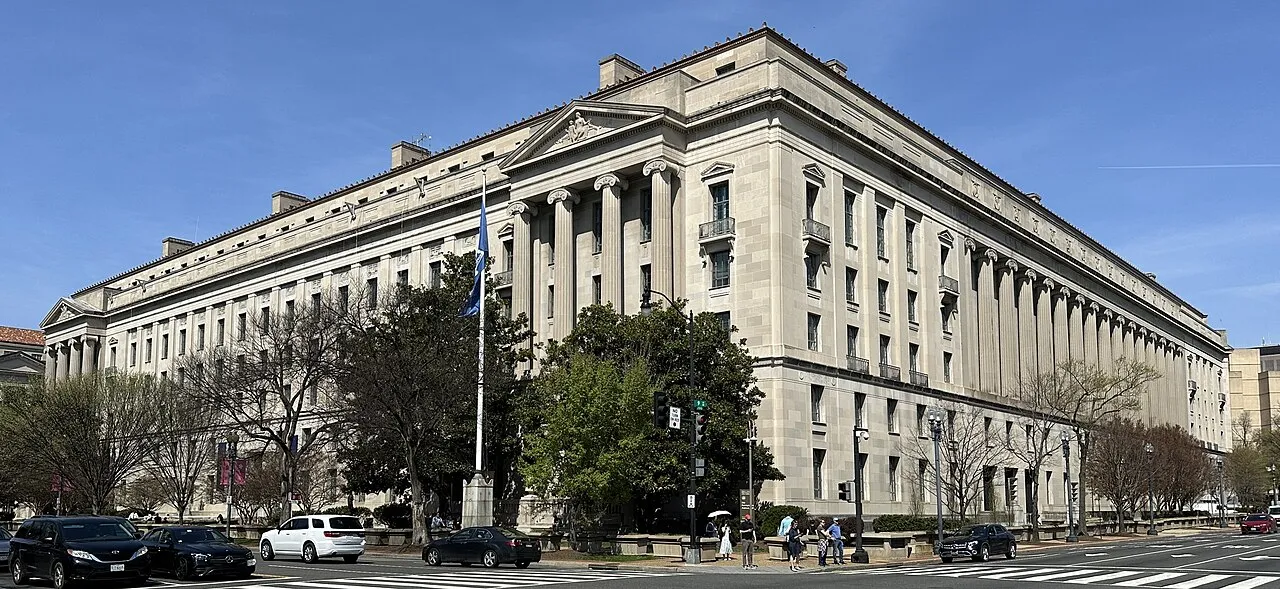
The Justice Department asked a federal court on Thursday to stop California from counting vote-by-mail ballots sent to more than 20,000 people the federal government believes are probably not U.S. citizens. The complaint landed 19 days before the November 3 midterm elections, and ten days after California mailed its ballots out.
The suit names the State of California and was announced by the U.S. Attorney's Office for the Central District of California, which says the Department of Homeland Security worked on the case with it. Attorney General Todd Blanche said in the announcement that "state-facilitated voter fraud is unacceptable in the United States of America."
What the government is asking a judge to do
The Justice Department is careful about what it is not requesting. It says it does not want names purged from the voter rolls, and it does not want any ballot canceled. It uses the word "segregate."
What it does want are three orders: that California stop tabulating vote-by-mail ballots from the people on the list until their citizenship is settled; that those ballots be physically set aside; and that the state verify each person's citizenship — on its own or with federal help — rather than relying on the sworn statement of citizenship that registration already requires.
In practice that is a request to hold a set of ballots out of the count on the strength of a list no court has examined.
Where the 20,000 names came from
DHS says it compared California's voter files against federal immigration records. Secretary Markwayne Mullin described the results as preliminary and the review as ongoing, and argued that "even one noncitizen vote cancels out the ballot of an American citizen."
The government's own word for the people on the list is "likely." Nothing filed on Thursday establishes that any particular person on it is ineligible to vote, and the press release does not describe the data sources or the matching method behind the number.
That caveat has mattered before. A comparable federal review in Nevada flagged 185 registrations as suspect; all 185 belonged to citizens, according to ABC News. California officials and election researchers have long argued that noncitizen voting in the state is negligible, and courts have ruled against the Justice Department more than two dozen consecutive times in its attempts to obtain state voter rolls.
Two days, a thumb drive and a deadline nobody met
The lawsuit followed an ultimatum. On Tuesday, Acting Deputy Attorney General R. Trent McCotter wrote to Secretary of State Shirley Weber and to Dean Logan, the Los Angeles County registrar-recorder and county clerk. The letters demanded that officials investigate the citizenship of everyone on a list, set aside the returned ballots of anyone they could not clear, suspend signature verification on those ballots, and withhold ballots from the rest. The deadline was noon on Thursday. If it passed, the letter said, "the United States will have no choice but to seek emergency relief."
The list arrived on a password-protected thumb drive, accompanied by a handwritten note. Logan's office did not open it. He said a thumb drive is not a secure medium for voter data, and that the letter neither said how many people were on the list nor described the records behind it.
Weber answered with a three-page letter. She called the demand "an emergency of the DOJ's creation," said California already removes ineligible registrants under its own procedures, and said that any removal has to rest on verifiable information. No list, she added, was ever sent to her office. She has described the department's wider effort as an attempt to "unlawfully gain access" to protected voter data.
Governor Gavin Newsom called the suit a "sad, desperate attempt" at voter suppression three weeks before Election Day, and said federal courts have been clear that Washington does not run state elections.
An unusual legal route
Earlier Justice Department suits over voter rolls came out of the Civil Rights Division. This one was filed by senior officials in the deputy attorney general's office, and leans on the Constitution's supremacy clause rather than on the federal election statutes normally invoked in list-maintenance cases. The press release asserts that California "violated laws that protect our nation's representative system of government" without naming them.
The calendar is the part election administrators keep returning to. California's vote-by-mail ballots went out on October 5, and the department's own practice has long been to avoid actions that could disrupt an election in its final weeks. David Becker, of the Center for Election Innovation and Research, has questioned why a review of this kind was not run before the ballots were mailed.
Two recent rulings run against the effort as well: on October 2, a federal judge in Florida held unconstitutional a federal law criminalizing noncitizen voting, and on October 9, another federal judge found that the Justice Department had unlawfully sought state voter rolls to check against a DHS immigration database.
Reporting from the U.S. Department of Justice, ABC News, Axios and Al Jazeera.