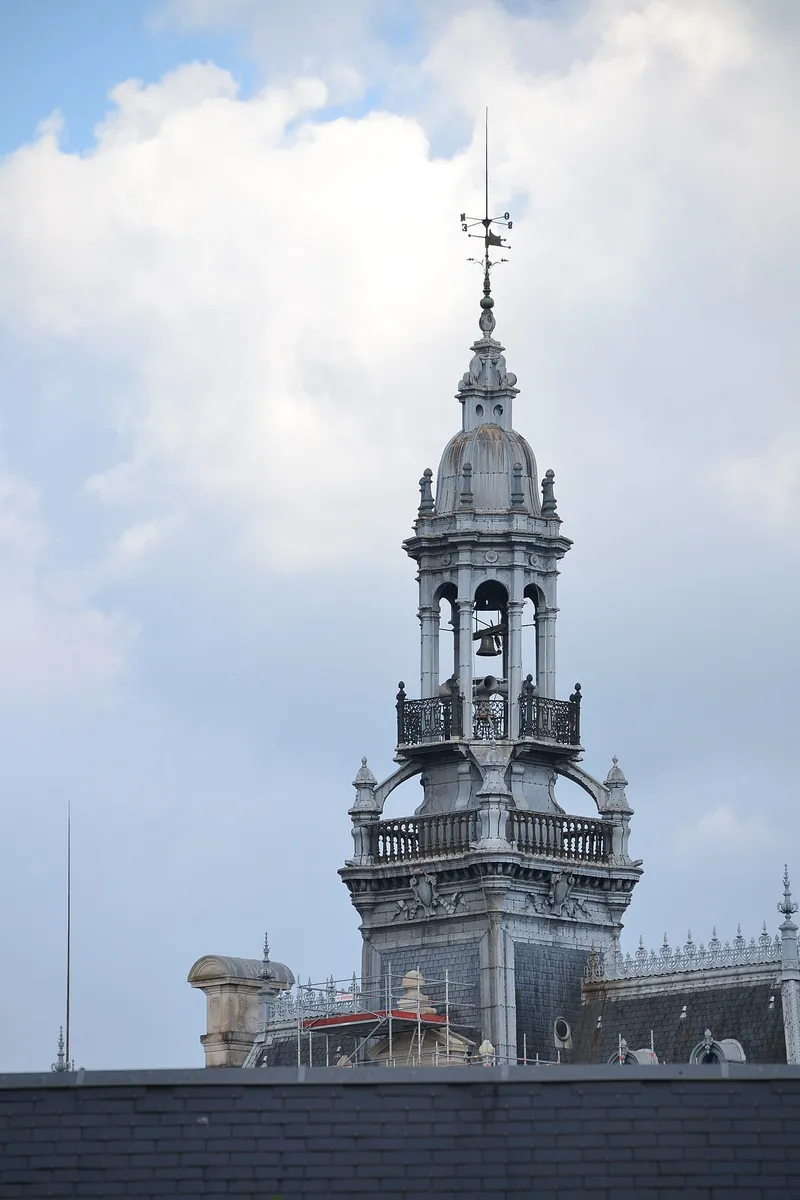
France saw its largest day of cost-of-living protests of the year on Saturday, 17 October. The Ministère de l'Intérieur (Interior Ministry) counted 550,000 demonstrators nationwide, 110,000 of them in Paris. Organisers put the figure at 800,000. The day ended with about 400 arrests, town halls broken into in four cities and the city hall of Limoges — a listed monument opened in 1883 — destroyed by fire.
The call came from the CGT trade union confederation, from student organisations including the Union étudiante, and from a website linked to the gilets jaunes (yellow vests). On the streets were students, school pupils, trade unionists, climate activists and former gilets jaunes — eight years after that movement began. The CGT demanded that the government respond "immediately to social demands" and stop repressing protesters.
The numbers of the day
The counts diverged through the afternoon, as is usual in France, where police and unions publish their own totals:
- Interior Ministry: 550,000 nationwide, 110,000 of them in Paris, according to minister Laurent Nuñez.
- Organisers: 800,000. The CGT had announced more than 500,000 at 5pm before aligning with the higher figure.
- Actions: the CGT counted 1,750 gatherings and marches. Around 500 actions had been planned beforehand.
- By midday: police recorded 32,800 people at 140 actions outside the Paris region.
- At 3pm: 20,000 in Lyon, 20,000 in Nantes and 10,000 in Rennes.
In Paris, the march set off from Place de la République towards Place de Clichy. There was looting at the Galeries Lafayette, and the city's mayor described streets as "methodically ravaged". About thirty people attempted an assault on La Santé prison, and four were arrested.
Arrests mounted through the day: 223 by 2pm, 133 of them in Paris; 191 in the capital alone by 6pm, roughly 90% of them adults; and close to 400 nationwide by the evening.
At least 60 security officers were injured. Two were taken to hospital unconscious, among them a Paris police officer in critical condition after internal bleeding. In Saint-Étienne, a protester lost a hand while picking up a grenade, and the ministry said an investigation is under way.
Limoges lost its campanile
The gravest case was in Limoges. At around 5.45pm, at the end of a march that had been peaceful until then, a group smashed windows and set fire to the ground floor of the city hall. Before 7pm the flames reached the roof of the left wing and, later, the campanile. The 43-metre tower, which housed the republican bell and is the city's architectural symbol, collapsed that evening.
The building, opened in 1883 and listed as a historic monument since 1975, lost much of its façades, roofs and structure, according to the prefect. Restoration of the complex had been costed at €4 million before the fire. Among the works hit are the stone allegories by Tony Noël on the façade, four Venetian mosaic medallions from the Facchina workshop, and twelve enamelled porcelain coats of arms by Haviland inside.
"It is a monument that burns, but not the Republic," said the mayor of Limoges, Guillaume Guérin, of Les Républicains, announcing that the city would go to court: "Criminal proceedings will follow."
There was damage in other cities. In Bordeaux, the prefect's official residence was ransacked and the RAID elite unit was deployed. In Lyon, a branch of the tourist office was vandalised and burned. In Lille and Marseille, protesters entered the town halls; in Marseille a municipal police post was attacked and dozens of shops looted, and mayor Benoît Payan called for urgent reinforcements.
The government blames the far left, the opposition splits the bill
Prime Minister Sébastien Lecornu convened an inter-ministerial crisis cell and denounced "violence of extreme intensity", saying that "ultra-left groups organised the violence in several French cities". Nuñez blamed radical far-left groups for the attacks on public buildings and police stations.
President Emmanuel Macron wrote that there is "no place for violence in our Republic" and pledged that the country would stand together against those he called "sowers of chaos".
On the right, Bruno Retailleau, Édouard Philippe and Marine Le Pen called for a tough criminal response; Le Pen accused La France insoumise (LFI) of encouraging disorder. On the left, Jean-Luc Mélenchon and Marine Tondelier criticised the government's public-order strategy, which they said fuelled the tension. Socialist leader Olivier Faure summed up the battle over the narrative by saying the government "throws up a curtain of tear gas the better to mask legitimate demands", while condemning those who wrecked a movement "led by school and university students".
The ministry's figure and the organisers' tell the same story by different routes: even on the official count, Saturday's mobilisation is the year's largest, and it comes with a newly formed government trying to close the budget. That is the point the argument about violence tends to cover up.
With information from L'Express, Europe 1 and Aquitaine Online.