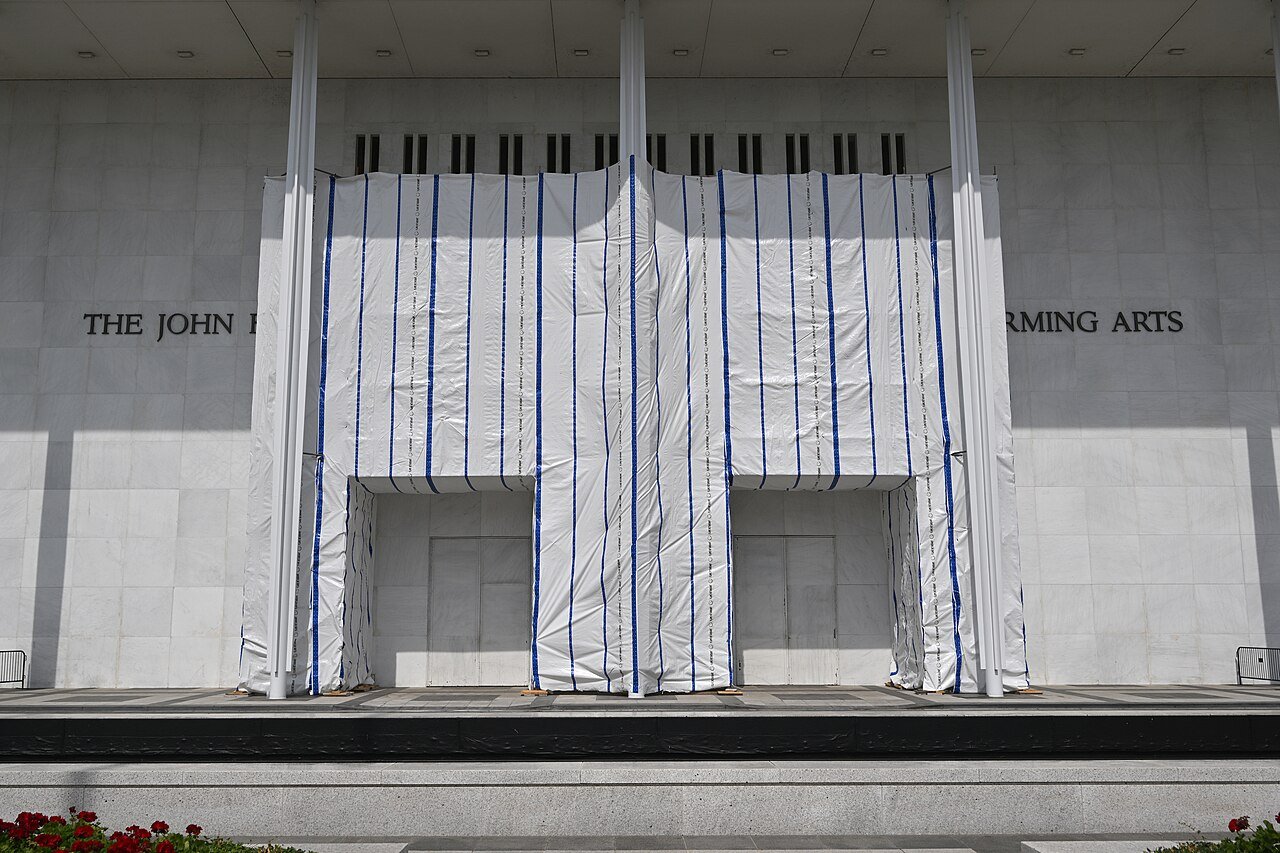
A federal judge has put a clock on any irreversible work at the John F. Kennedy Center for the Performing Arts.
U.S. District Judge Christopher Cooper ruled on Thursday, September 17, 2026, that the center must give 30 days' notice before making any major physical change to its building on the bank of the Potomac in Washington — demolition included. The order arrived one day after the center closed to the public without advance notice, and while the $257 million that Congress appropriated for repairs has yet to be spent.
A building closed without warning
The Kennedy Center stopped admitting the public on Wednesday, September 16. Matt Floca, the center's executive director, attributed the closure to "acute risks to public safety resulting from continued structural deterioration," and said the building would stay shut for at least seven days in order to "assess existing safety risks in those portions of the main building exhibiting severe structural deterioration."
The shutdown followed an inspection of the roof terrace canopy and a partial ceiling collapse earlier in the month. The center's board had voted this week to close the building indefinitely for repairs.
The hearing behind the order
Representative Joyce Beatty, a Democrat of Ohio who sits on the board as an ex-officio member, sought an emergency hearing to stop the closure. Cooper's order does not reopen the building. What it does is narrower and more specific: it removes the possibility of the structure being altered — or taken down — before anyone outside the institution has had a month's notice.
A name on the wall
President Donald Trump was named chairman of the center by board loyalists last year. In August, the board voted on a proposal to inscribe the building with the words "The John F. Kennedy Center for the Performing Arts Restored and Renovated By President Donald J. Trump."
Cooper blocked that family of proposals in May and ordered Trump's name removed from the building; the removal was completed in June. Trump has since tied the repair work to the inscription, saying the renovation deserves recognition and warning what he expects otherwise: "if we don't do that, it's going to close. It'll end up being ripped down."
What the $257 million does and does not settle
The repair money is already appropriated, which means the obstacle to fixing the building is not a missing line in the federal budget. It is the conditions being attached to spending it, and the condition of the building itself — a structure now closed to its own audiences while its board, its chairman and a federal court disagree about who decides what happens to it next.
Cooper's 30-day rule changes the sequence rather than the outcome. Anything permanent now has to be announced before it is done.
Reporting from PBS NewsHour and The Associated Press.