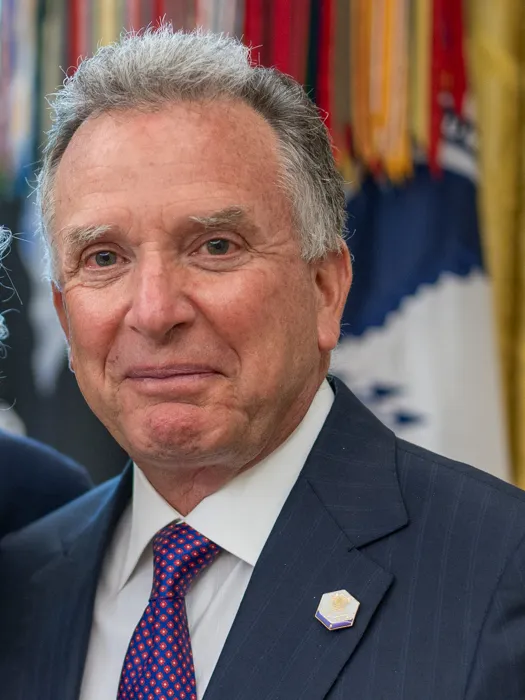
Russia released Stephen Hubbard, a 74-year-old retired schoolteacher from Michigan, on Wednesday, October 21, 2026, ending more than four years in Russian custody. He was the last American in Russia carrying the U.S. government's formal designation of wrongfully detained.
President Donald Trump announced the release in a post on Truth Social, writing that Vladimir Putin had freed Hubbard at his request, made in a phone call the previous week. "There was no 'swap' necessary for this release," Trump wrote — a departure from the exchanges that brought earlier American prisoners home from Russia.
Freed during a visit to St. Petersburg
Hubbard was let go while Steve Witkoff, the White House special envoy, was meeting Putin in St. Petersburg for talks centered on the war in Ukraine. "Because of you, he's going home to his family," Witkoff told the Russian president, and went on to call him a humanitarian, a description that drew criticism in Washington. Witkoff had met Volodymyr Zelenskyy in Norway the day before.
Russian state media placed Hubbard at Pulkovo Airport in St. Petersburg. He is in poor health and was expected to be flown to a military hospital in Texas for treatment.
Dmitry Peskov, the Kremlin spokesman, said the American side had been raising the case for some time and that Putin granted the release on humanitarian grounds. He added that the two countries' intelligence services remain in regular contact.
Nearly seven years for "mercenary activity"
Hubbard, who served in the U.S. National Guard and the Air Force before he taught school, was captured in Ukraine roughly two months after Russia's full-scale invasion began in February 2022. Russian prosecutors said he had signed a contract with the Ukrainian military and had manned a checkpoint for foreign fighters. A closed trial sentenced him in 2024 to almost seven years in a penal colony.
His family, which had little contact with him throughout his imprisonment, has always maintained his innocence, and advocacy groups that work on detention cases call the charge baseless. The Biden administration had classified him as wrongfully detained, the designation that commits the State Department to work for a prisoner's return.
The release lands next to a sanctions decision
Five days before Hubbard walked free, Trump waived a set of sanctions on Russia that were about to take effect under a law passed to support Ukraine. The decision was criticized by members of Congress, including some Republicans, and praised by Putin. The administration has also announced a deal to import Russian diesel.
Trump drew the connection himself after the release, saying that had he allowed the sanctions to bite, "you would not have Mr. Hubbard coming back."
Americans still held
Hubbard is the second American freed by Russia in about two months, after Robert Gilman was released in August as his health deteriorated. Counts of how many U.S. citizens remain in Russian custody differ: one advocacy group puts the figure at five, while broader tallies that include dual nationals run as high as 10.
The State Department keeps Russia at its Level 4 "Do Not Travel" advisory. It has not applied the "state sponsor of wrongful detention" label to Russia; that designation went to Iran in February 2026 and to Afghanistan in March.
Reporting from PBS NewsHour and CBS News.