Presidents Nayib Bukele of El Salvador and Laura Fernández of Costa Rica signed an agreement on cooperation against transnational crime in San Salvador on the night of Friday, 16 October 2026. The text was not made public.
According to the Salvadoran presidency, the bilateral meeting focused on public security and on fighting criminal structures that operate across more than one country. It laid the groundwork for technical assistance, prompt exchange of police information and intelligence coordination between counterpart institutions in the two states.
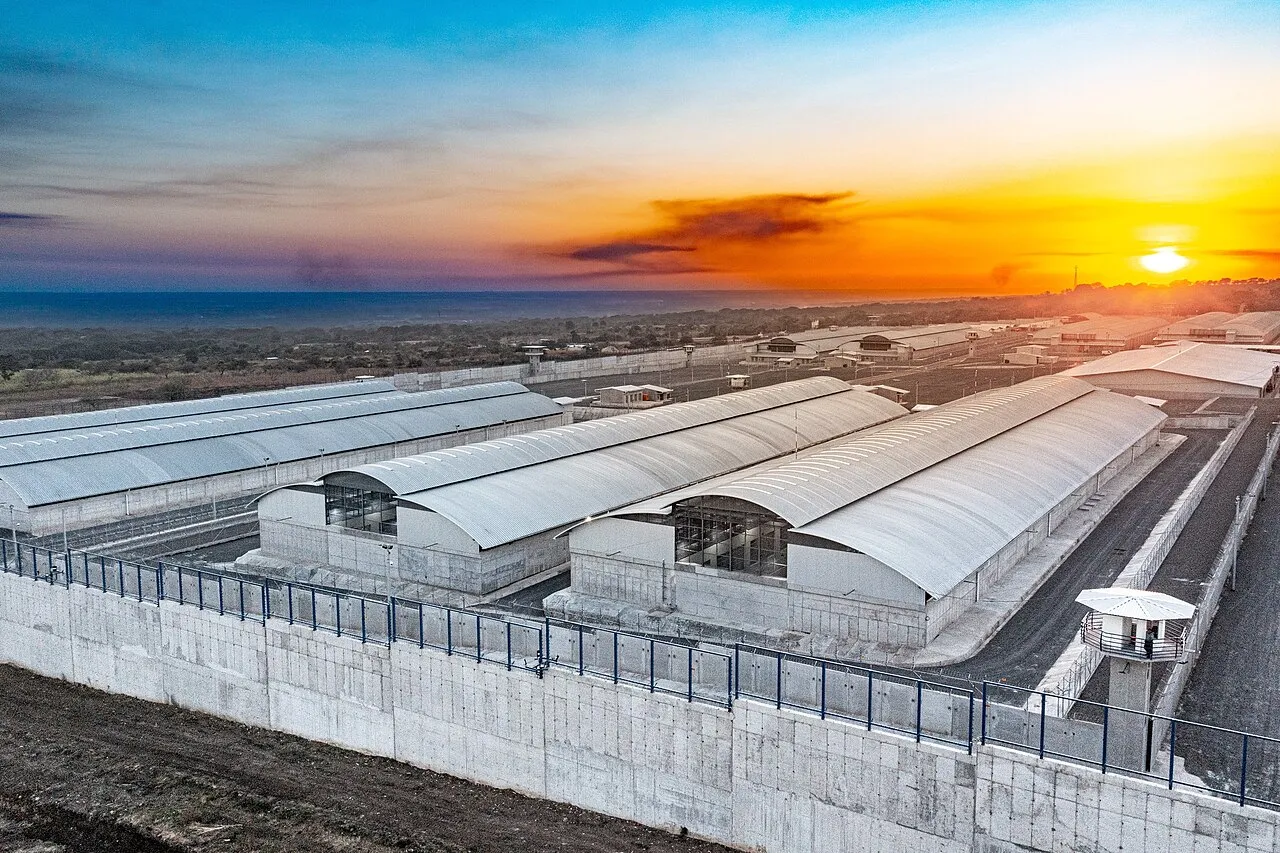
Before the meeting, Fernández toured the Centro de Confinamiento del Terrorismo (Terrorism Confinement Centre, or Cecot), the maximum-security prison in Tecoluca with capacity for about 40,000 inmates that became the emblem of Bukele's security policy.
"A monument to justice"
"What you have there is more than a Cecot — it is a monument to justice," Fernández said in the joint statement that followed the meeting. She said one of the central aims of her trip was to see how the prison works at first hand: "I came to learn about that experience first hand."
Fernández thanked El Salvador for its support and technical assistance and argued that "today Costa Rica is also moving towards becoming a benchmark on security". On the relationship with San Salvador, she said that "it is in difficult moments that an ally's support is measured" and that "our countries have joined efforts, intelligence and experience to confront a common enemy".
Bukele drew an explicit distinction between the two national situations: "The realities of Costa Rica and El Salvador are different, but there is a lot that can be learned." He also urged early action: "It is better to attack it now and not wait to get to where we got." The Salvadoran leader stressed legal reform, institutional coordination, police operations and intelligence, and acknowledged the political difficulty Fernández faces in passing legislative changes. He added that his government wants to learn from Costa Rica on the environment and the economy.
The Cacco, Costa Rica's own piece
The visit came two days after Costa Rica opened its own maximum-security prison, modelled on the Salvadoran example.
The Centro de Alta Contención contra el Crimen Organizado (High Containment Centre against Organised Crime, or Cacco) was inaugurated on Wednesday 14 October next to the La Reforma prison in San Rafael de Alajuela, about 25 kilometres from San José. Its figures:
- Capacity: 5,100 inmates.
- Cost: 16.774 billion colones, roughly US$35 million, funded entirely from the national budget.
- Layout: five independent modules of 1,020 inmates each, across 91,000 square metres, of which 31,000 are roofed and armoured.
- Transfers: the first are planned for late October, with an initial group of 2,500 inmates.
The profile of those to be held there, according to the Costa Rican government, covers gang leaders, heads of criminal organisations, hitmen and prisoners facing extradition proceedings.
A regional turn
The sequence — a mega-prison opened on Wednesday, a tour of the Cecot on Friday, a cooperation agreement the same night — compresses into three days a shift that had been building: Costa Rica, the Central American country with the institutional tradition furthest from the region's punitive turn, is openly adopting the Salvadoran repertoire and presenting it as state policy.
What is not yet visible is the text of the agreement, nor which parts of the Salvadoran experience — which includes a state of exception in force since 2022 and objections from human rights bodies — Costa Rica considers adaptable to its own legal framework. Bukele himself noted that legislative reform is the point where the Costa Rican president has the least room to manoeuvre.
With information from the Presidency of El Salvador, EFE, La Prensa (Panama), La Noticia SV and Bloomberg Línea.