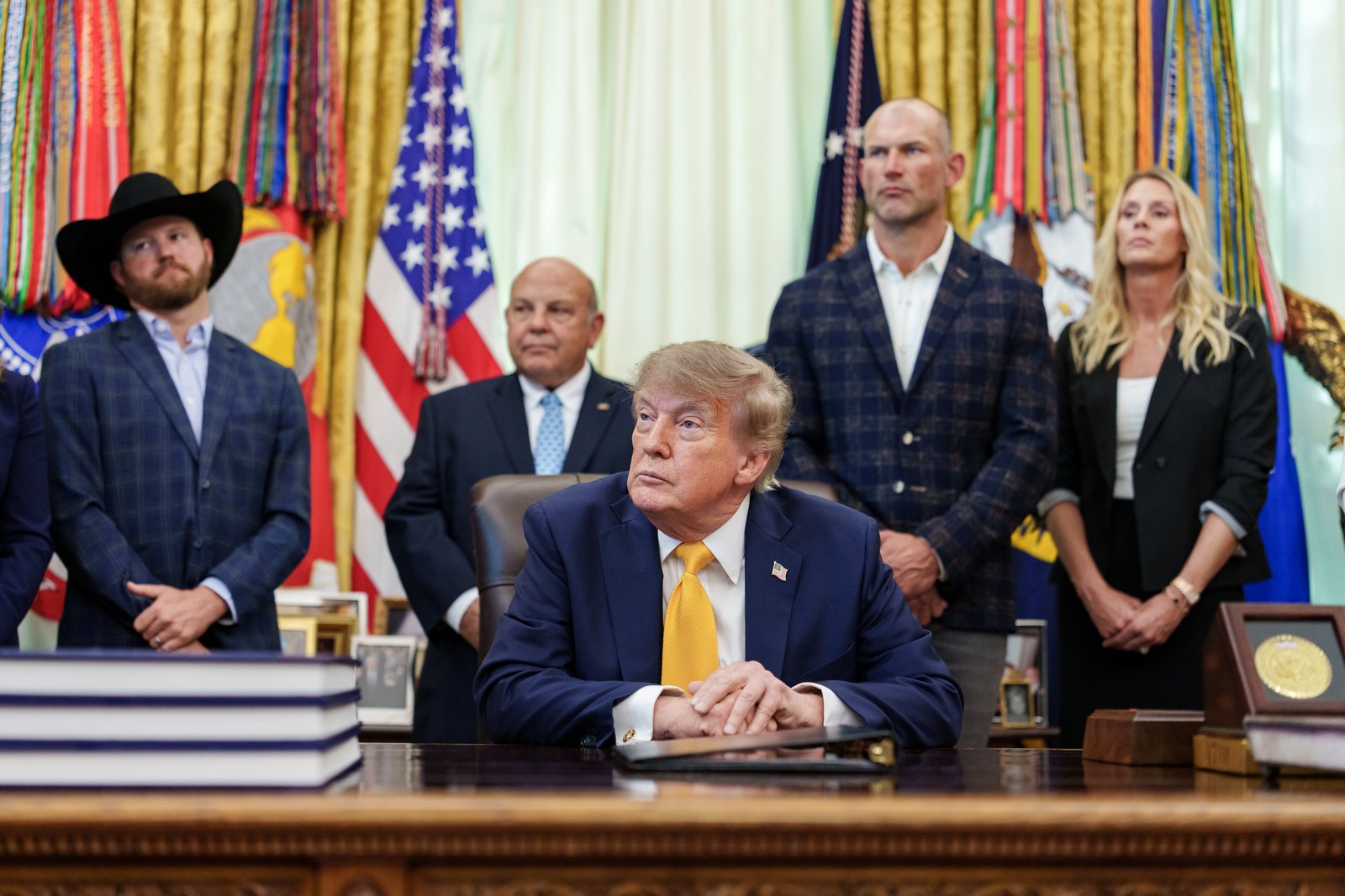
President Donald Trump signed a proclamation on September 18 that keeps a $100,000 payment on new H-1B petitions in place for another twelve months, together with an executive order instructing federal agencies to apply sharper scrutiny to employers that cut American jobs while asking to bring in foreign specialists.
The proclamation, titled "Restriction on Entry of Certain Nonimmigrant Workers," takes effect at 12:01 a.m. EDT on September 21, 2026 and expires on September 21, 2027 unless it is renewed again. It covers specialty-occupation workers admitted under section 101(a)(15)(H)(i)(b) of the Immigration and Nationality Act. An employer must obtain the payment, and keep documentation of it, before filing the petition.
The restriction is not absolute. The Secretary of Homeland Security may set it aside where a particular hire is judged to be, in the proclamation's words, "in the national interest" and no threat to "the security or welfare of the United States."
What the executive order adds
The companion order has a narrower target: employers that lay off American staff and petition for foreign workers in the same stretch of time. It directs the Secretaries of State, Labor and Homeland Security to coordinate their reviews, and to pull employment data from the Departments of Commerce and Education and from the Small Business Administration.
The operative instruction is for "enhanced scrutiny of H-1B visa applications where there is a heightened risk that American workers would be laid off." An employer's recent or planned layoffs become a factor weighed when the petition is examined.
The numbers the White House cites
The administration's case rests on what it says the September 2025 proclamation already changed:
- registrations from the largest IT outsourcing firms fell 92%;
- requests for consular processing fell by nearly 97%;
- overall registrations dropped close to 40% after a wage-based lottery replaced random selection in December 2025;
- holders of a master's degree rose from 45.1% to 66.1% of registrants.
The proclamation says the program "has been exploited to replace, not supplement, American workers with lower-paid labor." The White House also cites unemployment among recent graduates before the 2025 action — 6.1% in computer science and 7.5% in computer engineering — as the harm the fee is meant to address.
Each of those figures describes who registered, not what was collected. That distinction matters here, because the charge has not been payable for months.
A fee the courts have already struck down
A federal judge in Massachusetts voided the $100,000 charge in June, finding that the president had imposed what amounts to a tax without Congress, and blocked its collection. The decision is now before the federal appeals court in Boston, according to Reuters. A separate challenge brought by the U.S. Chamber of Commerce is also on appeal.
The proclamation signed on September 18 therefore extends a fee that is not currently being collected, keeping the policy in force on paper while the appeal runs. The original proclamation dated from September 19, 2025 and was due to lapse this weekend.
Ordinary H-1B filing fees run roughly $2,000 to $5,000. The charge does not reach people already in the United States on student visas, nor renewals of visas already held.
A second fee, by a different route
The administration is not relying on the proclamation alone. The Department of Homeland Security published a proposed rule on August 25 that would add a separate fee of $103,265 to each cap-subject H-1B petition, open to public comment for 30 days, with petitions from universities and comparable non-profits exempt. The trade publication HR Dive reported that the two charges would stack where both apply, and that DHS justifies the figure as the cost of administering the lawful immigration system.
Some employers have moved work rather than pay. Alphabet has expanded its operations in India, Reuters reported. Business groups argue the visas let them recruit skills that are scarce in the domestic labor market.
Reporting from the White House, Reuters and HR Dive.