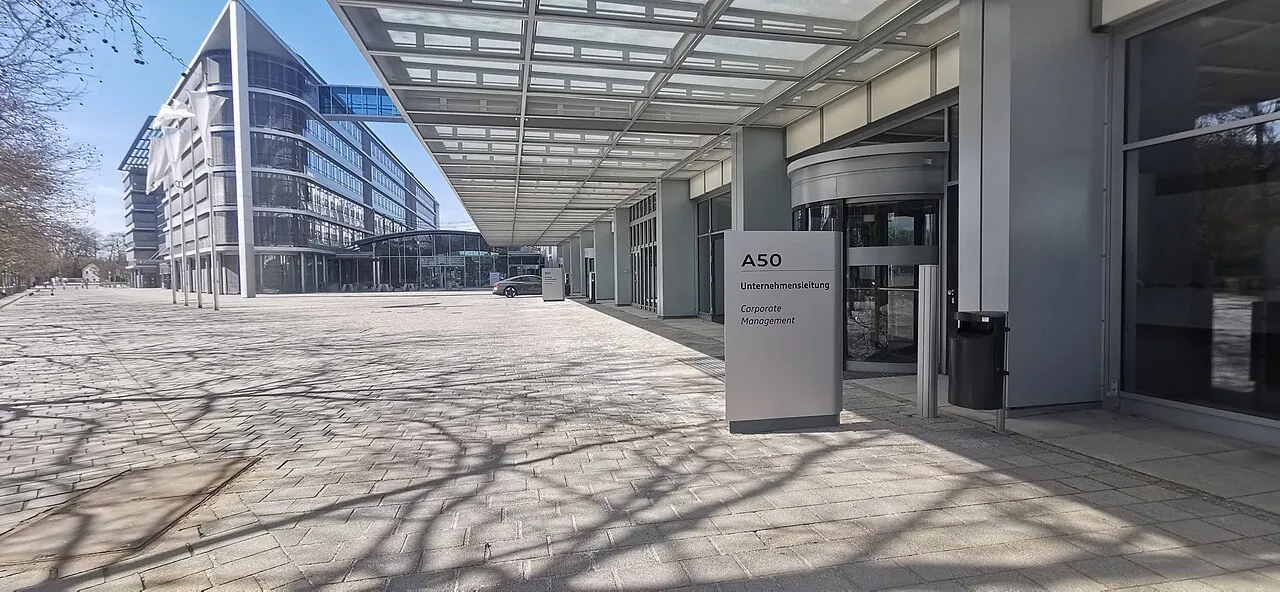
Audi will build its first manufacturing plant in the United States in middle Georgia, a project that state and local officials put at about $4 billion and roughly 4,500 jobs. President Donald Trump announced it on Saturday night, October 24, 2026, at a midterm campaign rally in Perry, Georgia, with Audi chief executive Gernot Döllner standing beside him.
Trump put the figure at $4.2 billion and described the site as being in "nearby Macon, Georgia." He called it "the single largest investment in U.S. auto industry history, modern history," and credited Commerce Secretary Howard Lutnick with helping close it.
Where it is actually going
The plant is not going inside Macon. It is going to the Middle Georgia Megasite, a 1,474-acre tract in Peach County along Georgia Highway 96, just off Interstate 75 — a few miles from Fort Valley and about half an hour's drive south of Macon.
That site exists because three counties spent four years preparing it for exactly this. Georgia acquired roughly 1,100 acres in mid-2022 in partnership with the Development Authority of Peach County, using proceeds from the sale of a state-owned economic development site in Chatham County. Bibb, Houston and Peach counties each pledged $7 million to market the tract and bring it up to industry standards, and officials say it can be expanded to around 2,400 acres.
Audi said it chose Georgia for the state's workforce, speed to market, access to consumers and proximity to the automotive supply chain. Georgia Quick Start, the state's training program, will build a customized program and a dedicated training facility with campuses of the Technical College System of Georgia, with training beginning before construction is finished.
What it will build, and when
The plant is slated to produce up to 200,000 vehicles a year. Döllner said it would build the company's largest and most premium SUVs, aimed at North American customers.
The two timelines on offer do not agree. Trump said construction could begin as early as next month. The schedule released locally is slower and more conventional for a greenfield assembly plant: site grading starting in 2027, construction in 2028, and full production in 2031.
"This is a long-term investment because we believe in the American market," Döllner said, calling the deal a "fantastic opportunity" for both Audi and the United States. He said Georgia "will play a central role" in the company's American ambitions. Audi North America president Vito Paladino was also on stage.
Governor Brian Kemp described the decision as bringing "truly historic investment and jobs to middle Georgia." Peach County Commission chairman Roy Lewis said it "realizes the vision we had for the Middle Georgia Megasite." Macon-Bibb Mayor Lester Miller said the impact "will be felt for many decades." Houston County Commission chairman Dan Perdue credited the region's preparation.
The tariff arithmetic behind it
Audi is the outlier among Germany's premium brands in the American market: BMW has assembled cars in Spartanburg, South Carolina, since the 1990s and Mercedes-Benz in Alabama, while Audi has sold into the United States entirely on imports. Its best-selling US model, the Q5, is built in San José Chiapa, Mexico.
That arrangement became expensive under the Trump administration's auto tariffs, and trade coverage through 2026 recorded Audi weighing American production and warning about the cost of shipping cars into its second-largest market. A factory in Georgia answers that problem — in about five years. Until the line runs, every Audi sold in the United States still arrives as an import.
Trump used the announcement to claim a wider total, telling the Perry crowd that about $40 billion in auto industry investment and some 30,000 jobs were coming. At the same rally he floated a $5,000 "Trump dividend" for adult citizens if Republicans hold both chambers in November, and warned of a "1929-style economic depression" if Democrats win.
Reporting from Fox Business, WGXA, The Atlanta Journal-Constitution and Audi's own announcement.