Bulgaria voted on Sunday in the first round of its presidential election and will have to return to the polls on 1 November. Exit polls point to President Iliana Yotova and former caretaker prime minister Andrey Gyurov as the two names going through to the runoff, with a margin narrow enough that the polling agencies disagree among themselves about who finished first.
What the exit polls say
The figures released after polls closed at 8pm local time do not converge:
- Trend: Yotova 36.4% and Gyurov 32.1%
- Myara: Yotova 35.0% and Gyurov 31.9%
- Alpha Research: Yotova 34.6% and Gyurov 32.7%
- Market Links (final parallel count): Gyurov 33.5% and Yotova 32.7%
Of the four agencies, only Market Links puts Gyurov ahead — by 0.8 of a point. Third place went to Kostadin Kostadinov, leader of the ultranationalist Vazrazhdane party, with somewhere between 12.6% and 13.5%; he ran with MEP Petar Volgin on a pro-Russian ticket. None of the other tickets — there were 26 in all — reached double digits. Preliminary official results are expected on Monday.
Why there is a runoff
Bulgarian law requires two things at once to elect a president in the first round: turnout of at least 50% of the electorate and more than 50% of valid votes. Neither was met.
Turnout came in near 22% — 22.3% an hour before polls closed, according to Alpha Research; 22.1% according to Market Links; 22.2% according to Myara. It is the lowest figure ever recorded in a Bulgarian presidential election, and the night's most telling number: the contest for the country's highest office drew little more than one voter in five.
The two names in the runoff
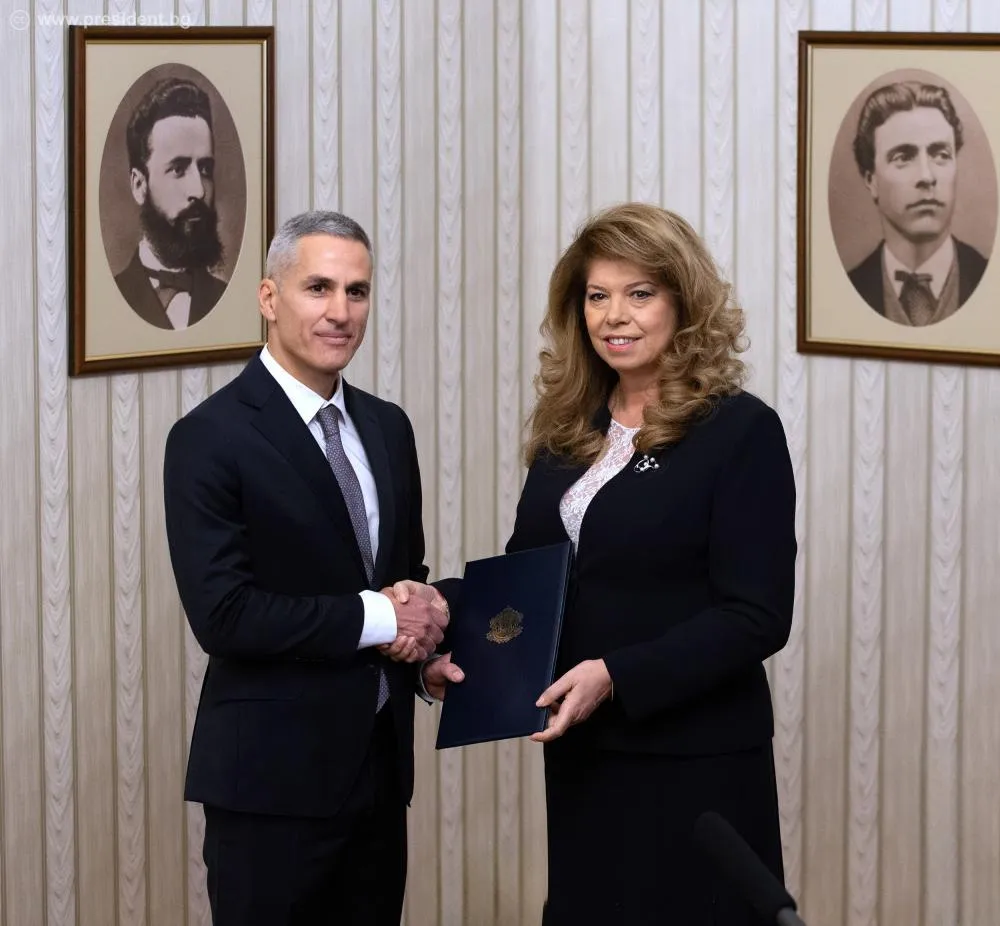
Iliana Yotova, a journalist by training and a former member of the European Parliament, served as vice-president in Rumen Radev's terms won in 2016 and 2021 and took over the presidency in January 2026, when Radev left the post for parliamentary politics. She has the declared backing of Radev's Progressive Bulgaria, the Bulgarian Socialist Party and the left-wing ABV. She favours dialogue with Moscow and opposes military aid to Ukraine. Her running mate is Kiril Vulchev, head of the state news agency BTA. If she wins, she would be the country's first elected woman president.
Andrey Gyurov is an economist, a former deputy governor of the Bulgarian National Bank, and headed a caretaker cabinet in early 2026. He is backed by We Continue the Change and Democratic Bulgaria, pro-Western parties that oppose Radev; he expresses firm support for Kyiv and signed a security cooperation agreement with Ukraine. His running mate is Georgi Kandev, a former acting chief secretary of the Interior Ministry.
The campaign
Three issues dominated the closing weeks: Russia's war in Ukraine, the drone attacks on commercial vessels off Bulgaria's Black Sea coast — which sharpened security concerns — and rising energy prices and inflation, felt above all by rural families.
The Bulgarian presidency is a post of limited powers, but not a decorative one: the head of state commands the armed forces, can veto laws passed by parliament and appoints caretaker governments — a power that has mattered in recent years of near-permanent parliamentary instability.
With information from The Sofia Globe, Euronews and Novinite.