The two candidates contesting the runoff in Brazil's presidential election were interviewed on Jornal Nacional, TV Globo's flagship newscast, on consecutive nights: President Luiz Inácio Lula da Silva (PT), seeking re-election, on Thursday, and Senator Flávio Bolsonaro (PL-RJ) on Friday. The vote is set for 25 October, eight days after this Saturday.
In the first round, on 4 October, Flávio Bolsonaro took 47.03% of valid votes and Lula 45.16%. Because neither cleared half, the contest went to a second round.
Lula: "I am in favour of lowering it to 16, but not in this PEC"
Questioned by journalist Renata Lo Prete, Lula said he favours lowering the age of criminal responsibility from 18 to 16 in cases of heinous crime — a position his party has historically rejected.
"My thinking, as a citizen, is that I am in favour of lowering the age of criminal responsibility for any and every heinous crime," the president said.
He made the discussion conditional, however, on the progress of the PEC da Segurança Pública (public security constitutional amendment), drafted by his own government: "I am in favour of lowering it to 16, but not in this PEC. Pass the PEC and then discuss it."
The proposal has already cleared the Câmara dos Deputados (lower house) and was approved without changes by the Senate's constitution and justice committee. It is ready for a two-round floor vote, but the Senate president, Davi Alcolumbre (União-AP), pulled the item from the agenda on Thursday itself, to avoid what he called a "hasty debate". Of the amendments filed, two deal with the age of criminal responsibility: Senator Rogerio Marinho (PL-RN) would set it at 16 generally and 14 for heinous crimes, torture, trafficking and terrorism; Senator Camilo Santana (PT-CE) would keep 18 as the rule, with an exception of 16 for heinous crimes.
Lula said the states "lacked the competence" to deliver public security and that the amendment would let the federal government act in the sector, as well as authorising him to create a public security ministry. "We need to asphyxiate organised crime to free territories from criminals across the country," he said.
On the economy, the president resisted the idea of adjustment through spending cuts. "Every time someone wants to solve the fiscal problem, poor people pay. And I don't want poor people to pay," he said, defending a 15% increase to the Bolsa Família cash-transfer programme. He also cited the Senate's approval of the end of the 6x1 shift pattern, debt forgiveness for sole-trader microentrepreneurs and a promise of free public transport at weekends.
On trade policy, he said he would rather negotiate with Donald Trump's administration than invoke Brazil's reciprocity law — "I don't want to apply the Reciprocity Law, but if we have to, we will" — and argued that trade with the United States fell 9% while growing with other partners: "we grew 20% with China, 15% with Indonesia, 16% with Germany."
Flávio: 8 January, a pardon and ministry cuts
The following night, in an interview lasting just over 40 minutes, Flávio Bolsonaro denied that the 8 January 2023 riot was an attempted coup and described as a "sham" the trial that sentenced his father, former president Jair Bolsonaro, to 27 years in prison.
"This sham — history will show it was entirely staged to try to remove Bolsonaro from public life," said the senator, who referred to the rioters as "a lady with a Bible".
He said he would grant his father a pardon, without confirming whether he would hold a post in the executive, and ruled out his brother Eduardo Bolsonaro as foreign minister. Of Eduardo he said: "He is politically persecuted."
The senator announced that he intends to abolish presidential re-election, including for the term he himself would hold — "It was I who put forward a constitutional amendment ending presidential re-election" — and that he would wind up at least ten ministries.
On the public accounts, he promised to cut more than R$ 200 billion from the federal debt by selling off abandoned public property, and said the Equatorial Margin oil frontier would yield "R$ 100 billion off the bat". Petrobras, however, does not expect exploration there to begin before 2033.
On security, he promised to designate the Comando Vermelho and the PCC as narcoterrorist organisations, without detailing the practical effect, and defended changes to Brazil's gun-control statute: "The problem is that the guns are in the wrong hands." He has come round to supporting the end of the 6x1 shift pattern, approved in the Senate last week, arguing that workers should have more freedom to set their own hours.
In accusing the federal government of record fires in the Amazon — "This was the October with the most fires in the history of the Brazilian nation" — he contradicted data from the Inpe (Brazil's space research institute), which recorded 9,544 fire hotspots in the region through 15 October, well below the highest readings in the series.
Flávio was also asked about a R$ 130 million request to former banker Daniel Vorcaro and about the funding of Dark Horse, a film about his father, and answered that the matter had already been cleared up: "And he agreed when there was nothing wrong." Hours before the interview he had lunch with Globo executives; the broadcaster said no journalist took part in the meeting.
What the two nights leave behind
Both interviews covered the same ground — public security, the public accounts and working hours — and on all three the candidates converged on a point that did not exist before the first round: both now back ending the 6x1 shift pattern, and both treat tougher criminal penalties as central to their programmes. The clearest divergence remains the fiscal path: Lula rejects adjustment through spending, while Flávio puts it at the centre, through asset sales and a smaller state apparatus.
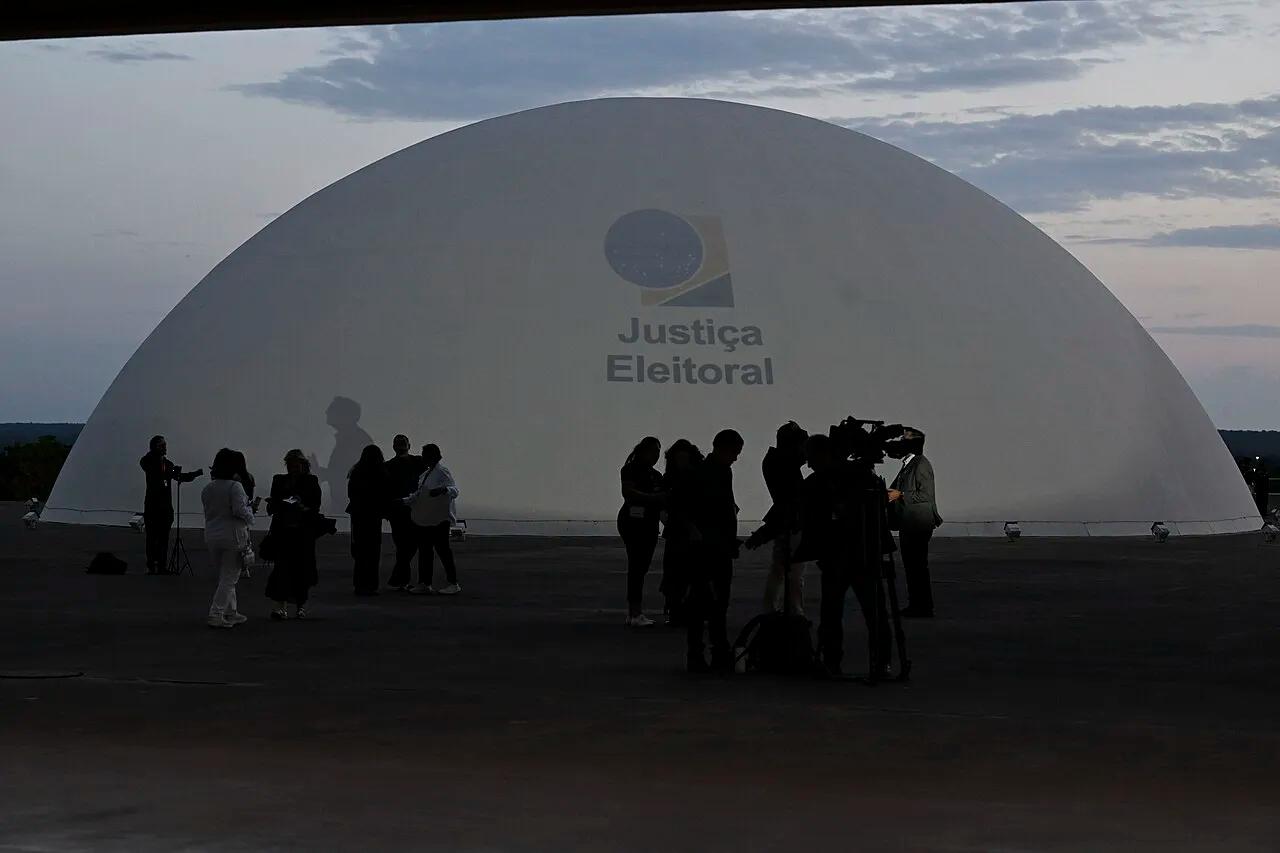
With information from Agência Brasil, Inpe and the Tribunal Superior Eleitoral (Brazil's electoral court).