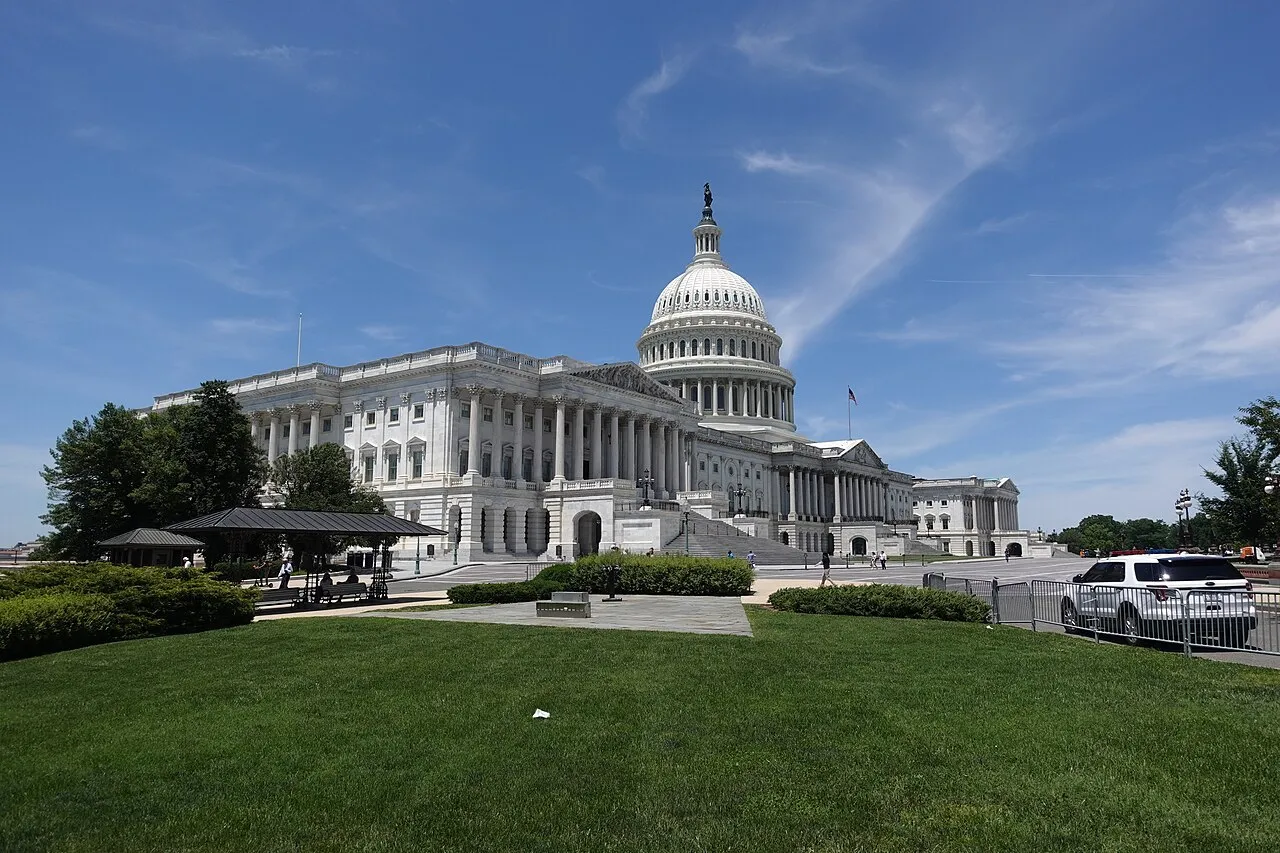
Democrats won control of the United States House of Representatives in Tuesday's midterm elections, according to a projection by the NBC News Decision Desk, and flipped Senate seats in three states President Donald Trump carried in 2024. Control of the Senate had not been settled by early Wednesday.
NBC News projected that Democrats would finish with a majority of at least 244 of the chamber's 435 seats. Republicans went into Election Day with 219 seats to the Democrats' 214, and Democrats needed a net gain of three. A majority takes 218.
The Senate math
Republicans held the Senate 53-47 before the vote, counting the two independents who caucus with Democrats. That means Democrats needed a net gain of four seats, and they took three of them on Tuesday night.
Texas. State Representative James Talarico, a Democrat and a Presbyterian seminarian, defeated Attorney General Ken Paxton, in a race called by Decision Desk HQ. Talarico is the first Democrat to win a statewide race in Texas since 1994 and the first the state has sent to the Senate since 1988. Paxton had reached the general election by unseating Senator John Cornyn in the Republican primary.
South Carolina. Annie Andrews, a 45-year-old pediatrician who campaigned on health care costs, defeated Senator Darline Graham, according to CBS News. Graham, 62, had been appointed by Governor Henry McMaster to finish the term of her brother, Senator Lindsey Graham, who died in July, and then won a condensed primary for a full six-year term. South Carolina had not elected a Democrat to the Senate since 1998, and Trump carried the state by 18 points two years ago.
North Carolina. Former Governor Roy Cooper, a Democrat, beat Michael Whatley for the seat of retiring Republican Senator Thom Tillis. "We knew that the chaos and corruption in Washington were hurting our people," Cooper said on Tuesday night. "Today, you said this has to stop."
Democrats also held two seats Republicans had spent the cycle targeting: Senator Jon Ossoff was reelected in Georgia over Representative Mike Collins, and Representative Chris Pappas won in New Hampshire for the seat of retiring Senator Jeanne Shaheen. Republican Senator Ashley Moody was reelected in Florida.
Races in Iowa, Michigan, Ohio, Maine, Kansas and Alaska — where the count runs through ranked-choice tabulation — were still open as returns came in, and any one of them could settle the majority.
Governors
Georgia elected Keisha Lance Bottoms, the former mayor of Atlanta, over Republican Rick Jackson. She will be the first Black woman elected governor of any state. In Florida, Republican Byron Donalds defeated Democrat David Jolly. Democratic governors JB Pritzker in Illinois, Wes Moore in Maryland, Josh Shapiro in Pennsylvania and Maura Healey in Massachusetts were all reelected. Thirty-six states elected governors on Tuesday.
What a divided Congress changes
A Democratic House ends unified Republican control of Congress for the second half of Trump's term. It hands the opposition the floor schedule, the committee gavels and subpoena power, and it means no major bill reaches the president's desk without Democratic votes. Government funding is the first test, because it is the one piece of legislation Congress cannot skip.
If Republicans hold the Senate, the practical effect is narrower than a full handover: judicial and executive nominations still need only that chamber, and the next two years become a negotiation over spending rather than over policy.
Reporting from NBC News, CBS News, Newsweek, The Hill and Texas Monthly.