Dengue has stopped being a tropical-summer problem in Brazil and become a climate problem. A study by the Fundação Oswaldo Cruz (Fiocruz, Brazil's public health research foundation), published in Scientific Reports, part of the Nature group, matched the disease's incidence against climate data between 2006 and 2024 and arrived at one number that sums up the shift: Brazilian microregions at epidemic level jumped from 110 to 292 over the period — the equivalent of 54% of the country. The remaining 46% registered medium or low incidence.
For the authors, there is no going back. "The process of expansion of the dengue transmission area appears to be irreversible," they write.
The south is now on the map
The cases that best illustrate the shift sit outside the disease's traditional range. Rio Grande do Sul, Brazil's southernmost state, recorded almost 210,000 confirmed infections and 281 deaths from dengue in 2024 — in a state where the first non-imported case appeared only in 2007. In Bahia, there were about 163,000 cases and 188 deaths that same year.
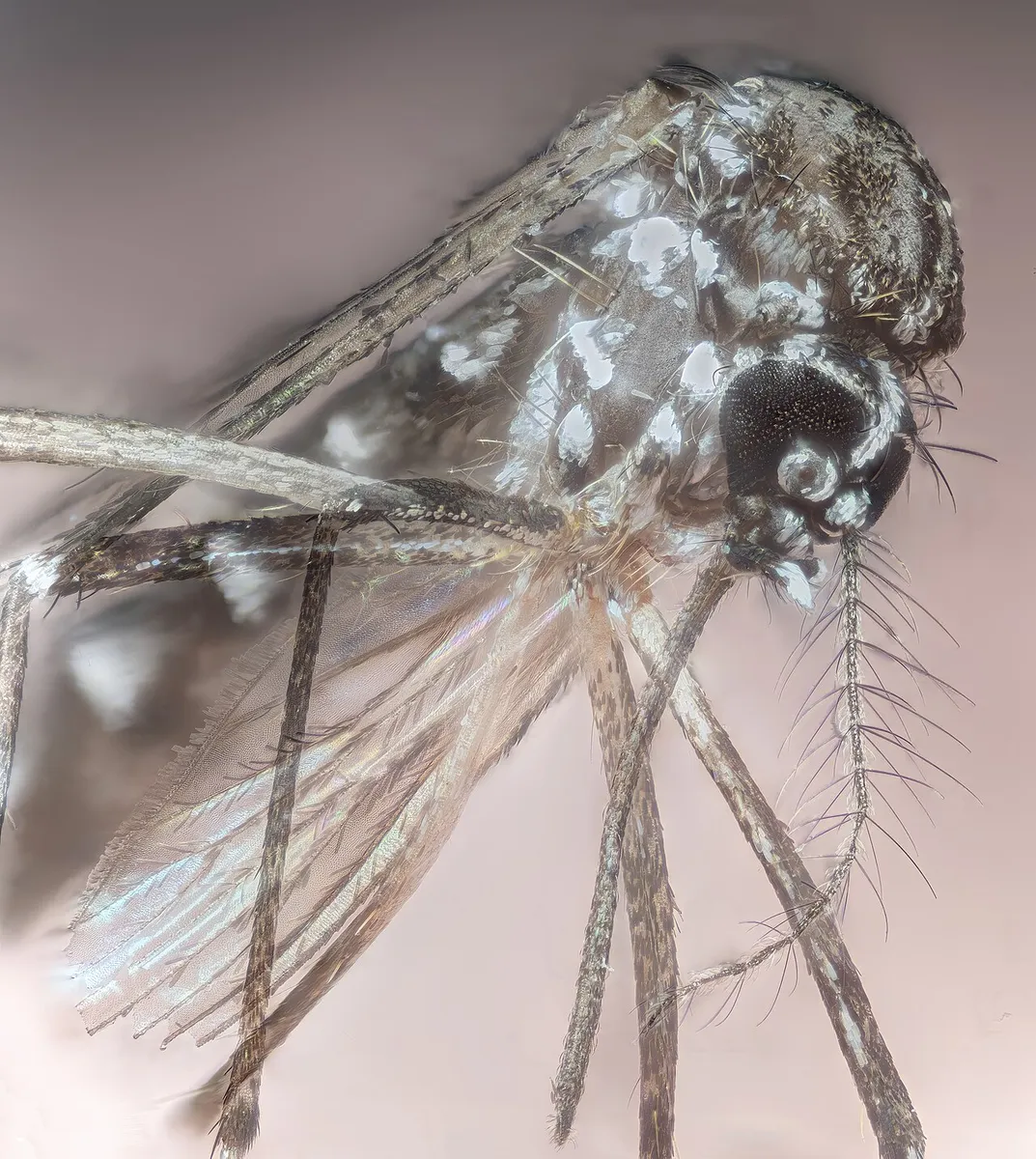
Celso Granato, an infectious-disease specialist with the Sociedade Brasileira de Patologia Clínica e Medicina Laboratorial (SBPC/ML, the Brazilian society of clinical pathology and laboratory medicine), explains why heat speeds up the cycle: Aedes aegypti beats its wings faster at high temperatures, which increases how often it bites. "When it is very hot, they have to beat their little wings faster in order to fly," he says. The eggs, he adds, survive long dry spells: "They lay eggs with a very resistant shell, which can stay in nature for years."
The expansion is not only Brazilian. The continental United States is going through its largest recorded dengue outbreak, and France and Italy reported locally acquired cases this year.
Floods and wildfires leave a trail too
Two recent extreme events left an epidemiological trail. After the floods in Rio Grande do Sul, leptospirosis surged. "In Rio Grande do Sul, after the rain disaster, the frequency of leptospirosis increased many times over," Granato says.
Wildfires show up in the hantavirus figures — the cardiopulmonary syndrome caused by the Brazilian strain of the virus accounts for 530 confirmed infections since 2016, with 212 deaths, a fatality rate of 40%. "When fires happen, infected rodents come into people's houses and cause this disease," says the specialist, describing the animals' flight indoors.
Oropouche fever is the fastest-moving case. Until 2023 it was practically confined to the Amazon region; last year it passed 12,000 infections, spread across 23 states and the Federal District.
Fungi that have learned to tolerate 37 degrees
Human body temperature works as a barrier against most environmental fungi. "95% of the fungi in the environment cannot grow at that temperature," said Sarah Gonçalves Tavares, a professor at the Universidade Federal do Espírito Santo (UFES), at the Brazilian congress of clinical pathology and laboratory medicine. A warming environment narrows that barrier.
The examples she cited are all inside hospitals. Candida auris causes hospital outbreaks with fatality rates of 40% to 60%. Aspergillus had its first recorded Brazilian infection in Bahia in 2020, and since then there have been 24 occurrences across 15 states, all in health facilities: of 146 colonised patients, 56 died, and bloodstream infections carried an 82% fatality rate. There is also Trichophyton indotineae, a skin fungus identified in 2022 that already shows resistance to antifungals.
The researcher notes that the risk concentrates among those already weakened: "A healthy person will hardly develop an infection from this type of fungus."
El Niño is forecast to affect Brazil, which tends to increase the frequency of extreme events — and with it the risk of new outbreaks.
With information from Agência Brasil and the Fiocruz study published in Scientific Reports.