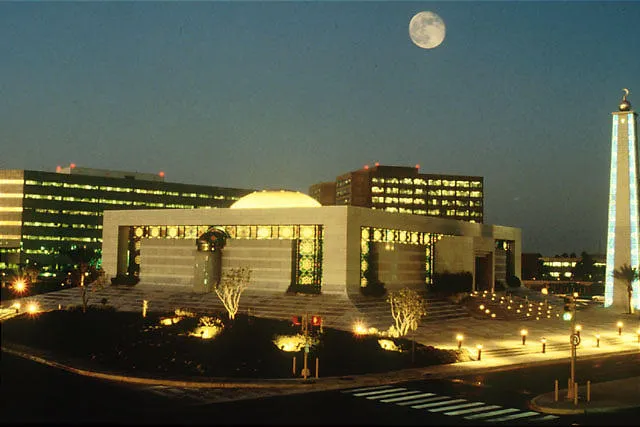
Saudi Aramco's administrative building in Dhahran, in eastern Saudi Arabia, was hit between Tuesday night, 13 October, and the morning of Wednesday the 14th by attacks attributed to the Houthis, the Iran-aligned Yemeni movement. The company recorded a fire that Saudi authorities described as limited. There was no report of any effect on the oil company's production or exports.
Dhahran is not just any target: it is the nerve centre of the world's largest oil exporter, with the administration, engineering and exploration buildings gathered in a single complex.
What Saudi air defence reported
The spokesman for the Coalition to Restore Legitimacy in Yemen, Major General Turki Al-Malki, said a ballistic missile aimed at Dhahran had been intercepted and destroyed. The coalition also said it had intercepted missiles fired at Riyadh and at the south of the country.
In Riyadh, debris from downed missiles injured four people. This week's attacks follow two deadly strikes on the capital's international airport over the weekend — the terminal was closed for three days, with almost half of Saudi flights cancelled.
Hours before the Dhahran attack, Saudi Energy Minister Prince Abdulaziz bin Salman had said the kingdom's energy supply remains resilient, calling Riyadh the "capital of energy security".
Two ships attacked near Hormuz
Over the same stretch, two ships were attacked in the vicinity of the Strait of Hormuz — one inside the strait itself and the other off the coast of Oman. According to the price-reporting agency Argus, a Suezmax tanker loaded with Iraqi crude, which had sailed on 8 October, was struck by an unidentified projectile and caught fire, with two crew members missing; the second, a product carrier, was hit by a drone, an attack logged by the United Kingdom Maritime Trade Operations (UKMTO).
Responsibility has not been confirmed. Reuters reported that Iran was deploying new tactics against shipping in the region. The navy of Iran's Islamic Revolutionary Guard Corps warned that vessels switching off their navigation and identification systems while crossing the strait would be treated as hostile and "dealt with severely and decisively". India's Ministry of External Affairs called for de-escalation and said attacks on commercial vessels and seafarers must stop.
What prices did
At the European open on Wednesday, Brent futures were up 0.5% at $106.24 a barrel and WTI up 0.5% at $94.64. In Europe, the Dutch TTF benchmark traded just above €86 per megawatt-hour, close to the four-year high of €87.44 set shortly before.
The muted price response to a strike on Aramco's headquarters says something about the moment: the geopolitical risk premium is already largely priced in. Brent has been trading above $103 since Sunday, and each new episode adds less than it would in a calm market.
With information from Reuters, the Associated Press, Euronews, Argus and Oilprice.com.