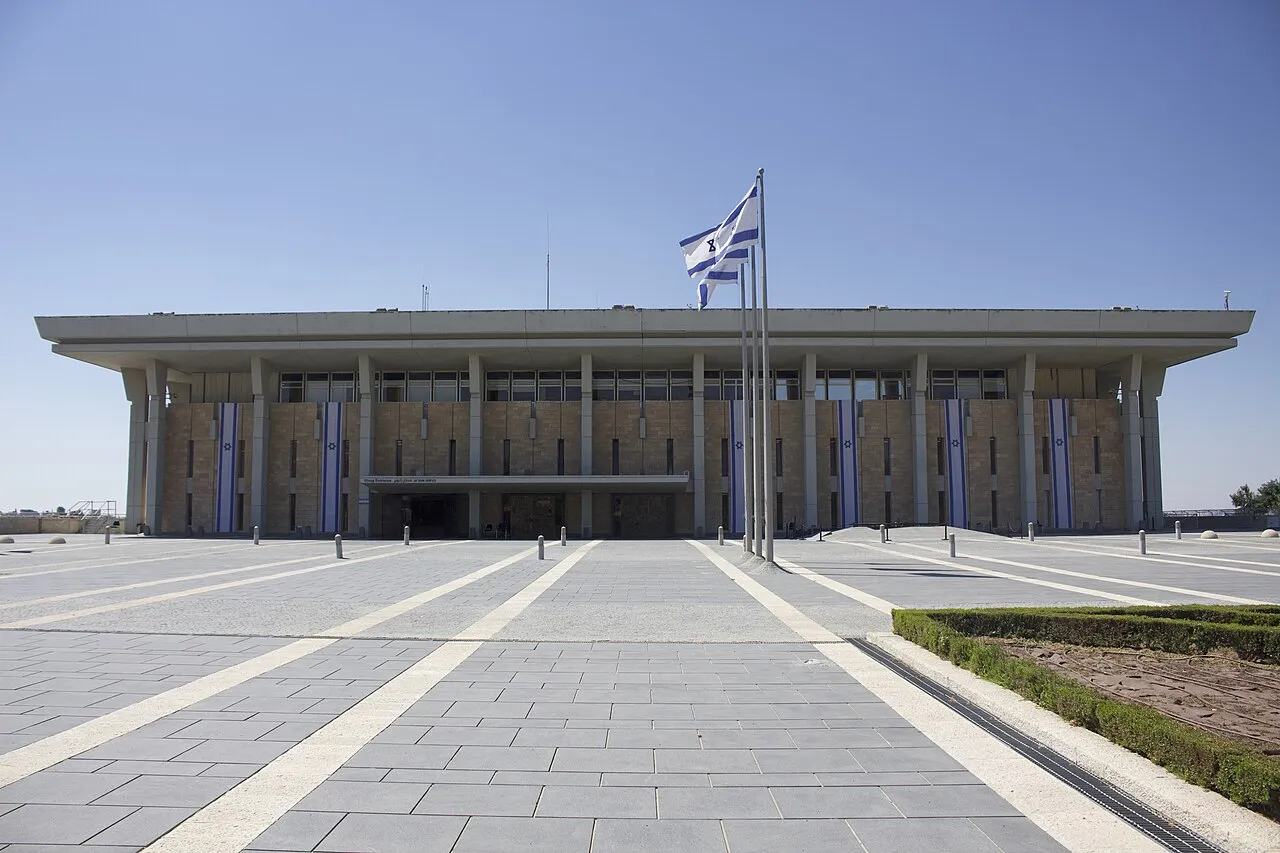
Israeli voters go to the polls on Tuesday to choose the 120 members of the Knesset (the country's parliament), in the first national election since the attacks of 7 October 2023. About 7 million people are eligible to vote, according to Euronews. Most polling stations are open from 7am to 10pm local time.
The surveys published over the weekend agree on one thing: neither bloc reaches the 61 seats needed to govern.
How votes become seats
Israel is a single nationwide constituency. Voters choose a closed party list, and seats are distributed proportionally among the parties that clear the 3.25% electoral threshold. No single party has ever won 61 of the 120 seats, which makes coalition bargaining — not the count itself — the stage that decides who governs.
The calendar is long, too. The 25th Knesset was dissolved on 17 July, with members staying in office until the new parliament's first sitting and the government serving until a successor is sworn in. The final deadline to register lists was 9 September, and campaign broadcasting on television and radio began on 13 October. The official result will be confirmed on 4 November, and appeals against the count may be filed until 18 November. Israelis abroad voted at diplomatic missions from 20 October.
What the polls show
The average of four surveys — Channels 12, 13 and 14 and the newspaper Maariv — compiled by The Jerusalem Post on the eve of the election broke down as follows:
- Yashar (Gadi Eisenkot): 22
- Likud (Benjamin Netanyahu): 19.75
- B'Yachad (Naftali Bennett and Yair Lapid): 14.5
- The Democrats (Yair Golan): 9.5
- Joint List (Arab-majority): 9
- Yisrael Beytenu (Avigdor Lieberman): 8
- Otzma Yehudit (Itamar Ben-Gvir): 7.75
- Shas: 7.5
- United Torah Judaism: 7.5
- Religious Zionism–Zehut (Bezalel Smotrich): 7
- Ra'am (Mansour Abbas): 5.5
In that average the opposition bloc adds up to 54 seats and Netanyahu's to 49.5 — a gap of 4.5 and, more to the point, seven seats short of a majority for the side in front. Maariv's final poll had it 54 to 48; Channel 13, 54 to 50; KAN 11, 52 to 50; and Channel 12, 56 to 50.
Al Jazeera, in a separate compilation, projected 52 seats for the opposition and 50 for Netanyahu's religious-nationalist alliance.
In every one of those counts, the combined total of the Arab-majority parties — between 13 and 14.5 seats — is larger than the distance between the two blocs, without those parties belonging to either. That is the figure that makes it arithmetically hard to assemble a government without them, whether inside a coalition or supporting one from outside.
Two small lists sat on the edge of the threshold: the Reservists-Economic list of Yoaz Hendel and Yaron Zelekha cleared 3.25% in two of the four polls, with four seats; People of Israel fell below the cut-off in all of them.
Netanyahu, Eisenkot and the campaign
Netanyahu, who has dominated Israeli politics for roughly two decades, is seeking another term after three years of war. His main challenger is Gadi Eisenkot, a former military chief of staff who lost two sons in combat and whose campaign has been built less around a distinct platform than around opposition to the prime minister. In a radio interview cited by Euronews, Eisenkot said what Netanyahu offers is "an eternal war".
The two converge on significant points: both reject a two-state solution and favour a hard line on Iran.
In late September, opposition leaders signed a mutual non-aggression pact for the campaign, aimed at removing Netanyahu from power. The group named no candidate for prime minister, though Eisenkot is seen as the likeliest.
One issue in play is a state commission of inquiry into the failures of 7 October 2023, which the current government has rejected. "The more the government rejects the idea, the more people are suspicious that they have something to hide," Yossi Mekelberg of the British institute Chatham House told Euronews; he argues an opposition government could open such an investigation.
The scenarios after the count
Al Jazeera lists eight possible outcomes, from Netanyahu returning with the same or new partners to a minority government backed from outside by the Joint List — which would demand conditions, among them a path to Palestinian statehood. Mansour Abbas of Ra'am has signalled willingness to join a coalition, a prospect most opposition leaders have publicly ruled out. The scenarios also include a national unity government, a rotating premiership and, at the limit, no agreement at all, which would mean another election with Netanyahu as caretaker.
What Europe is watching
For the European Union it is not clear whether the result changes the relationship with Israel. The EU-Israel Association Agreement, in force since 2000, remains in place, and the relationship between the EU High Representative for Foreign Affairs, Kaja Kallas, and Israeli Foreign Minister Gideon Sa'ar is described as strained. A European source told Euronews there is "some hope" of finding common ground with the new Israeli administration, whoever leads it.
With information from Al Jazeera, Euronews and The Jerusalem Post.