The largest immigration enforcement force in the United States is no longer the one on the federal payroll. More than 29,000 state and local police officers across 30 states are now deputized to enforce federal civil immigration law, according to an analysis published on Wednesday, October 28, 2026, by the advocacy group FWD.us — more than twice the 11,600 deportation officers that Immigration and Customs Enforcement employs directly.
The officers are deputized under section 287(g) of the Immigration and Nationality Act, through written agreements between ICE and local agencies. More than 1,850 agencies had signed on to the program's Task Force Model as of October 1. At the start of 2025, none had.
What the Task Force Model changes
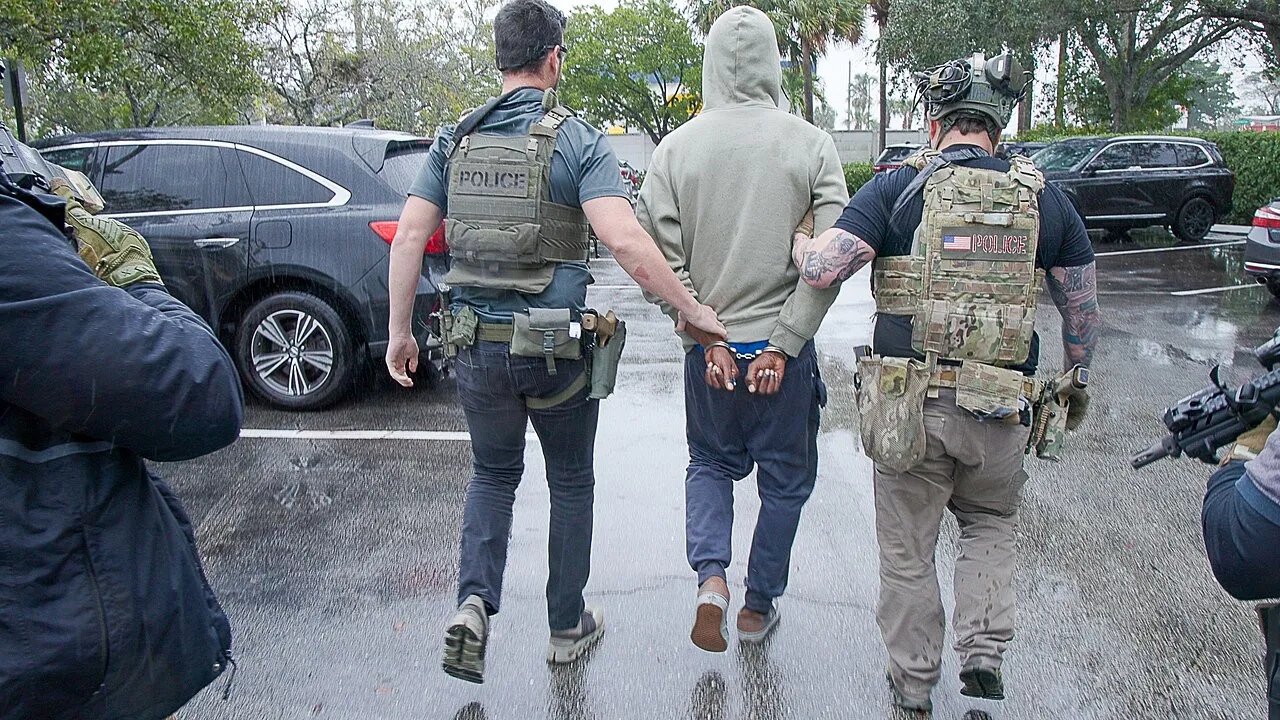
The jail-based versions of 287(g) let local officers check the immigration status of people already in custody. The Task Force Model is different: it deputizes officers to make immigration arrests in the field, during ordinary police work — which in practice has meant traffic stops.
FWD.us describes that as a deliberate shift away from the highly visible urban operations the administration ran in cities such as Chicago and Minneapolis, toward a quieter mechanism spread across thousands of patrol cars.
"This isn't a handful of sheriffs in a few counties anymore," said Zoë Towns, the group's executive director. The participating jurisdictions cover at least 136 million people, roughly one in three Americans.
The arrest curve
The arrest figures moved with the sign-ups. Arrests involving 287(g) officers went from just over 1,000 in August 2025 to more than 2,400 that October, and topped 6,600 in July 2026 — a more than sixfold increase in under a year. Their share of all ICE arrests rose from under 3 percent in early 2025 to roughly 15 percent, and in several states the program recently accounted for more than half of all immigration arrests.
In total, the partnerships produced more than 47,000 arrests between January 2025 and August 2026. About half of those came from Florida and Texas, where governors required local police departments to sign agreements.
The states where the share is highest are not the ones in the headlines. In Wyoming, deputized officers made 77 percent of immigration arrests in April 2026, and more than 60 percent in every month since November 2025. New Hampshire reached 60 percent in June 2026. In Oklahoma, where the Highway Patrol enrolled all of its troopers, nearly half of June's immigration arrests were made by state or local police.
"Even though Oklahoma may not be in the headlines, it's definitely a hotspot for immigration enforcement," said Gabriela Ramirez-Perez of the Oklahoma Policy Institute, who told NPR that residents have changed their routines to avoid highways and to limit how much they drive.
The money came first
FWD.us argues the sequence runs from funding to enforcement rather than the other way around. Participating agencies are eligible for at least $2 billion in projected federal payments through fiscal 2026 — roughly double the largest federal grant programs for local police in fiscal 2024 — and current participants could collect at least $1.8 billion a year going forward. The Justice Department has offered $3 billion to agencies that join, and Florida has added hundreds of millions of dollars of its own for its participating departments.
"The money came first, and the arrests followed," said Felicity Rose, the group's vice president of research and policy. She called the deputized officers "a key lever in the administration's quieter approach to enforcement."
The Department of Homeland Security defends the program as a critical tool for reducing crime and illegal immigration.
The report lands six days before the November 3 midterm elections, in a cycle where immigration enforcement has become a contested issue rather than a settled advantage for the administration.
Reporting from FWD.us and NPR.