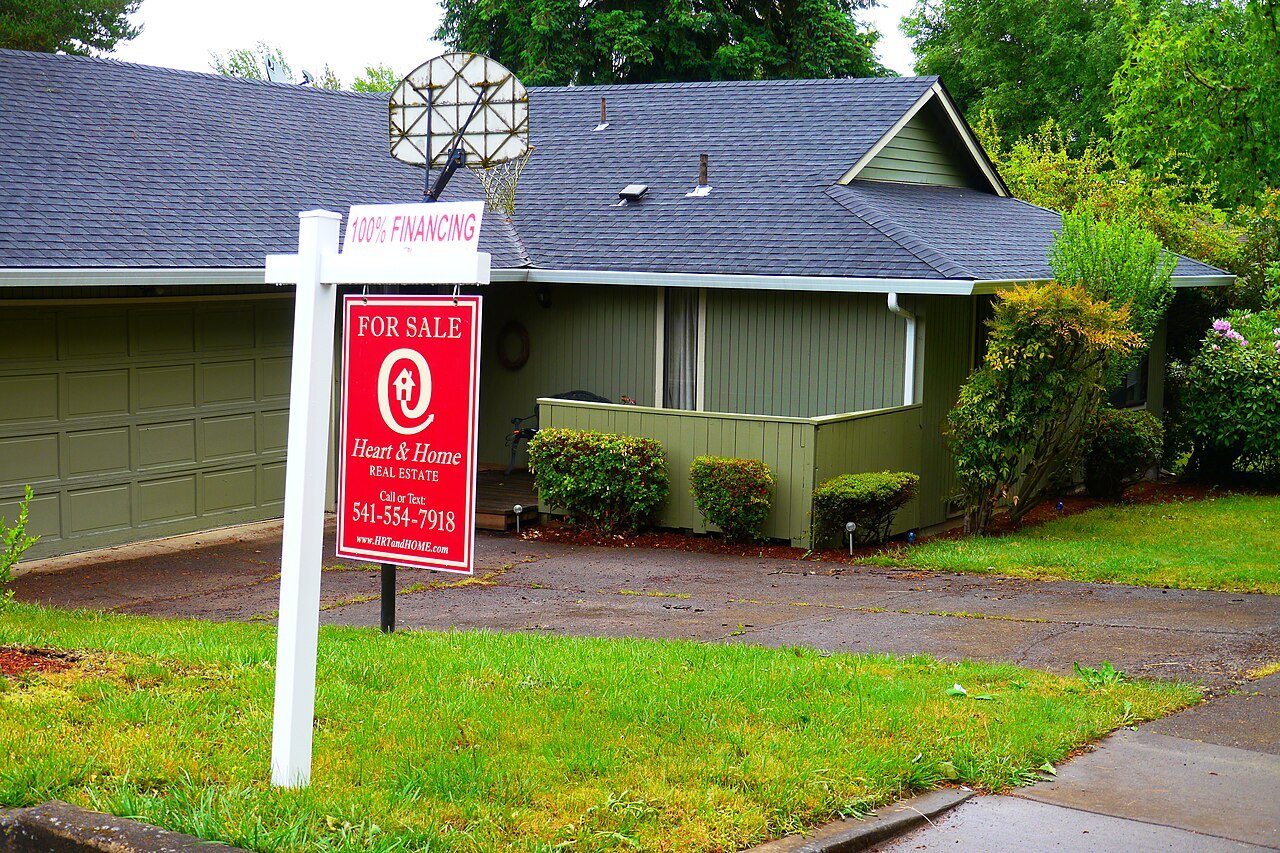
Americans bought new single-family homes in August at a seasonally adjusted annual rate of 684,000, the Census Bureau and the Department of Housing and Urban Development reported in their joint release of September 24, 2026. That is 6.4% above the revised July figure of 643,000 and comfortably ahead of the roughly 615,000 that forecasters had expected.
It is also 2.0% below the 698,000 rate recorded in August 2025.
The number comes with a wide margin
The headline gain is less solid than it looks. The Census Bureau publishes a confidence interval with each estimate, and the one attached to the monthly change is ±19.5%. Because that range comfortably includes zero, the agency's own standard does not allow the conclusion that sales actually rose between July and August. The same is true of the year-over-year comparison, whose interval is ±15.7%.
This is a routine feature of the new-home sales series, which is built on a relatively small sample and is revised often. It is worth keeping in view whenever a single month is presented as a turn in the market.
Prices are the clearer signal
The price figures move in one direction and move further:
- Median sales price: $393,700, up 0.4% from July but down 5.8% from August 2025.
- Average sales price: $478,700, down 9.1% from July and down 8.8% from a year earlier.
The gap between the two tells its own story. An average falling much faster than the median points to weakness concentrated at the expensive end of the market, where fewer high-priced sales pull the average down without moving the midpoint much.
Builders are still working through stock
There were about 483,000 new homes for sale at the end of August, essentially unchanged from July. At the current sales pace that is 8.5 months of supply, down from 9.0 months in July but still well above the four-to-six months usually treated as balanced.
The composition matters as much as the total. In the breakdown published by the housing analyst Calculated Risk, roughly 113,000 of those homes were completed and standing empty, 256,000 were under construction, and 114,000 had not been started at all — the highest figure on record for that last category.
Finished, unsold houses are the expensive kind of inventory to hold, and they are the reason builders have leaned on price cuts and incentives rather than slowing construction outright. The record number of unstarted homes suggests the opposite instinct is also at work: permits are being taken out, and ground is not being broken.
The wider picture
The housing numbers land in the same week as a reading on consumer confidence at its weakest since 2014, and with Federal Reserve officials signaling that another rate increase before the end of the year remains on the table after the September 16 decision that lifted the target range to 3.75%–4%. Mortgage rates track those expectations closely, and they are the single biggest determinant of whether August's pace holds.
Reporting from the U.S. Census Bureau and the Department of Housing and Urban Development joint release of September 24, 2026, and Calculated Risk.