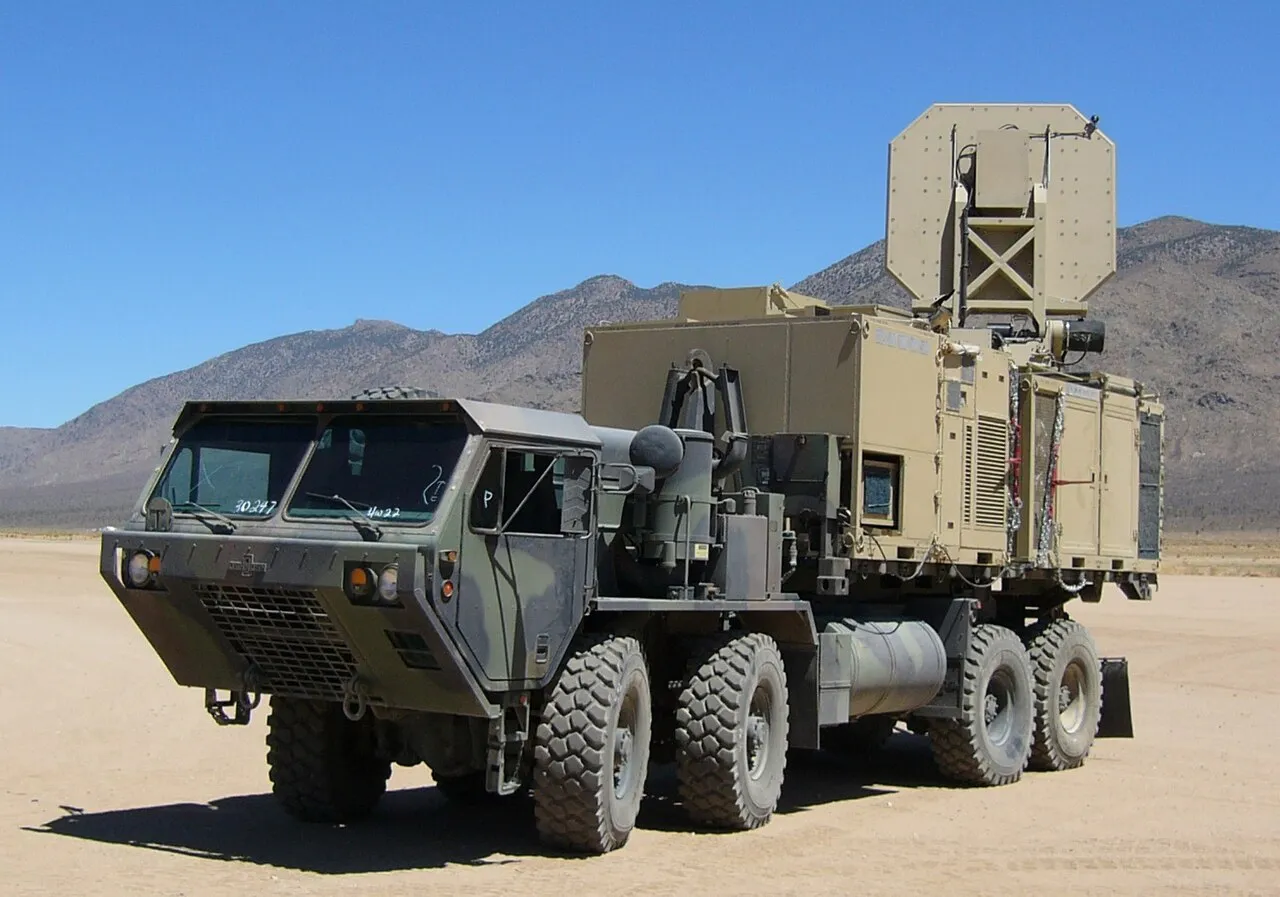
Defense Secretary Pete Hegseth has approved a temporary, seven-month loan of one Active Denial System — the directed-energy weapon known inside the military as the "heat ray" — to the Department of Homeland Security, which may test it for possible use at the U.S.-Mexico border.
Hegseth signed the memo in September, and CNN obtained and reported it on Wednesday, October 21, 2026. The loan runs seven months from September. The memo leaves responsibility for operating the system, and for writing the tactics, techniques and procedures governing its use, entirely with DHS. Approval to test is not a decision to deploy: it is not clear whether the agency will put the weapon on the border at all.
What the weapon does
The Active Denial System fires an invisible beam of millimeter-wave energy a little over half a mile — up to roughly 1,000 meters. The beam passes through thick clothing but not through walls, and it heats only the outermost layer of skin, producing a burning sensation that officials have compared to opening a hot oven. The sensation stops when the target steps out of the beam, though tingling or tenderness can last 10 to 15 minutes.
The Pentagon classifies the system as nonlethal. A 2008 account in Military Trader described the beam as raising the temperature of water molecules in the skin to about 130°F without burning it, likening the feeling to a hot light bulb pressed against the skin. Two injuries are documented in the program's history: a 1999 laboratory accident that left a blister, and a 2007 training exercise in which an airman was overexposed and later recovered fully.
Not the first attempt
The weapon has been proposed for border work before and turned down. It went to Afghanistan with U.S. forces in 2010 and came home without being used in combat. Officials weighed using it in American cities during the unrest of 2020. In 2018, Border Patrol officials considered deploying it against migrants, and the homeland security secretary at the time, Kirstjen Nielsen, rejected the idea. A smaller commercial version, Raytheon's Silent Guardian, was installed at the Pitchess Detention Center in Los Angeles County in 2014.
What officials and critics say
A Customs and Border Protection spokesperson said the agency continually evaluates new technologies that could save lives and improve its operational effectiveness and security. Patrick Weaver, Hegseth's deputy chief of staff, described the border as a military installation and a "battle lab" for new systems, adding: "The border is locked down!"
The objections run along two lines. The first is operational. A former CBP official questioned the legality and the safety of using a pain weapon to disperse crowds or to target people crossing water, where the reflex to move away from the beam could mean drowning, and asked whether the cost, the training and the policy work are worth it. The second is categorical: a former DHS official said the underlying problem is treating immigrants and citizens as enemy combatants, and that inhumane treatment tends to be rejected once it is visible.
Jared Keller, who writes the Laser Wars newsletter on directed-energy weapons, said the system raises ethical and legal questions precisely because it is designed to cause pain. "Personally, I simply would not do this," he said.
Reporting from Axios and from CNN's account of the memo, as carried by Yahoo News.