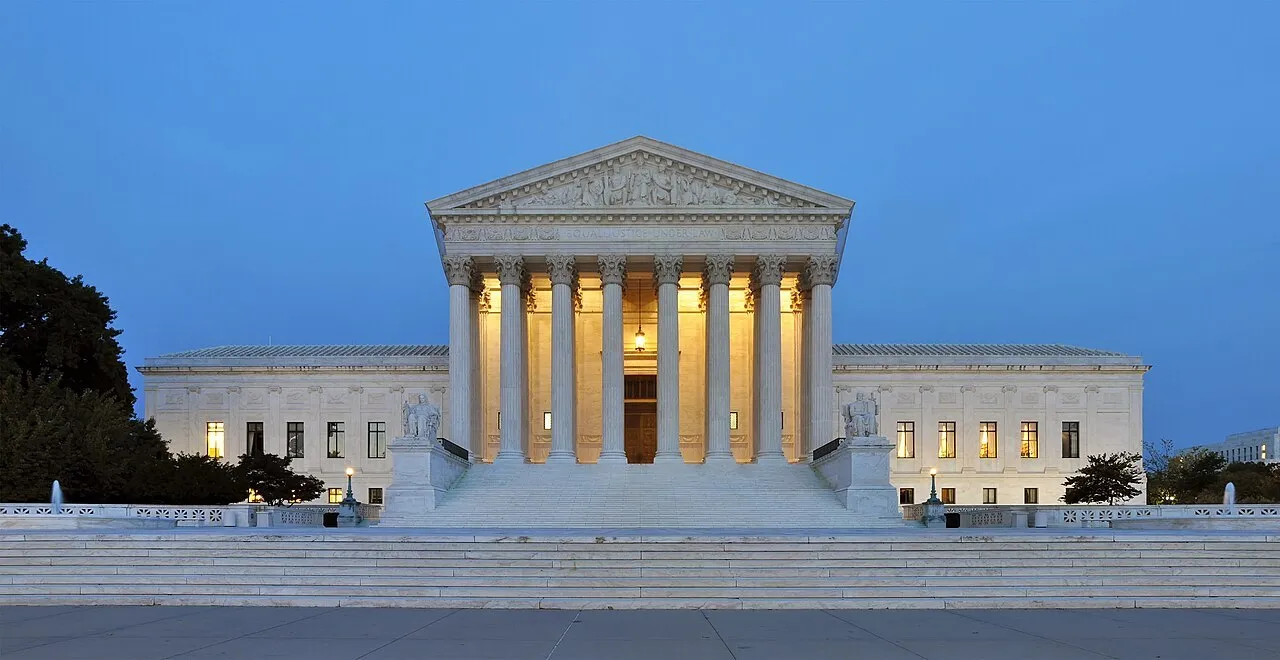
The Supreme Court on Wednesday, October 21, declined to let the Trump administration enforce a Bureau of Prisons policy that would end gender-affirming surgeries and phase out hormone therapy for transgender federal inmates, leaving a lower court's injunction in place while the litigation continues.
The vote was 7-2. Justices Clarence Thomas and Samuel Alito would have granted the stay, and neither wrote to explain why.
The order was unsigned and gave no reasoning. It reads, in full: "The application for stay presented to The Chief Justice and by him referred to the Court is denied."
What the policy would have done
The Bureau of Prisons issued Program Statement 5260.01 in February, following Executive Order 14168, which the president signed on his first day in office in 2025 and which directs the federal government to recognize only two sexes.
The policy would halt gender-affirming surgeries, taper off hormone treatment for inmates already receiving it, and end social accommodations such as makeup and wigs. Mental health treatment would continue to be offered. The Bureau of Prisons has provided hormone therapy to inmates since at least 1992.
The injunction the Court left standing
In June, U.S. District Judge Royce Lamberth of Washington, D.C., a Reagan appointee, blocked the policy, writing that it "amounts to arbitrary and capricious agency action." He ordered the bureau to keep providing hormone treatment and related accommodations to inmates diagnosed with gender dysphoria, including those diagnosed later. A panel of the D.C. Circuit subsequently declined to pause his order.
The suit was brought by three transgender inmates represented by the American Civil Liberties Union and the Transgender Law Center. The lead plaintiff is Alishea Sophia Kingdom, which is how the case carries her name.
The class covers roughly 1,000 inmates with a gender dysphoria diagnosis, about 800 of whom the ACLU believes have been prescribed hormone therapy. The organization estimates more than 2,000 transgender people are in Bureau of Prisons custody overall; the bureau stopped publishing data on transgender inmates after 2025, so no current official figure exists.
The arguments
Solicitor General D. John Sauer filed the emergency application, arguing that Lamberth's ruling denied prison administrators the "substantial deference they are due" and substituted a judge's view for their expert judgment on prison security. "The court's order causes irreparable harm to the government and to the public," he wrote.
The inmates' lawyers countered that the government suffers no injury from continuing treatments its own medical staff recommend, while their clients would face serious harm if the treatment stopped.
"This is a critical ruling for our clients and all transgender people in Bureau of Prisons custody," said Li Nowlin-Sohl, a senior staff attorney at the ACLU.
What it does and does not settle
An order on an emergency application is not a ruling on the merits. The Court decided only that the policy may not take effect while the case is litigated, and the justices gave no hint of how they would ultimately rule.
Still, the split is worth noting. On a bench where the administration has often found a sympathetic majority in emergency applications, seven justices — including the three appointed by this president — declined to disturb a district judge's finding that the agency acted arbitrarily.
Reporting from NTD, Townhall and The Daily Signal.