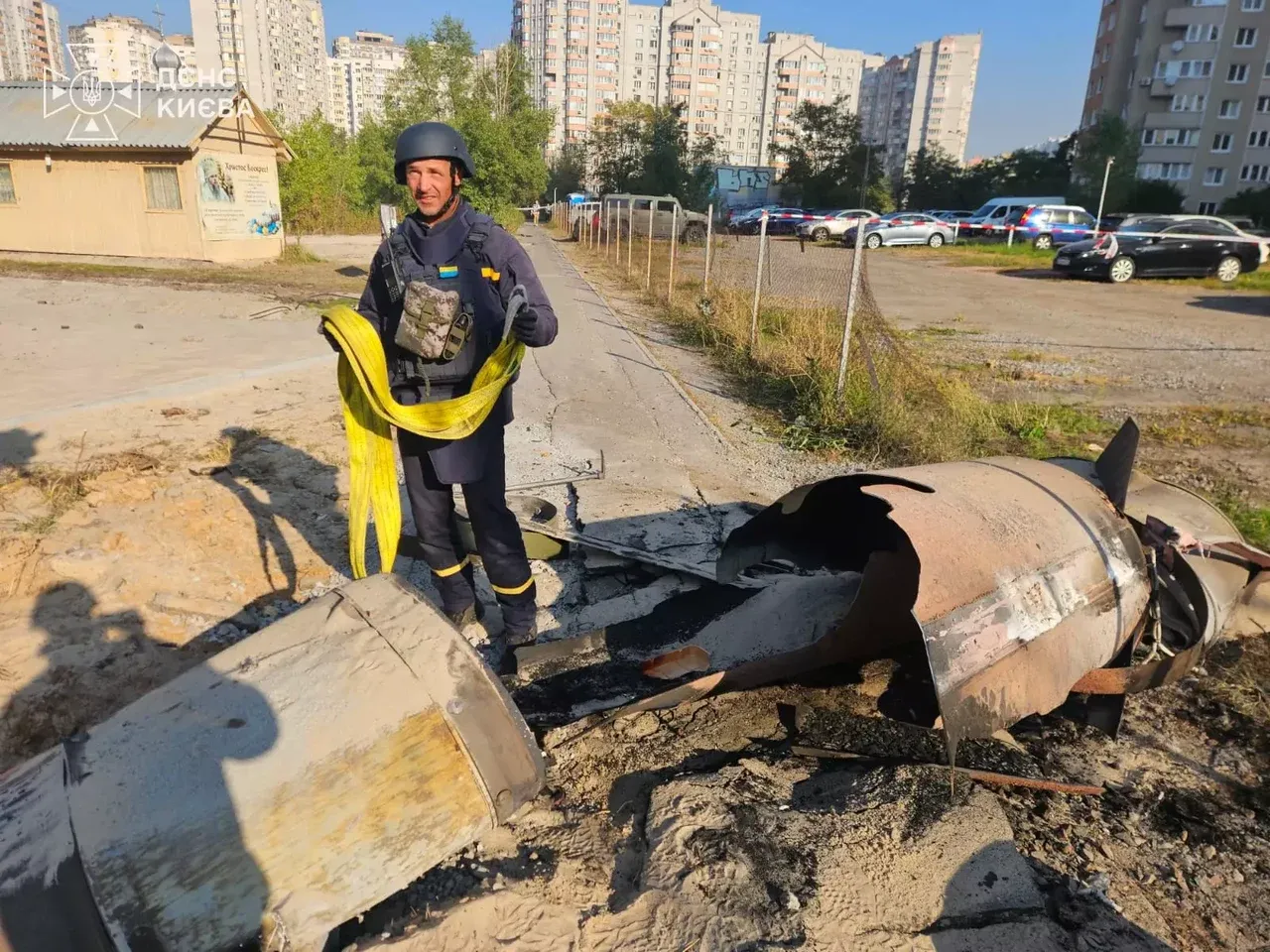
Russia fired 39 ballistic missiles and more than 120 drones at Ukraine's energy and critical infrastructure in the early hours of Wednesday, in an attack concentrated on Kyiv, the surrounding region and Kharkiv. The figures came from President Volodymyr Zelensky, who said it was the third consecutive night of strikes on the country's power grid and its oil and gas facilities.
Five people were killed in Kyiv and 36 injured, according to the capital's police. The toll rose through the day: by morning, the State Emergency Service had counted three dead and 21 injured.
Two districts hit
In the Desnianskyi district, a nine-storey residential block was struck and caught fire across roughly 400 square metres. Two people died there, and rescuers pulled 16 residents out of the building. Four of those hospitalised were in serious condition, including an eight-year-old child. In the Holosiivskyi district, a non-residential building was hit, leaving one dead and one injured. Emergency-service psychologists assisted 110 people at the attack sites.
Kyiv's three plants
The declared target was heat and electricity generation. Zelensky said a ballistic missile hit CHP-4, one of the capital's main energy installations. Prime Minister Serhii Koretskyi said all three of Kyiv's combined heat and power plants had been struck. More than 600,000 people lost electricity, according to the Ukrainian president, and DTEK, the country's largest private energy provider, imposed emergency cuts in several districts of the capital.
Russia's Defence Ministry confirmed the attack and said it had hit six power plants in Kyiv, the Kyiv region and Kharkiv, as well as a data centre that Moscow said was used to gather intelligence on Russian forces. Kyiv Mayor Vitali Klitschko described the operation as "a massive ballistic missile strike" on energy facilities in the city and the surrounding region.
Thirty-nine ballistic missiles in a single night is a high figure even by the standards of the campaign against Ukrainian infrastructure, and it comes at the start of the heating season — when combined heat and power plants supply cities with electricity and heating at the same time.
The ceasefire the Kremlin never confirmed
The attack came three days after US President Donald Trump announced, on Sunday 11 October, that Russia and Ukraine had agreed to an "energy ceasefire" — a mutual halt to strikes on energy installations. Zelensky confirmed he had agreed to suspend Ukraine's campaign against Russian refineries; the last reported strike of that kind was the previous Friday.
The Kremlin has never confirmed that Moscow signed up. On Monday 13 October, a spokesman said only that contacts on the matter were continuing and that there were "no changes so far".
"Russia has squandered the opportunity for de-escalation and has clearly chosen to continue its insane war of annihilation," Zelensky wrote on social media, asking "America and EVERYONE in the world who does not turn a blind eye to reality" to respond "forcefully".
No early warning
Zelensky again complained about the absence of advance warning from Western allies. He said Ukraine detected the missiles only as they were closing in on Kyiv. "Once again, no early warning from our partners," he wrote.
The same night, Serhii Beskrestnov, technology adviser to the Ukrainian presidency, said on Telegram that SpaceX had restricted Starlink terminals, preventing military-grade units from operating above 160 km/h and disrupting missions. "Obviously, this action cannot be a coincidence and is connected to the current political situation," he said.
On the Russian side, the Defence Ministry said it had downed 902 Ukrainian drones overnight, 180 of them near Moscow; Mayor Sergei Sobyanin put the number heading for the Moscow region at 493. Saratov Governor Roman Busargin reported one death and damage to residential buildings. None of those figures has been independently verified.
Zelensky was expected in London on Wednesday to meet British Prime Minister Andy Burnham, who said the United Kingdom is with Ukraine "for as long as it takes". The Ukrainian president may travel on to Brussels later this week for a European Union summit.
With information from Al Jazeera, the Associated Press, Meduza and Euronews.