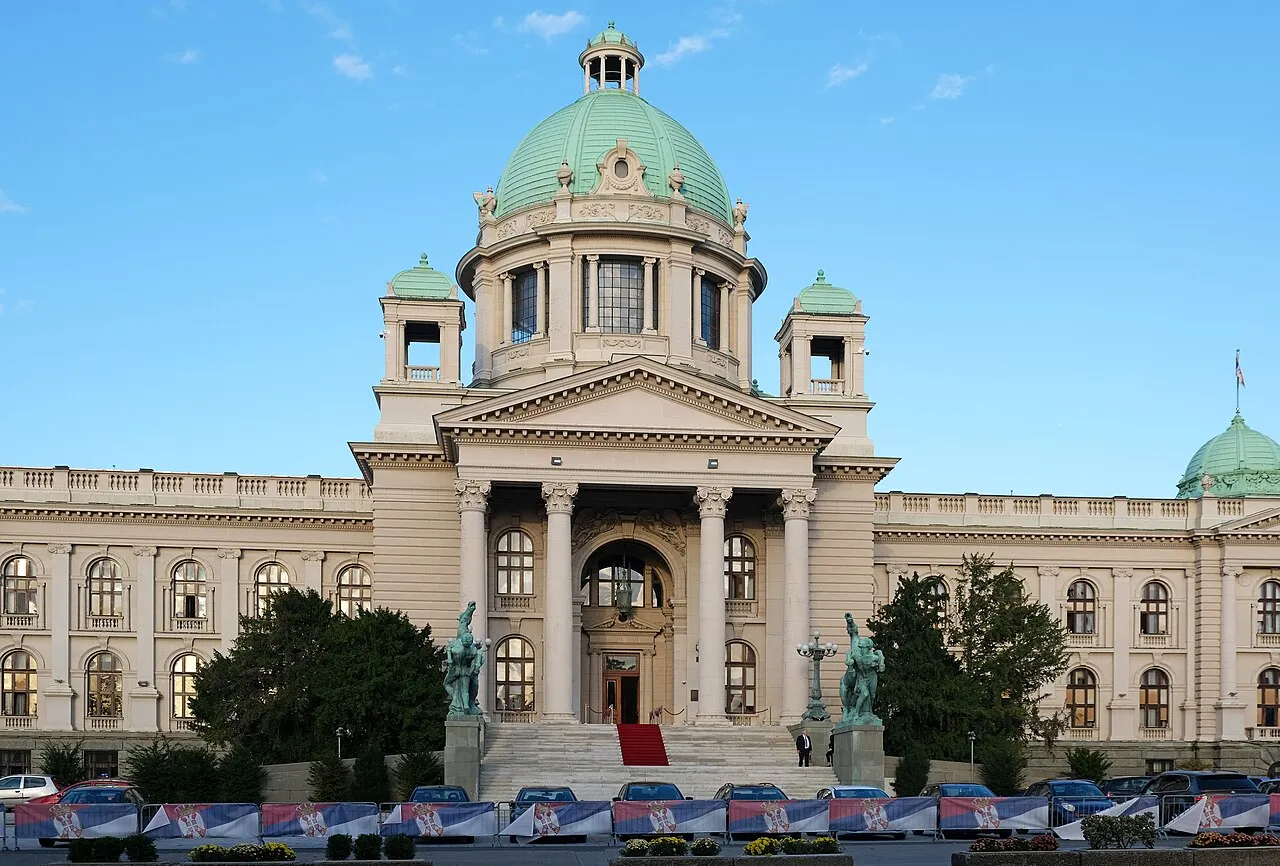
Aleksandar Vučić admitted on Sunday night that he had lost Serbia's snap parliamentary election — the vote he himself called in September, after almost two years of student protests. "We still do not have final results, but on the basis of a sample, it is clear that we have lost these elections," he said in a short address to the nation.
The defeat closes the 14-year cycle in which Vučić and the Serbian Progressive Party (SNS) organised the country's politics. Taking over parliament is a list that did not exist two years ago: the Student List, made up of 250 mostly little-known names — university professors, doctors, actors, farmers — and led by cardiologist Ilija Srdanović.
What the ballot boxes returned
Serbia's parliament has 250 seats, and 126 make a majority. Eighteen lists ran, before an electorate of about 6.5 million people.
By the sample count Vučić cited, the Student List would take somewhere between 135 and 140 seats, and the SNS about 105. He also mentioned three seats for the Alliance of Vojvodina Hungarians (SVM), one for Albanian parties and probably one for the SDA, and said no other party had entered parliament. In votes, by the same sample, the students would have close to 2.2 million against roughly 1.72 million for the SNS.
A projection by the Cesid-IPSPS institute, released the same night, came to similar numbers: 138 seats for the Student List and 104 for the SNS, with the rest going to ethnic minority parties.
Turnout was the day's most unusual figure. The Republic Electoral Commission recorded 64.9% at 6pm local time — already the highest level since Yugoslavia broke up in 1992 — and, according to Australia's ABC, the final number came close to 70%.
The vote did not pass without friction. The monitoring organisation CRTA said it had observed pressure on voters or polling staff at almost a third of the 500 stations it watched, as well as failures to protect ballot secrecy. Cesid said it had received about 260 reports of possible irregularities by 5pm, including ballot photography, group voting and problems with identity checks.
From a collapsed canopy to a parliamentary majority
The movement now set to govern was born of an accident. In November 2024, the canopy of the Novi Sad railway station collapsed and killed 16 people. What started as a demand for accountability over the works became, through 2025 and 2026, a broader agenda: corruption, the capture of institutions and press freedom — accusations Vučić and the SNS have always denied.
Vučić, who governed with the public backing of Russian President Vladimir Putin, treated the protests as a foreign-led attempt to unseat him. According to Al Jazeera and Euronews, he left the presidency in September to run for prime minister in the snap election. The SNS has been in power since 2012.
"Tonight we celebrate victory. Tomorrow we build the future," said Radomir Šajčić, a University of Belgrade professor who speaks for the movement.
What comes next
Final results have not yet been certified, and no timetable has been announced for forming a government. Nor is it settled who will be prime minister — the list presented itself without a single candidate for the job.
European Commission President Ursula von der Leyen congratulated the Student List in a post on X and said the European Union stands ready to support reforms on the rule of law, media freedom and the fight against corruption, and to advance Serbia's candidacy for the bloc.
The domestic agenda the students campaigned on is concentrated on corruption and education. On foreign policy they were more reticent — and that is where the hard part of the arithmetic lies: Serbia has China as a major investor, Russia as a traditional ally and its main gas supplier, and the European Union as its largest trading partner. A government with no administrative experience will soon have to decide what to do about Kosovo, energy, public finances and the relationship with Moscow itself.
With information from Euronews, Al Jazeera and ABC (Australia).