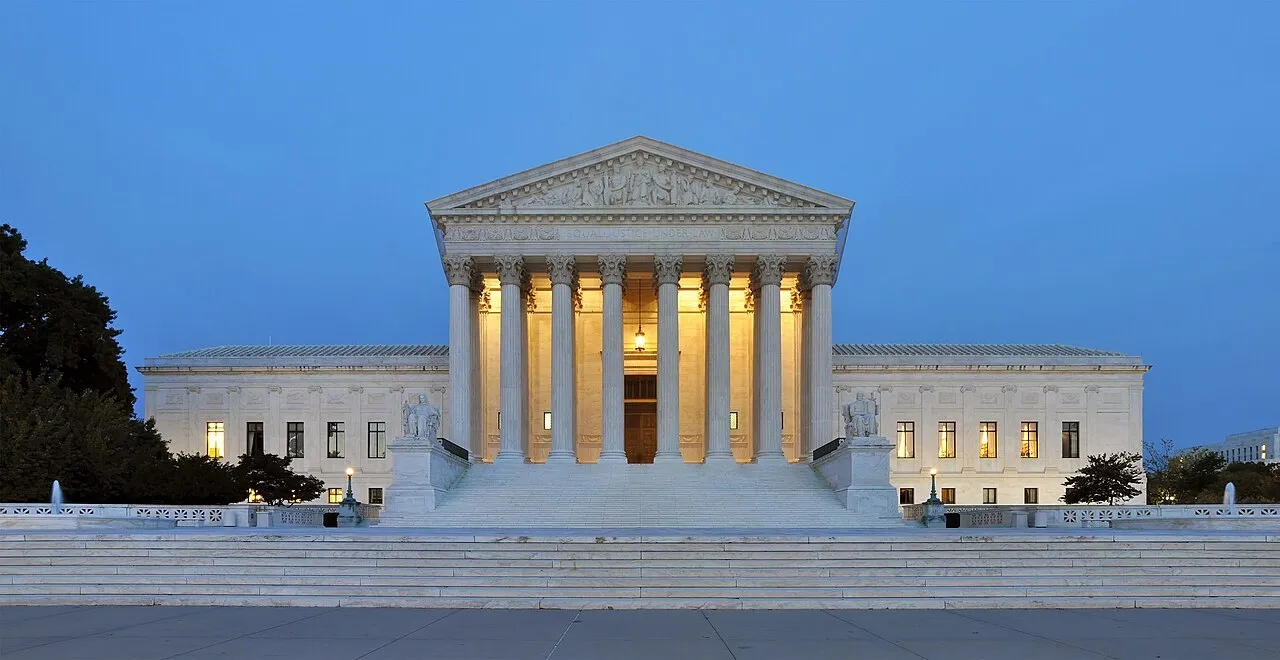
The Supreme Court heard argument on November 3 in St. Mary Catholic Parish v. Roy, No. 25-581, a case that asks whether Colorado may condition public preschool money on a promise to admit every eligible child — including children who are LGBTQ and children who have LGBTQ parents.
The challenge was brought by the Archdiocese of Denver, which oversees 34 Catholic preschools, together with two parishes that run preschools of their own, among them St. Mary Catholic Parish, and parents of preschool-age children. They are represented by Amanda Dixon of the Becket Fund for Religious Liberty. The Trump administration filed in support of them. It was the only case argued that day.
What the program requires
Colorado voters approved funding for universal preschool in a 2020 ballot measure, intended to make preschool widely available free of charge to every 4-year-old in the state. The program reimburses families for 15 hours of preschool a week, worth more than $6,000 a year, and runs on a mixed-delivery model: public schools, private centers, secular providers and faith-based providers all take part, provided each signs a state contract and meets quality standards. Colorado estimates about 40,000 eligible children and nearly 2,000 participating providers.
The statute requires a participating preschool to give eligible children an "equal opportunity to enroll" regardless of race, ethnicity, religious affiliation, sexual orientation, gender identity, income or disability. The state turned down the archdiocese's request for a religious exemption, and the current regulations no longer allow faith-based providers to limit enrollment to members of their own congregations. None of the archdiocese's preschools are in the program.
The free-exercise argument
The suit, filed in August 2023, argues that the exclusion violates the Free Exercise Clause of the First Amendment. Its central precedent is the Court's 2022 decision in Carson v. Makin, which held that Maine could not shut religious schools out of a tuition-assistance program otherwise open to private schools.
The plaintiffs also argue that Colorado treats religious conduct worse than secular conduct: the state grants enrollment preferences for low-income families and for children with disabilities, but refuses one on religious grounds, and it has allowed more than 1,000 other preschools exceptions in order to serve 4-year-olds in particular communities. On that reading the rule would face strict scrutiny, the hardest standard in American constitutional law for a government to satisfy.
What is at stake for the families is concrete. Lisa and Daniel Sheley put their forgone reimbursements at roughly $24,000, and Erika Nagle says the program would have saved her family about $18,000.
What the lower courts said
A federal district court ruled for Colorado, finding the sexual orientation and gender identity provisions neutral and generally applicable — the finding that, where it holds, lets a law stand without facing strict scrutiny. The U.S. Court of Appeals for the 10th Circuit affirmed.
Colorado's answer is that religious providers remain free to teach and to build curricula according to their faith, and are asked only to follow the same equal-opportunity rule as everyone else in the program. What the archdiocese seeks, the state argues, is public money on terms no other participating preschool receives, together with permission to turn families away on the basis of protected characteristics.
The case opens a November session unusually heavy with disputes over religion and schools. A decision is expected before the term ends next summer.
Reporting from the Supreme Court of the United States, CBS News and SCOTUSblog.