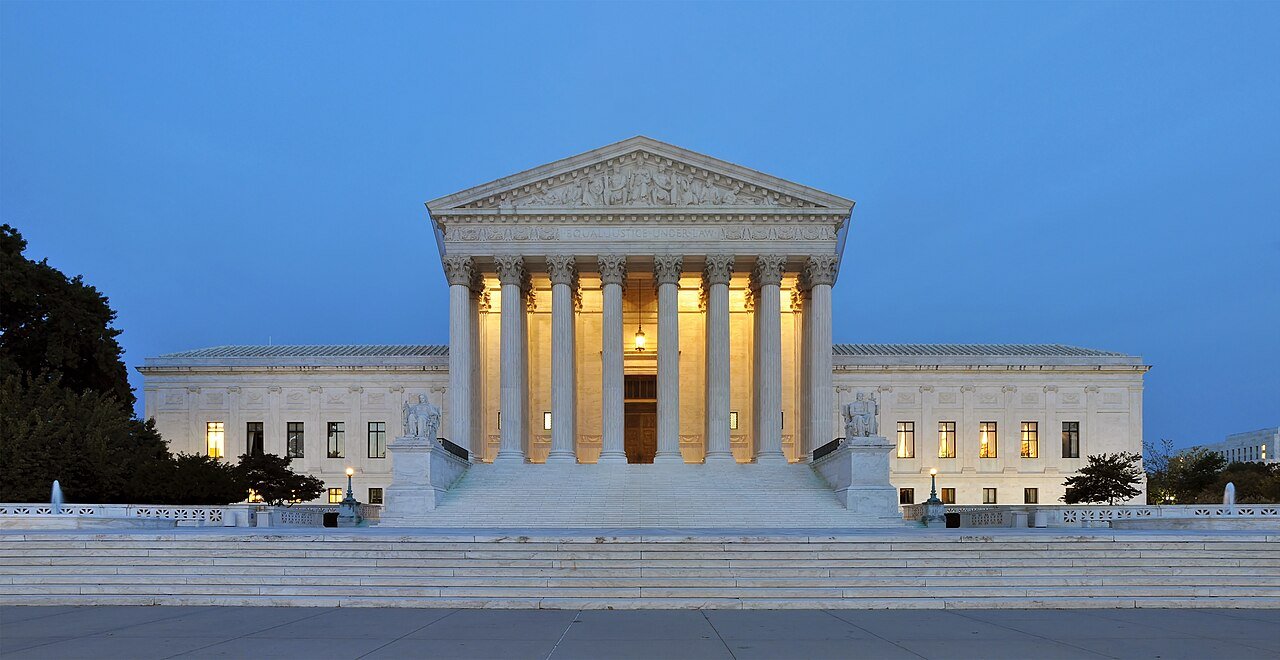
The Supreme Court on Friday cleared the way for the Trump administration to give states access to a rebuilt federal citizenship database and to let election officials run their voter rolls through it, five weeks before the midterm elections.
The unsigned emergency order lifts an injunction that a federal district judge issued in June against the expanded version of SAVE — the Systematic Alien Verification for Entitlements system. Three justices dissented publicly: Ketanji Brown Jackson, who wrote the dissent, joined by Sonia Sotomayor and Elena Kagan. CBS News reported the vote as 6-3. The case is docketed as 26A308 and pits the League of Women Voters against the Department of Homeland Security.
What the database is, and what changed
Congress created SAVE in 1986 as an immigration tool: a way for agencies to check, one person at a time, whether someone applying for a public benefit was in the country legally. It answers a narrow question about a named individual at a single point in time.
The version at issue is much larger. In 2025 the administration folded Social Security Administration records into the system and opened it to bulk searches, so that a state could submit a voter file and get back a verdict on each name. Election offices in a number of states have already asked for it.
Under the order, states may run searches, but a separate federal rule still bars systematic removals from the rolls within 90 days of an election.
The accuracy fight
The dispute is less about whether states may verify citizenship than about whether this particular system gets the answer right.
In Travis County, Texas, officials who reviewed the names SAVE flagged as noncitizens found that between 10% and 21% of them were in fact U.S. citizens — most often naturalized citizens whose records had not caught up with them. Georgia's own audit turned up 20 noncitizens among 8.2 million registered voters. Federal investigations nationwide have produced about 160 arrests.
The League of Women Voters and the Electronic Privacy Information Center, which filed suit in September 2025, argue the rebuilt system violates the Social Security Act, the Privacy Act and administrative law. Their lawyer told the court the government had "recklessly created an error-laden master citizenship database that endangers millions of Americans' privacy."
The two opinions
The majority wrote that the challengers' claims likely lack merit, and that Congress had "separately and expressly authorized DHS to request and receive information relating to citizenship." The order also faulted the ruling below for having kept the government from the tool it judged best: "The order below prevents the Federal Government from using the program it believes is best suited to the task."
Jackson's dissent turned the balance around. Weighing an error against a delay, she wrote that "the harm caused by burdening or disenfranchising even a few lawful voters outweighs the nonexistent harm" of leaving the injunction in place while the case is heard.
How it got here
District Judge Sparkle Sooknanan blocked the expansion on June 22, finding that the administration had "knowingly trampled on the privacy rights of American citizens in a manner that threatens the sacred right to vote." On September 4 a divided panel of the D.C. Circuit refused, 2-1, to pause her order. The Justice Department went to the Supreme Court, calling the injunction indefensible and arguing the plaintiffs had no standing to sue at all; the majority rejected the standing argument but sided with the government on the merits.
Friday's order is temporary in form and decisive in timing. It resolves nothing finally — the litigation continues — but it settles which rules govern the rolls for an election that is already under way in early-voting states.
Reporting from SCOTUSblog, CBS News, NPR, Roll Call, Ballotpedia and OPB.