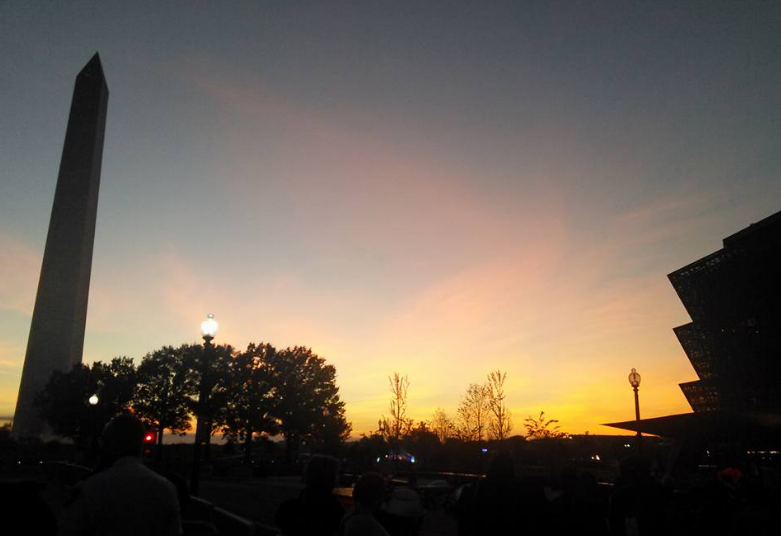
The National Museum of African American History and Culture opened on the National Mall on September 24, 2016, and marked its tenth anniversary on the same date this year. In that decade it has drawn nearly 14 million visitors from 200 countries and hosted more than 26,000 school groups — numbers that make it one of the most visited museums the Smithsonian has ever built.
It reached the anniversary as one of eight Smithsonian museums under review by the White House.
Asked what the review has cost the galleries, Shanita Brackett, the museum's acting director, was blunt: "We have not changed any exhibitions. We haven't changed our language." Nothing, she said, has changed.
The order
The review rests on an executive order titled "Restoring Truth and Sanity to American History," signed in April 2025, which directs federal officials to keep Smithsonian money away from exhibits the administration considers to degrade shared American values or to divide Americans by race.
Eight museums were named: the National Museum of American History, the National Museum of Natural History, the National Museum of African American History and Culture, the National Museum of the American Indian, the National Air and Space Museum, the Smithsonian American Art Museum, the National Portrait Gallery, and the Hirshhorn Museum and Sculpture Garden. The White House set January 13, 2026, as the deadline for the institution to hand over documents about its exhibitions. Lonnie G. Bunch III, the Smithsonian's secretary, wrote at the time that the institution was "committed to being transparent and open" in complying.
Beyond the Smithsonian, the Interior Department has removed dozens of displays at national monuments dealing with social activists, people of color, women and LGBTQ history. The administration also ordered signs placed on some Smithsonian buildings warning visitors of what it called an inaccurate portrait of American history.
Why the review has teeth
The Smithsonian received $1.09 billion in federal appropriations in 2025, roughly 62% of its annual budget. That share is the leverage. The administration proposed cutting $131.2 million; the spending measure in force holds funding at existing levels and sets aside $10 million each for the planned National Museum of the American Latino and the American Women's History Museum.
A change at the top
Bunch, who spent years assembling the museum's collection as its founding director before becoming secretary of the Smithsonian, announced his retirement earlier in September. Brackett runs the museum on an acting basis. Its governing council includes lawmakers from both parties, private donors and Chief Justice John Roberts, who sits on the Smithsonian's board as chancellor.
Among the objects that made the museum's reputation is the casket in which Emmett Till was buried in 1955, donated by his family. The Greensboro lunch counter, another landmark of the civil rights movement, is on display next door at the National Museum of American History.
Reporting from The Associated Press via ABC News and Artnet News.