The Commerce Department is handing money to fusion energy companies and taking shares in return. Two letters of intent signed last week — $175 million for Helion Energy and $85 million for Commonwealth Fusion Systems — account for $260 million of a package of up to $389 million aimed at power semiconductors under the CHIPS Act.
Neither award is for fusion power itself. Both are for the chips that fusion machines need, and that a great many other things need too.
Helion: $175 million, and a stake the same size
Helion, based in Everett, Washington, signed its letter of intent with the Commerce Department's CHIPS Research and Development Office for up to $175 million over a three-year programme. The company is putting in $50 million of its own, for a combined $225 million.
The unusual part is the structure. If the letter becomes a definitive award agreement, Commerce would receive a $175 million non-voting interest in Helion, valued at the company's most recent Series G preferred stock valuation. The taxpayer, in other words, would be a shareholder rather than a grant-maker.
The money is split. More than $100 million would go to semiconductor and advanced packaging research, development and manufacturing in Everett, expected to add more than 100 jobs — materials scientists, semiconductor engineers, technicians and assemblers. About $80 million would fund tooling, design and process development with GlobalFoundries, which has operations in Vermont and New York. The remainder goes to packaging and manufacturing automation.
What Helion wants out of it is high-voltage semiconductors. "Building fusion plants at scale requires accelerating semiconductor technologies," chief executive David Kirtley said, describing work that "builds out the high-voltage semiconductor supply chain here in the United States."
Commerce Secretary Howard Lutnick framed it in the administration's own terms: "This investment expands domestic research, secures critical supply chains, and creates high-paying American jobs."
Helion says it was the first private fusion company to demonstrate deuterium-tritium fusion and to reach 150 million degrees Celsius. It raised a $500 million Series G and is building Orion, its first planned fusion power plant.
Commonwealth: $85 million, and a stake of undisclosed size
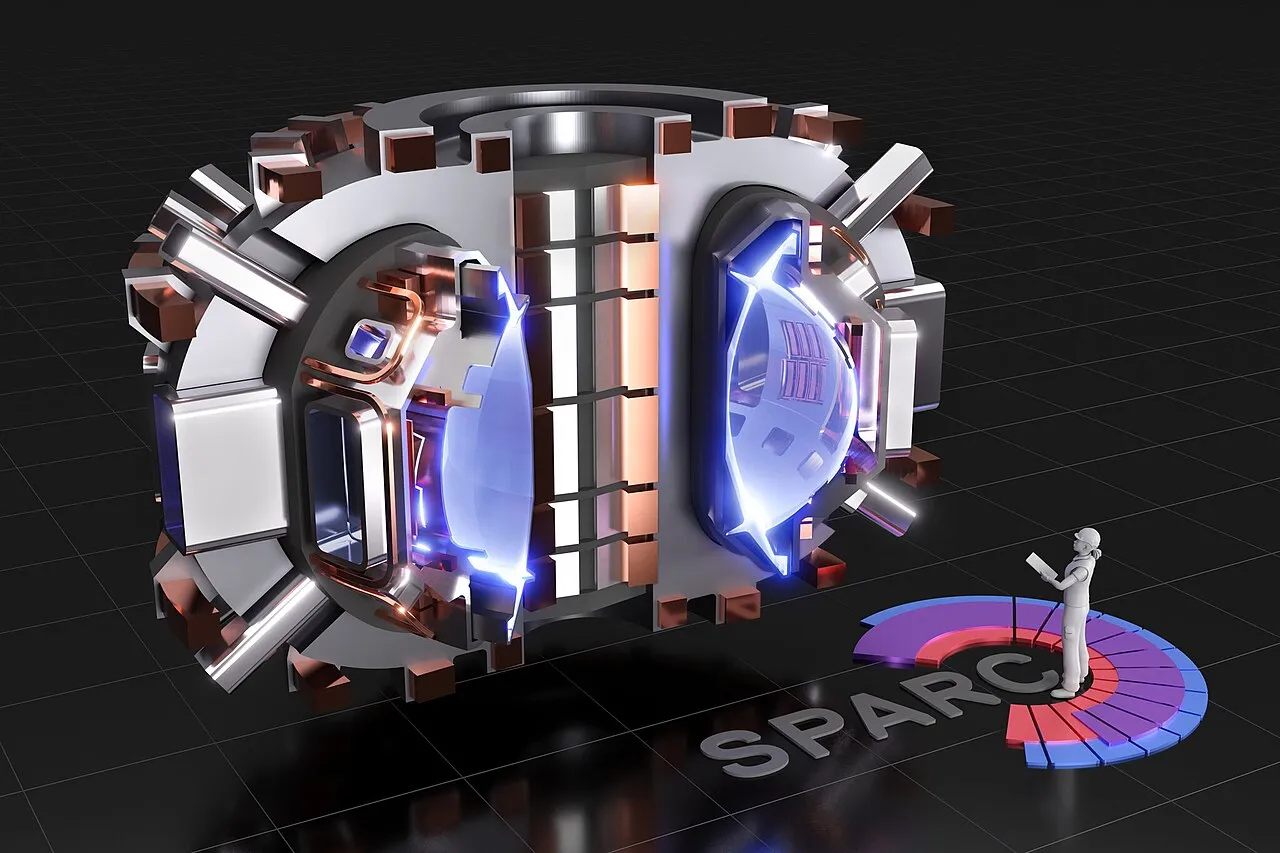
Commonwealth Fusion Systems, the MIT spinoff building the SPARC tokamak in Massachusetts, signed for $85 million on the same day. That award also gives the government a stake in the company; the size has not been disclosed.
The work covers silicon carbide power electronics, next-generation radio-frequency power generators used to heat fusion fuel, radiation-hardened electronics for faster reactor control and longer equipment life, and adapting AI hardware such as GPUs and TPUs for use in power plants.
"Ultimately, that means a more capable, economical power plant and a stronger U.S. supply chain to build it," said Brandon Sorbom, the company's co-founder and chief science officer.
The trade being made
Equity-for-award is not how the CHIPS Act was originally sold. The 2022 law was written as subsidy: public money to pull semiconductor manufacturing back onto American soil, with conditions attached but not ownership. Converting awards into stakes changes what the government is buying — a claim on the upside if a company succeeds, and a position to defend if it does not.
For companies at Helion's and Commonwealth's stage, which are pre-revenue in their core business and valued almost entirely on what they might build, that trade is not costless. Neither is turning it down.
Reporting from GeekWire, The Everett Herald and TechCrunch.