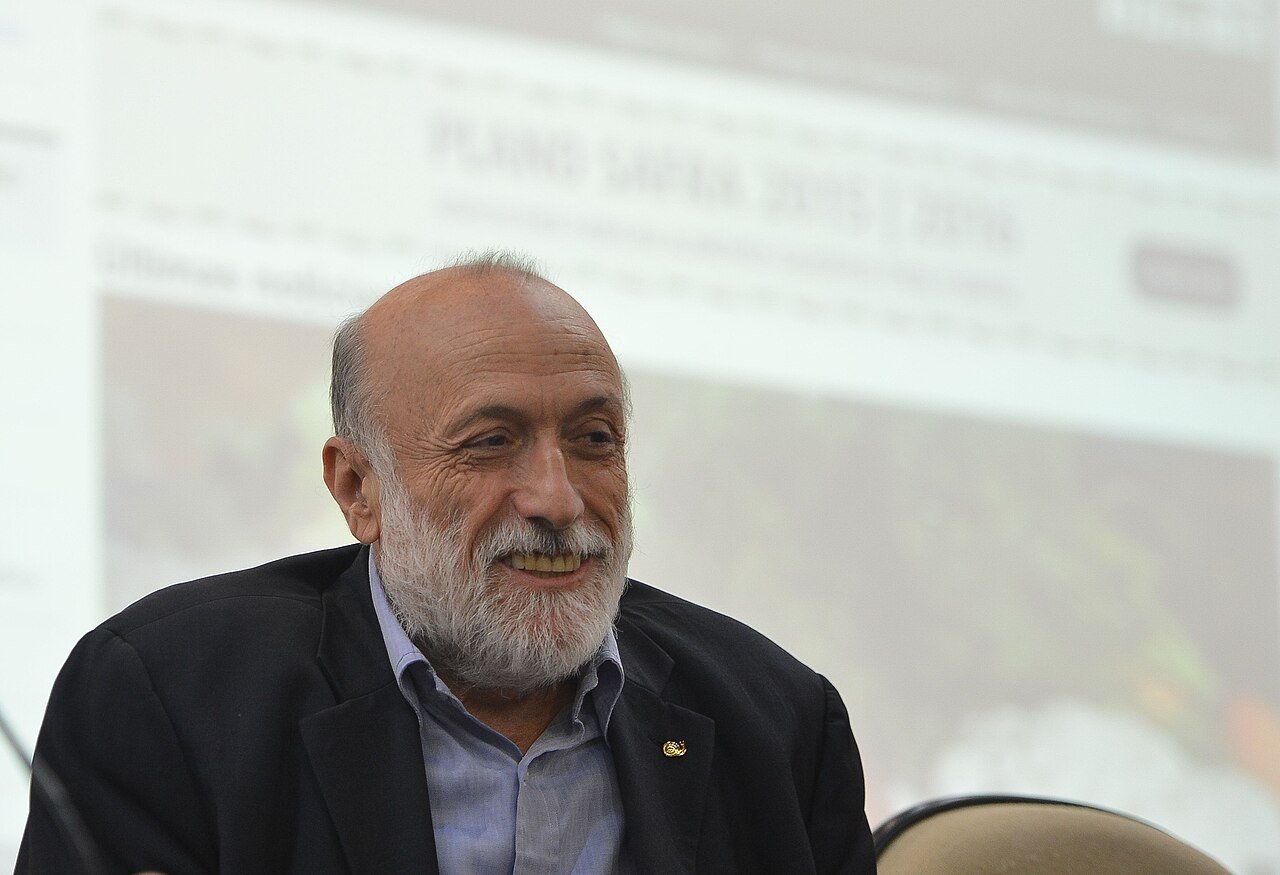
The 16th edition of Terra Madre Salone del Gusto opened on Thursday, 24 September, across the squares of Turin's historic centre, and runs until Sunday the 27th. It is Slow Food's largest global gathering — and the first held without the man who invented both.
Carlo Petrini died on 21 May this year, aged 76, in Bra, in Piedmont, the town where he was born and where he founded the movement. He had prostate cancer. He created Slow Food in 1986, as Arcigola, turned it into an international movement in 1989, invented Terra Madre in 2004 and, that same year, founded the University of Gastronomic Sciences.
This edition therefore carries two dates at once: Slow Food's 40th anniversary and the first collective farewell to the person who built it.
"Biodiversity. Be diversity"
The theme of this edition is an English wordplay, and it organises the programme around the diversity of plants, animals, foods, knowledge and cultures, treated as a resource for the generations to come.
In Slow Food's framing, defending biodiversity is also a political position: resistance to standardisation and monoculture. The association organises the event with the Piedmont Region and the city of Turin, with the backing of Italy's Ministry of Agriculture and of Ismea, the country's institute of services for the agricultural and food market. The attendance of President Sergio Mattarella was announced in the programme.
Forty voices for forty years
The commemorative strand is called Quaranta voci per quarant'anni: four days in which 40 guests — historians, cooks, activists and artists — discuss what has changed in the movement and in food systems over four decades.
Around it sits the gathering's usual structure: conferences, taste workshops, dinners by chefs alongside producers, educational activities in schools and a large marketplace with hundreds of Italian and foreign producers committed to protecting biodiversity. The run-up, named "Road to Terra Madre", involved events in Turin, across Piedmont and in 160 countries, organised by members and volunteers.
What Slow Food brings to the fair are the instruments it has built over the years: the Ark of Taste, a catalogue that now holds more than 6,500 products at risk of disappearing; the Presidia; community gardens; thematic networks devoted to beans, grains, rice and maize; and the Chefs' Alliance.
From a fight with fast food to 120 countries
It is worth recalling where this came from. Petrini rose to prominence in the 1980s by opposing the spread of fast food in Italy — in particular a McDonald's plan to open near the Spanish Steps in Rome. What began as a question of taste and of the pace of eating widened, over 40 years, into the protection of biodiversity, environmental and social sustainability and the valuing of farming communities, summed up in the formula that became the movement's hallmark: food that is good, clean and fair.
Slow Food now operates in more than 120 countries. For a sense of the scale of the gathering: the 2024 edition drew more than 3,300 delegates from 121 countries, 200 of them Indigenous, along with 700 exhibitors; the inaugural Terra Madre, in 2004, had brought together 5,000 delegates from 130 countries.
The 2026 edition is also the 46th Salone del Gusto, the Turin fair that predates Terra Madre and ended up merged with it. The decision to treat this one as the handing on of an inheritance — rather than as a nostalgic tribute — is explicit in the organisers' communications, which prefer to speak of Petrini's cultural legacy than of his absence.
With information from Slow Food, WineNews and Sky TG24.