The United Nations has stopped treating the 1.5°C target as something to be preserved and started treating it as something to be recovered. That shift in framing structures the Emissions Gap Report 2026, published on Wednesday by the UN Environment Programme (UNEP) under the subtitle The point of return: breaching the Paris Agreement's limit appears there as a given, and what the document calculates is the size and the length of that overshoot.
In the lowest-possible-overshoot scenario, peak warming would land between 1.7°C and 1.8°C around mid-century, returning to 1.5°C or below by 2100 — with roughly a 50% chance of that happening. It is not the current trajectory.
Three scenarios, none of them at 1.5°C
The report projects the century from what countries already do and what they have already promised:
- current policies maintained: warming of up to 2.8°C, still rising after 2100;
- all nationally determined contributions (NDCs) delivered, with similar effort continuing: 2.6°C;
- national pledges plus net-zero commitments: 2.1°C.
UNEP adds a yardstick that helps size up the delay: every five years of CO₂ emissions at today's level adds about 0.1°C to peak warming.
The arithmetic of the cuts
For the lowest-overshoot scenario, the report estimates that global greenhouse gas emissions would have to fall, relative to 2025:
| Deadline | Required cut |
|---|---|
| 2030 | 18% |
| 2035 | 45% |
| 2040 | 69% |
Between 2025 and 2035, that amounts to an average decline of 5.7% a year — a pace above the roughly 5% a year in the pathways of the Intergovernmental Panel on Climate Change's sixth assessment report. The observation matters because the figure is not merely ambitious in itself: it is more demanding than the scientific benchmark built before this decade of postponements.
What the national pledges deliver
The distance between what is needed and what has been promised is the document's central calculation. Delivered in full, the NDCs submitted so far would cut emissions by only 5% to 8% by 2030 and 11% to 15% by 2035 against 2025 — less than a third of what the lowest-overshoot scenario asks for by 2035.
The new pledges filed over the past year, according to UNEP, made a negligible difference to the projections. And the overall picture worsened compared with last year's report for two reasons: the United States' withdrawal from the Paris Agreement, and revised estimates of historical emissions.
320 billion tonnes to remove
Returning to 1.5°C by the end of the century, in the scenario the report sketches, is not achieved by cutting emissions alone. It depends on removing and permanently storing around 320 gigatonnes of CO₂ over this century — the equivalent of roughly eight years of global CO₂ emissions at 2024 levels. UNEP itself notes that the feasibility of removal on that scale is uncertain.
What the energy mix would have to look like
The document also updates, for 2035 and 2040, the sectoral benchmarks that came out of the first Global Stocktake. Relative to 2025, the following would be required:
- renewables: at least triple renewable electricity capacity by 2035, and multiply it by 4.5 by 2040;
- efficiency: reduce the primary energy intensity of GDP by at least 30% by 2035 and 40% by 2040;
- coal, oil and gas: cut each one's share of total energy supply by 55%, 15% and 5% by 2035, and by 75%, 30% and 35% by 2040;
- coal-fired power: down at least 75% by 2035 and phased out globally by 2040;
- methane: at least 25% below 2025 levels by 2035, and 40% below by 2040.
What public policy has already achieved
In a less pessimistic section, the report reviews more than 220 evaluations of public policies already in force. Measures aimed at the power sector cut emissions by an average of 9%; economic instruments such as carbon taxes and cap-and-trade markets achieved reductions of 5% to 13%. These are modest orders of magnitude next to the 18% asked for by 2030, but they are measured results, not projected ones.
The line that captures the shift
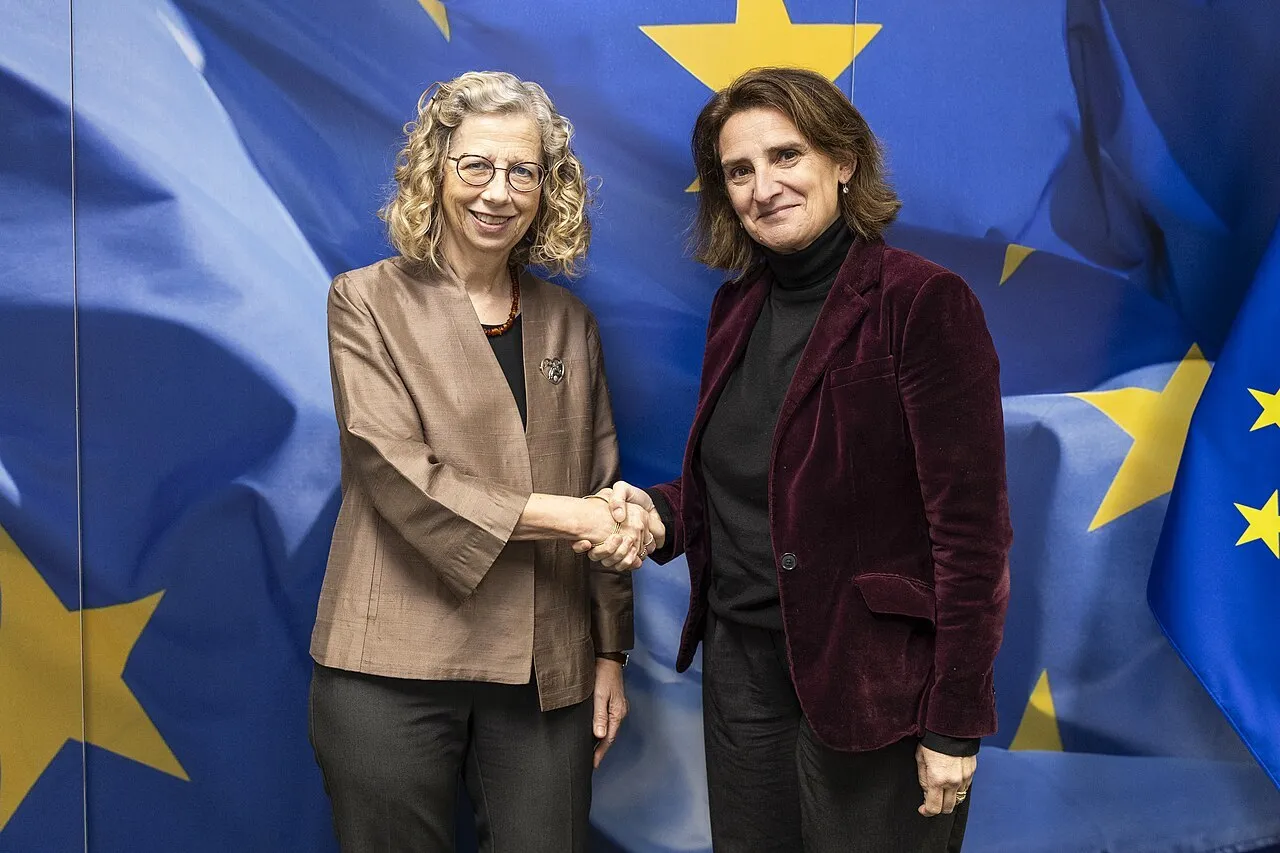
"Overshoot is not surrender. We can still keep it as small and as short as possible," UN Secretary-General António Guterres said of breaching the limit. UNEP Executive Director Inger Andersen put the cost of delay this way: "Every additional fraction of a degree and additional year of warming above 1.5°C increases climate impacts and risks."
The report lands a few weeks before COP31, set for November in Antalya, Türkiye, where the second Global Stocktake begins — the Paris Agreement mechanism that measures, every five years, the distance between what countries promised and what physics records.
With information from the UN Environment Programme (UNEP) and UN News.