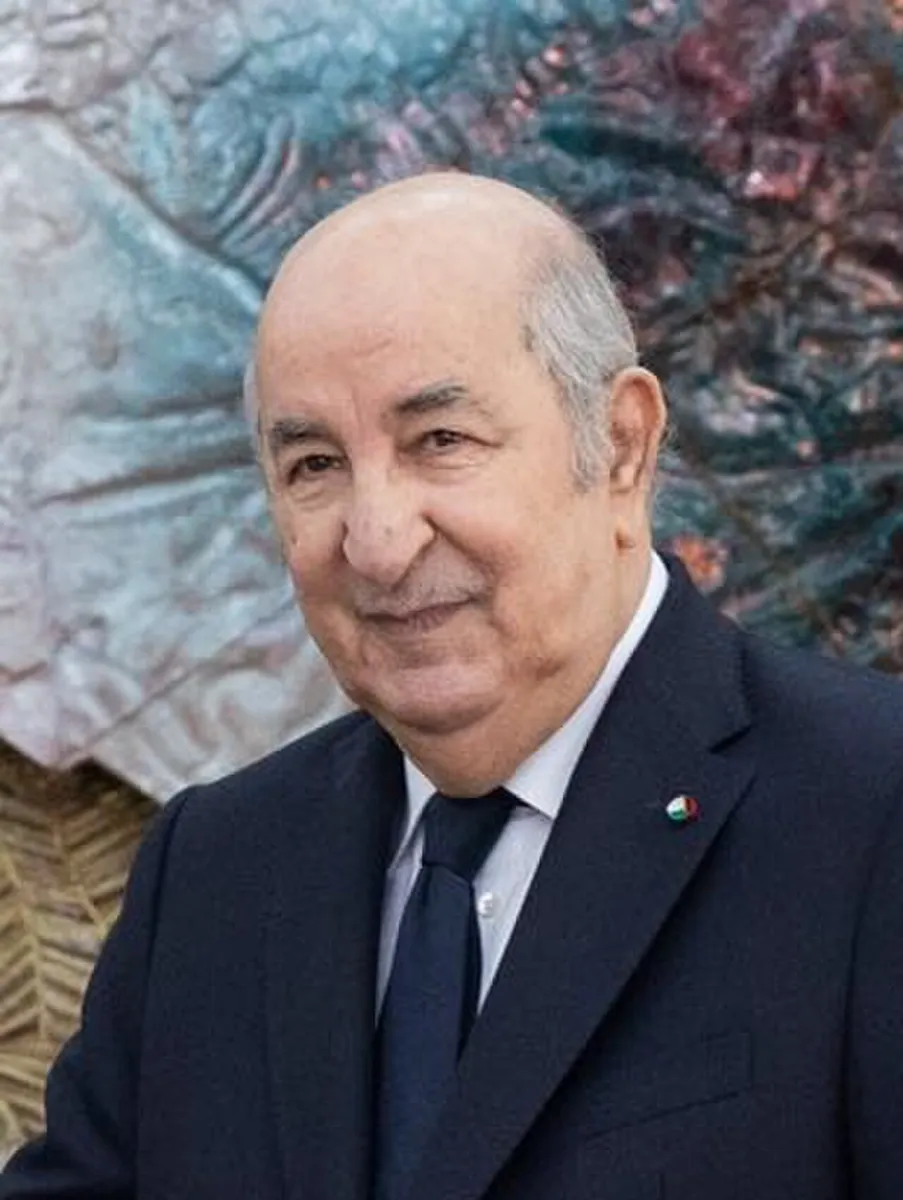
Algeria's presidency announced on Monday that President Abdelmadjid Tebboune had decided to send units of the Armée nationale populaire (ANP, the country's national army) to the Republic of Niger. According to the official statement, carried by the state news agency APS, the purpose is to "ensure the protection of shared Algerian-Nigerien energy and economic interests".
If carried out, it will be Algeria's first military operation beyond its own borders since 1973, when it sent soldiers in support of Egypt in the Arab-Israeli war.
What parliament approved
Both chambers of the Algerian parliament authorised the deployment at an emergency sitting on Sunday. A 2020 constitutional reform requires at least two thirds of the members of each chamber to vote in favour before troops can be used abroad — until then, Algeria had no mechanism for it.
In the Conseil de la Nation (Council of the Nation), the upper house, 148 of the 174 senators voted in favour, according to a senator who spoke to the AFP news agency on condition of anonymity; Al Jazeera described the approval as unanimous. The Assemblée populaire nationale (National People's Assembly), the lower house, voted the same day.
Neither the presidency's statement nor parliament said how many soldiers will be sent or when the operation begins.
Oil, gas and a pipeline
Senator Belkacem Boulghiti said the soldiers would guard economic infrastructure, in particular Algerian oil facilities on Nigerien territory, and that the country was "not sending our soldiers to wage war in Niger", according to Al Jazeera. He presented the mission as a response to changing security conditions in the Sahel.
Algeria's state energy company, Sonatrach, has been negotiating with Niger over the Trans-Saharan Gas Pipeline, a project that would carry natural gas from Nigeria across Nigerien territory to Algeria, for export to Europe. That is the asset that gives the decision its economic dimension: the infrastructure Algeria wants to protect lies on the other side of the border.
A shift in Algerian doctrine
The decision breaks with a long-standing Algerian refusal to intervene militarily beyond its frontiers, a principle the country upheld for decades, including through the crises in Mali and Libya.
There had been recent signs of that shift. In August, Algiers sent fighter jets and support aircraft to Niger after what Algerian officials described as an attempt to destabilise Niger's military government; the Algerian defence ministry spoke of four aircraft. On 3 October, in a televised address, Tebboune said Algeria would protect Niger "no matter what".
The rapprochement between the two governments follows a difficult period. In April 2025, Algerian forces shot down a Malian drone near the border, and Niger, Mali and Burkina Faso — all three run by military leaders who took power in coups and grouped in the Alliance of Sahel States — recalled their ambassadors from Algiers. Last week, Niger's defence minister, General Salifou Modi, was in Algiers, where he met Tebboune and the Algerian chief of staff, General Said Chengriha, and the two countries signed a military cooperation protocol whose terms were not made public.
Niger has been governed by General Abdourahamane Tiani since the 2023 coup, which Algeria condemned at the time. The country, like Mali and Burkina Faso, has faced years of attacks by armed groups linked to al-Qaeda and the Islamic State.
With information from the Algerian state news agency APS, Al Jazeera and Arab News.