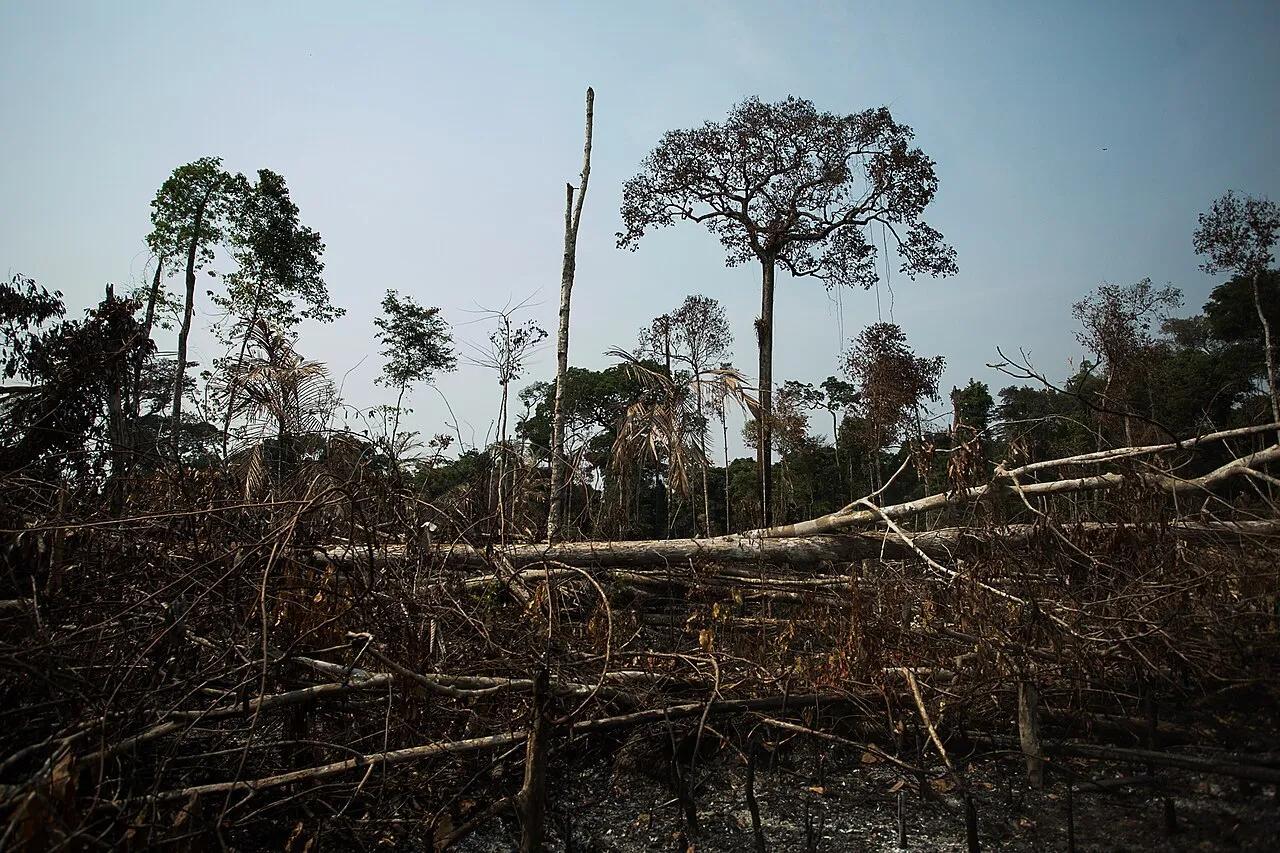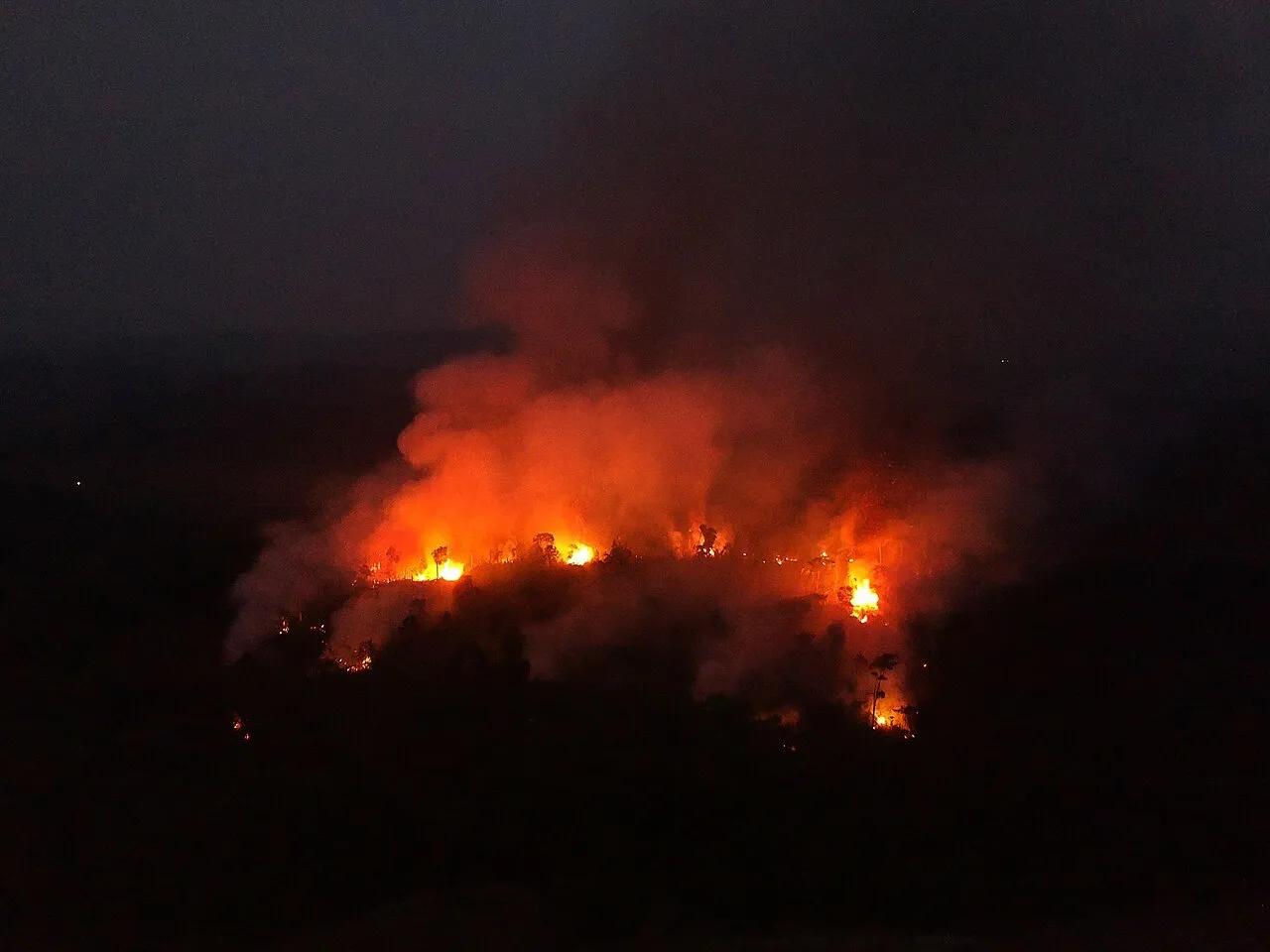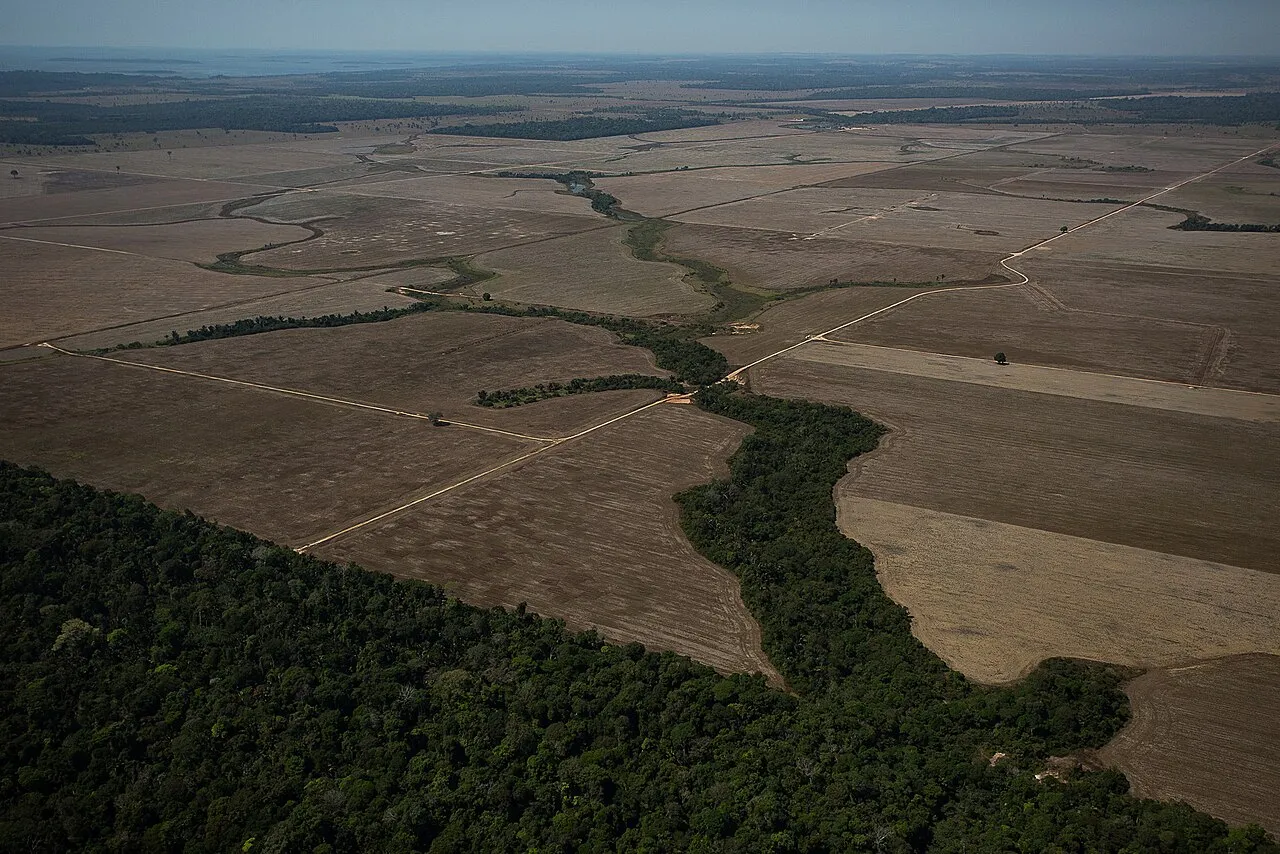
The Legal Amazon lost 3,335 square kilometres of forest between August 2025 and July 2026, the window the Instituto Nacional de Pesquisas Espaciais (National Institute for Space Research, or Inpe) calls the Prodes year. That is 41.8% less than the 5,731 sq km of the previous cycle, and the lowest figure since measurement began in 1988.
The data were presented on Friday at a press conference in the Palácio do Planalto, the presidential palace in Brasília, by the Ministério do Meio Ambiente e Mudança do Clima (Ministry of the Environment and Climate Change) and Inpe.
The previous low in the series was 2012, at 4,571 sq km. The old mark has been beaten by more than a thousand square kilometres — roughly 27% below the best year on record until now.
The Cerrado set a record too
In the Cerrado, the savanna biome that covers central Brazil, clearing came to 5,516.69 sq km, down 23.8% from 7,235.27 sq km in the previous period. It is the lowest value in that biome's series, which began in 2001; the earlier minimum was 6,319 sq km, in 2019.
There is a technical difference between the two numbers. The Amazon figure is a preliminary estimate, calculated from a set of priority satellite images; the consolidated rate is released in the first half of the following year. The Cerrado figure is already consolidated, because the mapping covered the whole biome.
Where the drop happened in the Amazon
Eight of the nine states in the Legal Amazon fell. The comparison is between 2024/2025 and 2025/2026:
- Pará: 2,064 → 1,130 sq km (−45.3%)
- Mato Grosso: 1,593 → 849 sq km (−46.7%)
- Amazonas: 979 → 525 sq km (−46.4%)
- Acre: 324 → 252 sq km (−22.2%)
- Rondônia: 229 → 149 sq km (−34.9%)
- Maranhão: 210 → 128 sq km (−39.0%)
- Tocantins: 30 → 8 sq km (−73.3%)
- Amapá: 17 → 8 sq km (−52.9%)
- Roraima: 285 → 286 sq km (+0.4%)
Roraima was the only exception, with a 0.4% rise — a small variation, but one that leaves the state as the biome's fourth-largest clearer this cycle, a position it did not hold when the top three were at another level.
Pará still accounts for most of the problem: the 1,130 sq km cleared there is 33.9% of all Amazon deforestation in the period.
In the Cerrado, Matopiba accounts for 74.3%
Four states — Maranhão, Tocantins, Piauí and Bahia, the region known as Matopiba — together make up 74.3% of the area cleared in the biome. State by state:
- Maranhão: 2,005.55 → 1,718.59 sq km (−14.3%)
- Tocantins: 1,489.02 → 1,263.06 sq km (−15.2%)
- Piauí: 1,350.44 → 625.24 sq km (−53.7%)
- Bahia: 789.91 → 489.75 sq km (−38.0%)
- Minas Gerais: 512.02 → 467.34 sq km (−8.7%)
- Mato Grosso: 455.39 → 454.52 sq km (−0.2%)
- Mato Grosso do Sul: 272.53 → 208.93 sq km (−23.3%)
- Goiás: 230.97 → 210.37 sq km (−8.9%)
- Other states (PA, RO, DF, SP and PR): 129.44 → 78.90 sq km (−39.0%)
What the two numbers say together
The comparison between the biomes is worth a look. Even with records in both, the Cerrado lost 5,516.69 sq km against the Amazon's 3,335 sq km — meaning the biome that gets less attention in public debate cleared 65% more land than the rainforest. And the Cerrado's drop was smaller (23.8% against 41.8%), which widens the gap between the two.
Over four years, Amazon deforestation is down 71.2% from the 11,594 sq km of 2022. In the Cerrado, the fall is 48.4% from the 2023 peak of 11,012 sq km.
"The figures released today are a historic achievement," Márcio Astrini, executive secretary of the Observatório do Clima (Climate Observatory), a Brazilian network of environmental groups, told InfoAmazonia.
The financing behind it
At the same presentation, the government cited the Fundo Clima (Climate Fund), with a reimbursable budget of 14 billion reais in 2025 and 27 billion reais in 2026, and targets of directing 25% of resources to the North and Northeast regions and 20% to climate adaptation. The briefing brought together representatives of the Casa Civil (the president's chief of staff office), the environment ministry, the ministries of justice, agriculture, science and technology and agrarian development, as well as Inpe and the BNDES development bank.
With information from the Ministério do Meio Ambiente e Mudança do Clima, Inpe, the Casa Civil, the Observatório do Clima and InfoAmazonia.