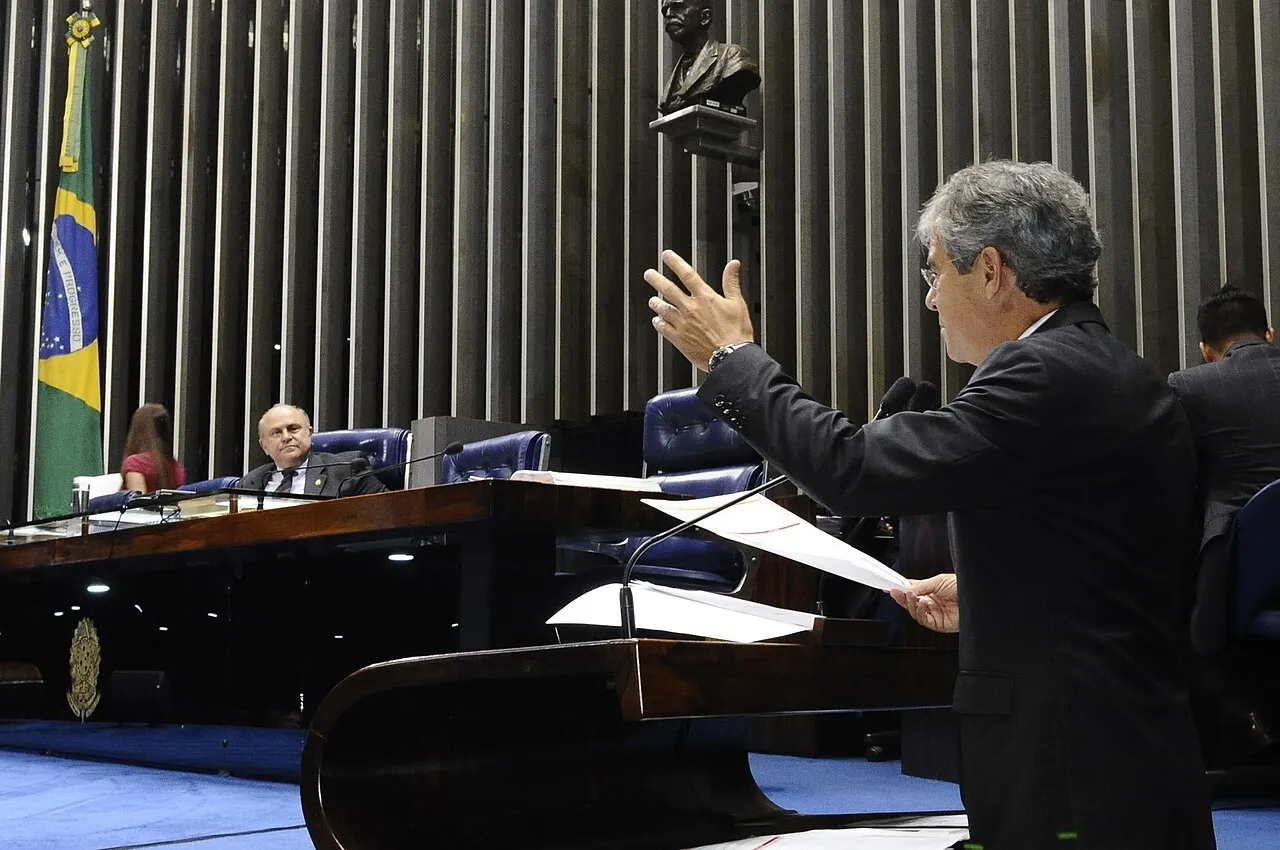
On Wednesday night (14) Brazil's Senate approved PEC 221/2019, the constitutional amendment bill that abolishes the 6x1 schedule — six days of work for one day of rest — and cuts the constitutional cap on the working week from 44 to 40 hours. Both rounds of voting were held in the same session and produced the same result: 75 votes in favour and 1 against.
A request by party leaders, approved by the floor, shortened the interval normally required between the two rounds, which is how both votes were completed the same night. The single vote against, in both rounds, came from Senator Hamilton Mourão (Republicanos-RS), who did not speak during the session. Already approved by the Câmara dos Deputados (Chamber of Deputies), the text does not go to the president: a constitutional amendment is promulgated by the leadership boards of the two chambers.
What changes
- Paid weekly rest rises from one day to two, one of them preferably on Sunday.
- The constitutional cap on the working week falls from 44 to 40 hours, keeping the eight-hour daily limit, with room for hour compensation and for reductions under a collective agreement or convention.
- The reduction may not produce a pay cut, nominal or proportional — including for wage floors.
A 14-month transition
Under the approved text, two months after the amendment is published the cap drops to 42 hours a week and the guarantee of two rest days takes effect. Twelve months after that, the limit falls to 40 hours. That is 14 months to the final rule, with no pay reduction along the way.
There is one exception. Workers with a higher-education degree earning R$ 21,188.87 or more may set their hours directly with the employer, provided the two rest days are preserved.
What was said
Omar Aziz (PSD-AM), the bill's rapporteur, framed the vote as a milestone for the legislature: "A gente entra para a história, Câmara e o Senado" — the Câmara and the Senado are entering history.
Opening the session, Senate President Davi Alcolumbre (União-AP) said he had "absolute certainty that we will fulfil our duty with absolute responsibility". Alcolumbre had committed to scheduling the proposal after the elections, so that senators could decide without electoral pressure.
On the other side of the debate, PL leader Carlos Portinho (RJ) argued that a right only holds up if there are jobs, and asked the Senate to look at "both sides of the table". Paulo Paim (PT-RS), who spoke of a 40-year fight for labour rights, said the decision gives workers back the freedom not to work Monday through Saturday.
Why the number matters
The four-hour cut in the weekly cap is the first since the 1988 Constitution set it at 44 hours. The practical effect, though, is uneven: it weighs most in sectors where the 6x1 schedule is standard — retail, services and logistics — and least where a five-day week is already written into contracts or collective agreements. That is also why the amendment comes with transition rules rather than immediate application.
With information from Agência Senado and Times Brasil.