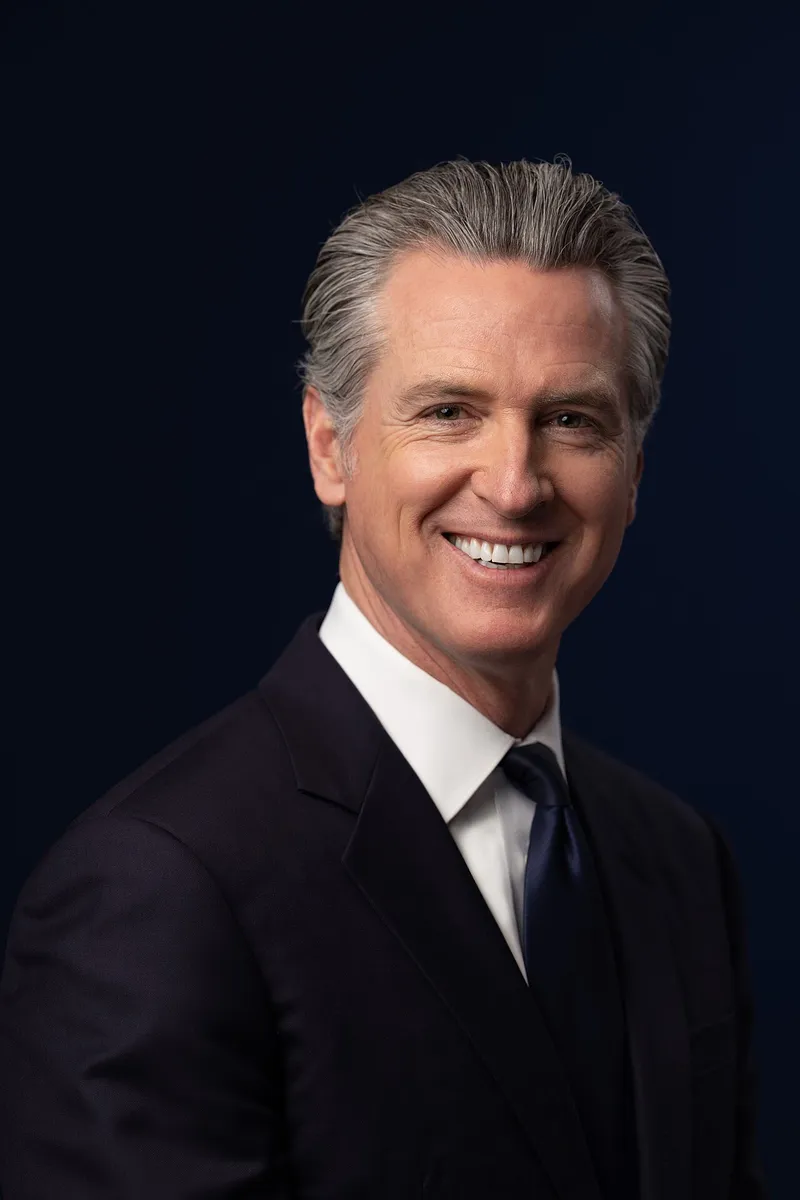
Anthropic has asked California to give its courts the power to suspend an artificial intelligence model, in a letter to Governor Gavin Newsom reported on Tuesday by POLITICO.
Under the company's proposal, if the state attorney general found a "near-term risk of catastrophic harm," the attorney general could ask a court to order a halt to a model's deployment, its internal use inside the company, or its further development.
That is further than any of the large developers has publicly gone, and further than OpenAI, which answered the same executive order a week earlier and proposed monitoring obligations instead of a state veto.
What Newsom asked for
The letters respond to an executive order Newsom signed on September 18, 2026, which directs the state's Government Operations Agency to speed up implementation of two AI laws, SB 813 and AB 1405, and asks outside experts to recommend changes to state law.
The order sketches three ideas the companies were answering: an independent verification organization working inside frontier AI labs, auditing safety frameworks and risk reports; a "kill switch" for frontier models, whose effectiveness that same organization would check over time; and a wider definition of critical safety incidents, covering loss-of-control events.
On September 23 the governor's office named the four experts who will deliver the recommendations: Jason Goldman, of the Center for Shared AI Prosperity and a former White House chief digital officer; Gillian Hadfield, of Johns Hopkins University; Alondra Nelson, of the Institute for Advanced Study and formerly acting director of the White House Office of Science and Technology Policy; and Rob Reich, of Stanford University.
The limits of a switch
Anthropic told the governor that every frontier AI company should be able to shut down the models it serves to customers or runs internally, and that it should be able to do so quickly. But it warned that a law built only around shutdowns "could provide a false sense of reassurance," and said pulling a model offline "only makes sense in extreme situations."
The heavier part of its proposal is the auditors. Anthropic wants outside evaluators working inside frontier companies, with access comparable to a company's own risk-assessment staff — short of some sensitive customer data — and able to report the risks they find to the attorney general. Large developers would publish risk reports at least every six months.
To keep the auditors independent of the companies they inspect, Anthropic proposes that the labs pay into a fund administered by the state rather than paying evaluators directly. The state would rate the auditors, and could require that at least one highly rated evaluator be used, or assign them by random selection or rotation.
Where OpenAI stops
OpenAI's letter, dated October 20 and signed by Chan Park, its head of U.S. and Canada policy and partnerships, prefers the term "shutdown controls" to "kill switch," on the grounds that stopping an AI system may take several coordinated controls rather than one lever.
It asks the legislature to amend SB 53 to require effective shutdown controls and a duty to use them when conditions are unsafe and no lesser intervention would do, with responsibility spread across the chain: "Responsibilities should extend to inference providers, downstream deployers, and users," the letter says, in proportion to what each one controls.
On inspection, OpenAI proposes annual independent compliance audits modeled on an Illinois law, SB 315, plus safety-case reviews by qualified assessors with scoped, secure access — a narrower design than Anthropic's resident evaluators. It argues that "common standards for frontier AI and standardized assessment methods are not yet in place," and that payment by a lab does not by itself create a conflict of interest, provided conflict rules exist.
It also draws a line at who decides: the state, not third-party assessors, should set standards and judge which risks the public has to accept. And it says it would rather see "a federal independent-assessment framework," asking California to align with federal standards as they emerge.
Both companies back the broader incident-reporting idea in the executive order. OpenAI would extend SB 53's definition of a critical safety incident to loss-of-control events that cause measurable economic harm or disrupt third-party systems, including during development and evaluation.
None of this is law yet. The recommendations go to the governor, and the California Legislature is expected to take up AI regulation when it returns in about a month.
Reporting from POLITICO, as published by Yahoo News, from OpenAI's letter to the governor and from the Office of Governor Gavin Newsom.