Major League Baseball's free-agent market opened on Monday, November 3, when the five-day window in which players could negotiate only with their former clubs ran out. Roughly 144 players reached free agency after the Milwaukee Brewers beat the Tampa Bay Rays to win the World Series on October 28, according to a Sportsnet count cited by Yahoo Sports.
The same Monday was the deadline for clubs to extend qualifying offers. This year the offer is a one-year contract worth $23.15 million for the 2027 season, higher than last offseason's figure.
The eight qualifying offers
Eight players received one, according to MLB.com: outfielders Randy Arozarena of the Mariners and Seiya Suzuki of the Cubs; relievers David Bednar of the Yankees and Adrian Morejon of the Padres; second baseman Brandon Lowe of the Pirates; first baseman Jake Bauers of the Brewers; catcher Ryan Jeffers of the Twins; and starter Trevor Rogers of the Orioles.
They have until 4 p.m. Eastern time on November 17 to accept or decline. A player who declines and then signs elsewhere leaves his former club with draft-pick compensation — the mechanism that makes the offer worth extending even when the team expects it to be turned down.
Jazz Chisholm Jr., Ian Happ and Matthew Boyd were among those who did not receive one.
Who is on the market
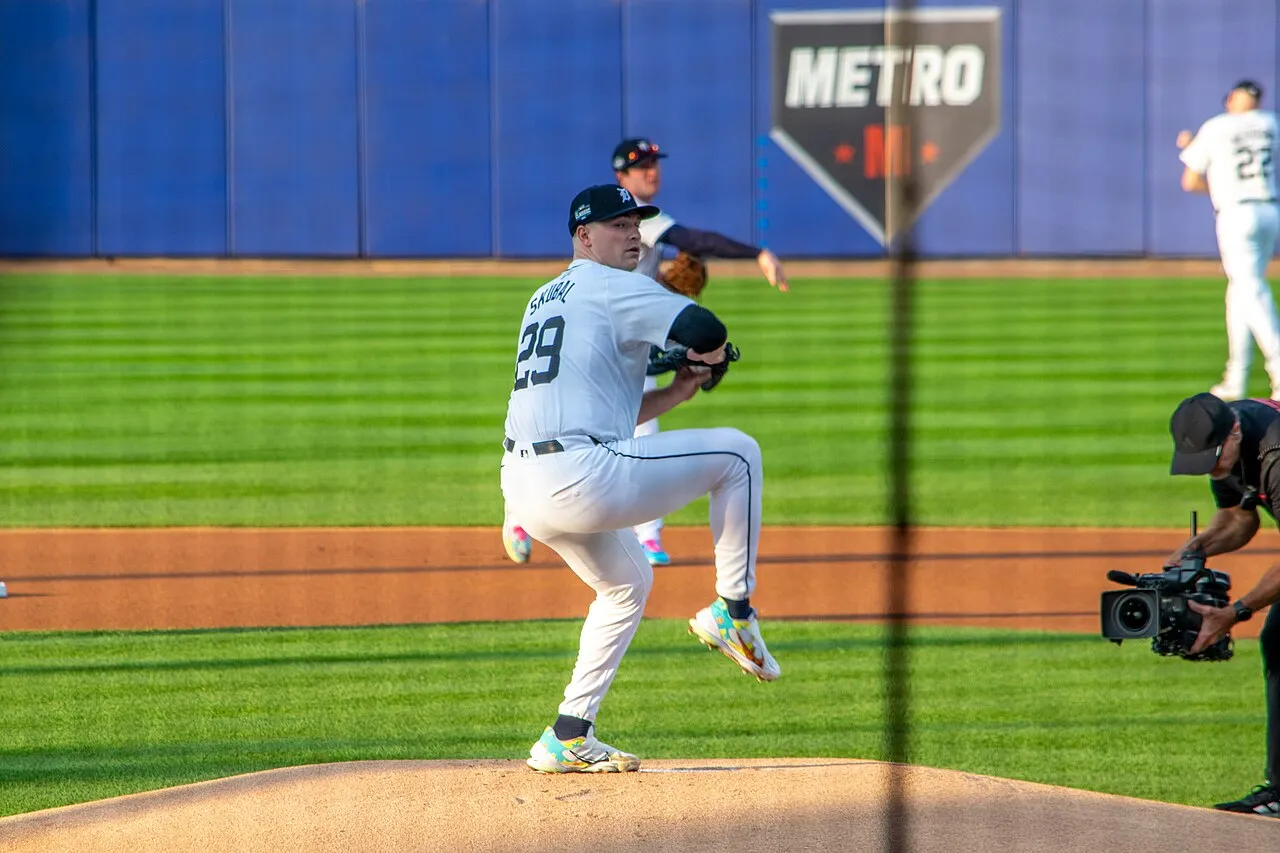
Left-hander Tarik Skubal heads the class, with the Dodgers, Mets, Cubs and Yankees all reported as possible destinations. George Springer, Max Scherzer and Shane Bieber are also available. No signings had been completed as of Tuesday.
Three players have been posted from Japan — Teruaki Sato, Kaima Taira and Hiromi Itoh — and each has 45 days from his own posting date to reach agreement with a major-league club, a clock that runs independently of everything else on the calendar.
The deadline behind the deadline
The collective bargaining agreement between the league and the Major League Baseball Players Association expires on December 1, which leaves under four weeks of ordinary business before the sport's labor framework lapses. An expiration does not by itself stop play, but owners can impose a lockout, as they did after the previous agreement ran out and delayed the start of the 2022 season.
The central dispute is a salary cap, which would be the first in the sport's history; the last serious attempt, in 1994, ended in a strike that cancelled the World Series. Under the owners' proposal, reported by Fox News in July, a cap would come with limits on contract length — six years at 16% of the cap to re-sign with the same club, five years at 15% to sign with another — and with local television revenue shared among clubs.
The union has called a cap non-negotiable. Its counteroffer centers on a payroll floor with no ceiling above it, a 28-man roster rather than 26 for the first 15 days of the season, and earlier access to free agency.
"Salary cap is the ultimate excuse not to compete," Bruce Meyer, then the union's interim executive director, said in July. "Every team in baseball can afford to compete, many are choosing not to."
Commissioner Rob Manfred, speaking in the same period, described the other side of the table as having "an ownership group that is more united than any group in my entire time in baseball."
For the players who just reached the market, the practical effect is a compressed window. Deals signed before December 1 are governed by rules that are known; deals after it are not.
Reporting from MLB.com, Yahoo Sports and Fox News.