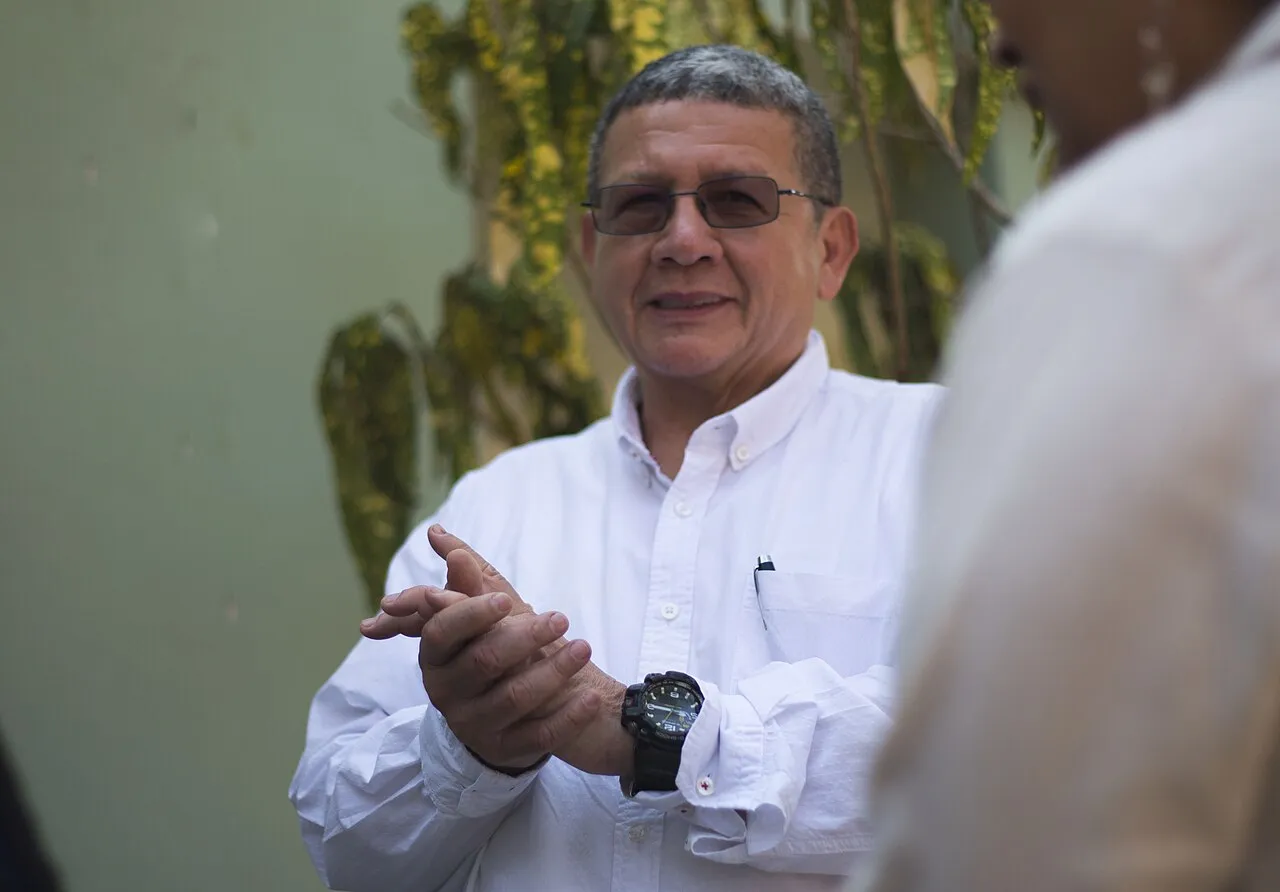
Colombia's Jurisdicción Especial para la Paz (JEP, the country's transitional justice tribunal) on Thursday, 29 October 2026, charged nine former members of the FARC-EP's Comando Conjunto Central (CCC) with war crimes and crimes against humanity. The CCC was the guerrilla structure that operated in the departments of Tolima, Huila and Quindío. Among those charged is Pablo Catatumbo Torres Victoria, who went on to serve in Congress for the Comunes party after the 2016 peace agreement.
The decision came from the tribunal's Sala de Reconocimiento de Verdad (Truth Recognition Chamber) and covers 468 incidents. According to the JEP, around 70% fall under a pattern of social and territorial control over the civilian population, and the remaining 30% under the conduct of hostilities.
This is Case 10, the macro-case gathering the former guerrilla's non-amnestiable crimes that were not covered by the tribunal's other files. Rapporteur magistrate Marcela Giraldo said it is the first time those appearing before the court must answer for the mass victimisations examined in this case.
The nine charged
Alongside Catatumbo, the chamber charged Luis Eduardo Rayo, Henoc Capera Trujillo, Jhon Jairo Oliveros Grisales, Gustavo Bocanegra Ortegón, Nelson Antonio Jiménez Gantiva, Wilson Ramírez Guzmán, Víctor Hugo Silva Soto and Raúl Agudelo Medina. All belonged to the CCC.
The Comunes party, under which Catatumbo held his seat, lost its legal status this year after failing to win enough votes in the legislative elections.
Roncesvalles and Puerto Saldaña
The CCC was the FARC-EP structure responsible for more town takeovers and police-station assaults than any other: 94 armed incursions between 1991 and 2016, according to the file.
Two episodes account for much of the indictment:
- Roncesvalles (Tolima), 14 July 2000. The takeover left 13 police officers killed after they had surrendered, along with the municipality's public ombudsman, Ángela Yesenia Briñez Ballesteros. More than 30 buildings were destroyed and about 800 people were displaced.
- Puerto Saldaña (Tolima), April–May 2000. The offensive left at least 27 civilians dead, some 200 homes damaged and more than 3,600 people displaced.
The chamber attributed homicide, forced displacement, torture, attacks on the civilian population, orders to give no quarter and the use of antipersonnel mines as war crimes; and murder, forced transfer, enforced disappearance, torture and persecution as crimes against humanity. Those offences cannot receive a judicial pardon.
The indictment was built on some 600 ordinary-justice case files, 54 reports from victims and civil society organisations, and the accounts of 967 accredited individual victims, 54% of them peasant farmers.
What happens next
The nine have 20 working days from notification to respond to the facts and conduct attributed to them, and 30 working days to file observations and additional information.
Within that same window they must give the JEP and the Unidad de Búsqueda de Personas dadas por Desaparecidas (the unit searching for disappeared persons) information that helps locate 30 disappeared people linked to these events.
If they acknowledge responsibility, the tribunal will convene a public hearing with victims taking part and then impose restorative sanctions, which carry no prison term but do involve effective restrictions on rights and freedoms. If they deny it, they go to trial and, if convicted, face sentences of up to 20 years in prison.
The JEP's outgoing president, Alejandro Ramelli, described the indictment as "a huge step in establishing judicial truth and justice", noting that only about 10% of cases of this kind had previously reached a sentence.
With information from El Tiempo, ABC Color and Diario Libre.