
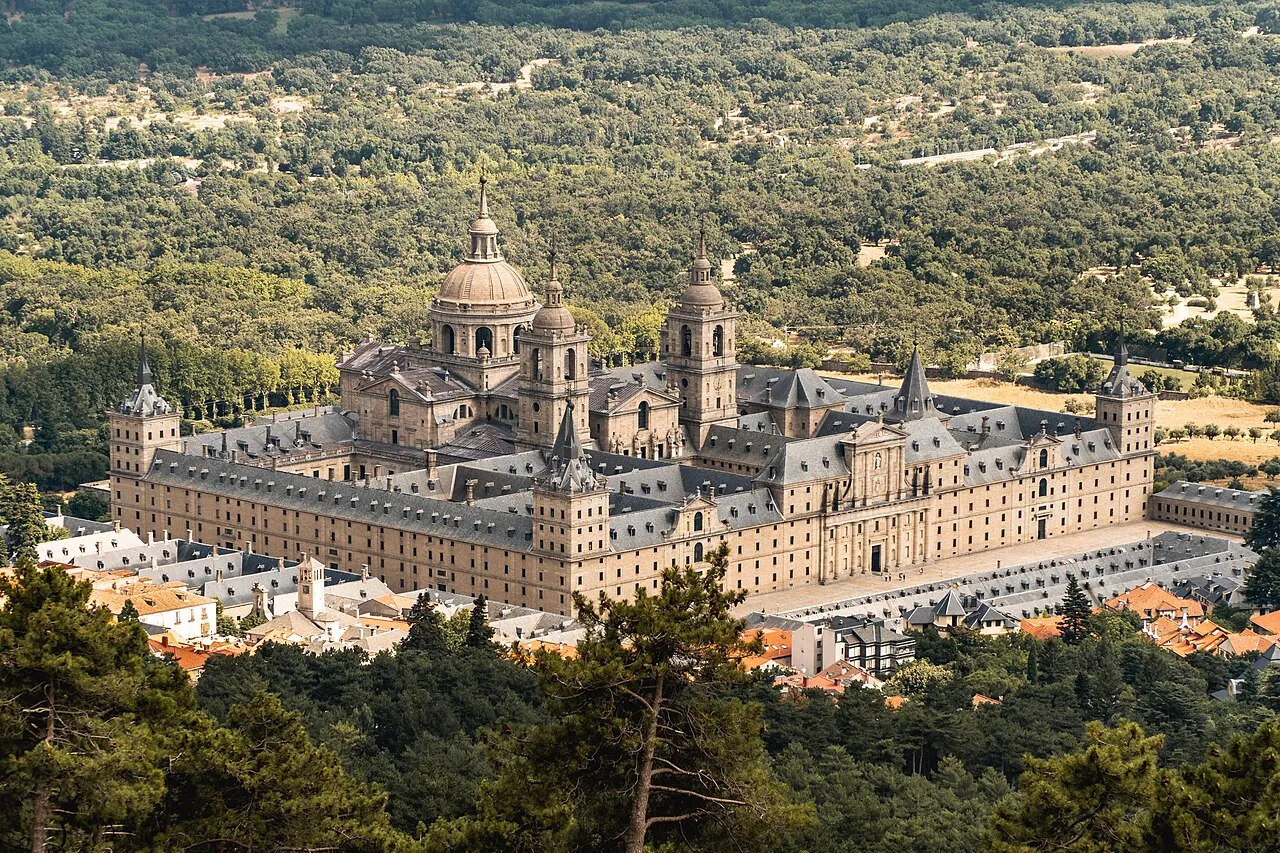
The painting and architecture museums at the Royal Monastery of San Lorenzo de El Escorial, about 45 kilometres north-west of Madrid, reopened to the public on Friday after a decade closed. The reopening was presented to the press the day before by Patrimonio Nacional (National Heritage), the Spanish body that manages Crown property, and cost €3.1 million, funded mainly from the European NextGenerationEU programme.
Entry is free until 31 December 2026, with tickets collected at the visitor reception centre. From January 2027, access to the two museums will form part of the general ticket for the monumental complex.
A hundred paintings, 21 of them newly on permanent display
The painting museum brings together around a hundred works from the Italian, Flemish and Spanish schools. Twenty-one enter the permanent display for the first time.
Among the major pieces are El Greco's The Martyrdom of Saint Maurice, Hieronymus Bosch's The Crowning with Thorns and Titian's Saint Jerome in the Wilderness. The route also includes Rogier van der Weyden's Calvary and The Descent from the Cross, and works by Tintoretto, Veronese, Luca Giordano, José de Ribera and Michiel Coxcie.
The architecture museum, on the same circuit, shows original plans, sketches, models, engravings and the tools and machinery used to build the monastery, raised between 1563 and 1584. The refurbishment also returned rooms that had been off the route, among them a Hall of Honour and a former palace kitchen turned into a rest area.
"A personal preoccupation of Philip II"
Ana de la Cueva, president of Patrimonio Nacional, tied the choice of the two subjects to the king who ordered the complex built: architecture and painting, she said, "were a personal preoccupation of Philip II throughout his life". Víctor Cageao, director of Royal Collections, and Luis Pérez de Prada, director of Immovable Property, also took part in the presentation.
According to Patrimonio Nacional, the work "returns to visitors two spaces in which to discover the artistic, architectural and historical heritage of the Royal Site". The body also announced Sunday family visits and school activities.
Ten years is a long gap for two galleries in one of Spain's most visited monuments — and three months of free entry works as an audience test before access goes back behind the general ticket.
With information from El Independiente, Qué.es, El Debate and Cope.