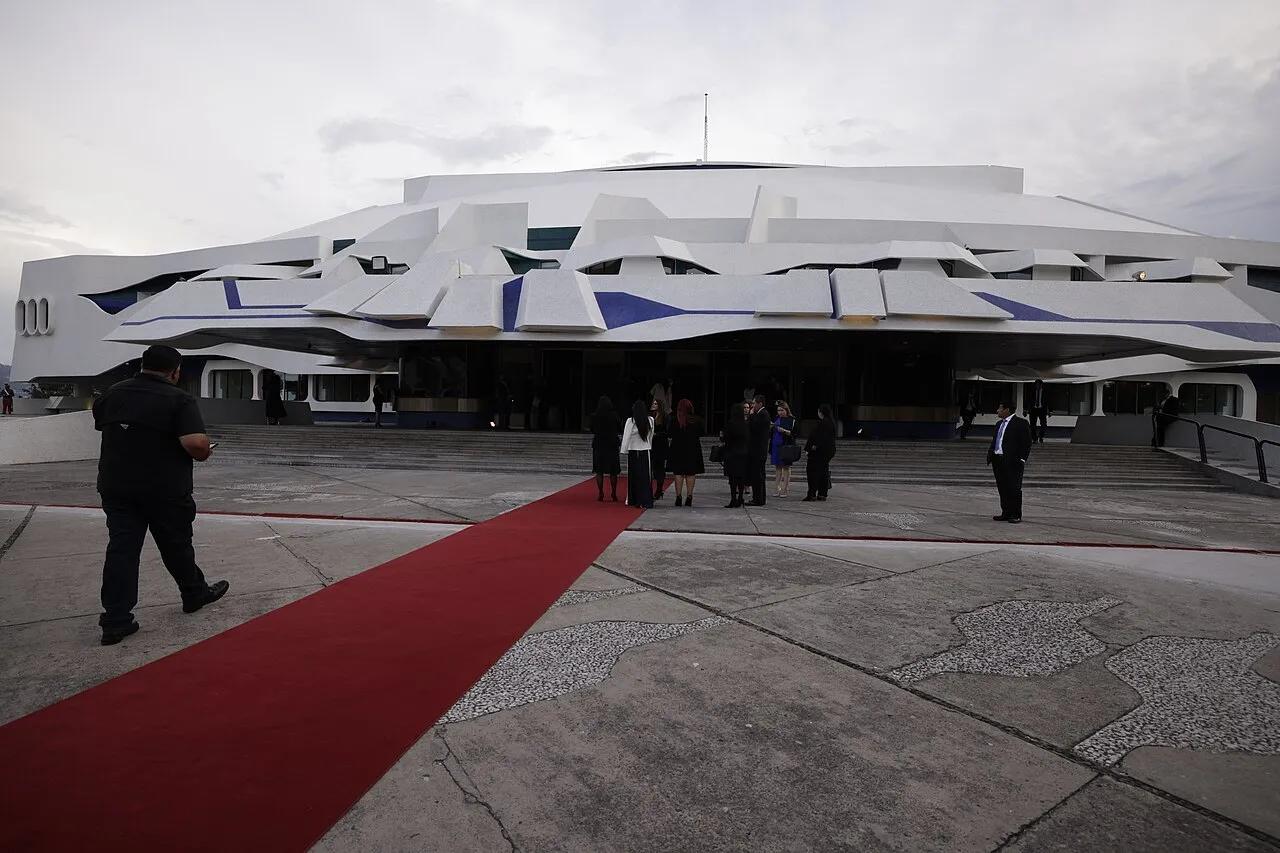
The Philippines won the first edition of the Eurovision Song Contest Asia, held on Saturday, 14 November, at the One Bangkok Forum in Bangkok. Singer Carmelle, 19 and the youngest competitor in the field, scored 211 points with the song "Sobra-Sobra" and finished ahead in both halves of the vote.
Of those 211 points, 93 came from the national juries and 118 from the public — an unusual combination, since juries and audiences often diverge in the European editions of the contest. The result was announced by the European Broadcasting Union (EBU), which organises the competition.
The podium
Thai duo MANG x DAOU finished second with 170 points for the song "Aroma", in front of a home crowd. Third place went to Vietnam's Tóc Tiên, with 164 points, for "EM TIÊN". Malaysia and Laos completed the top five.
How it worked
Eleven countries took part: Bangladesh, Bhutan, Cambodia, Laos, Malaysia, Mongolia, Nepal, the Philippines, the Republic of Korea, Thailand and Vietnam. The songs were performed in ten local languages and in English, under the same motto as the European editions, "United by Music".
The voting followed the European model: each country's jury counted for half and the audience vote for the other half, with an additional block of points awarded by the "Rest of the World", carrying the same weight as one participating country. According to the EBU, votes came in from 183 countries and territories.
The show was broadcast in all eleven participating countries, on the contest's official YouTube channel and by EBU member broadcasters outside Asia — KAN in Israel, SBS in Australia, TVP in Poland and Sveriges Radio in Sweden. Thai television personalities Woody Milintachinda and Cindy Bishop hosted, and the stage featured guest performances by Thai singer Jeff Satur and by DARA, who won the 2026 Eurovision Song Contest for Bulgaria.
A format that expands
The Asian contest is the most concrete attempt to take the Eurovision model beyond Europe after earlier projects were announced and abandoned over the past decade. Martin Green, Director of the Eurovision Song Contest, described the edition as "a major milestone" and congratulated Carmelle and the Philippines on the win.
"This is just the beginning of an exciting new chapter for Eurovision in Asia," said Assaf Blecher, Executive Producer of Eurovision Song Contest Asia, in an EBU statement. The organisers did not say where the next edition will be held.
With information from the European Broadcasting Union (EBU) and the Anadolu Agency.