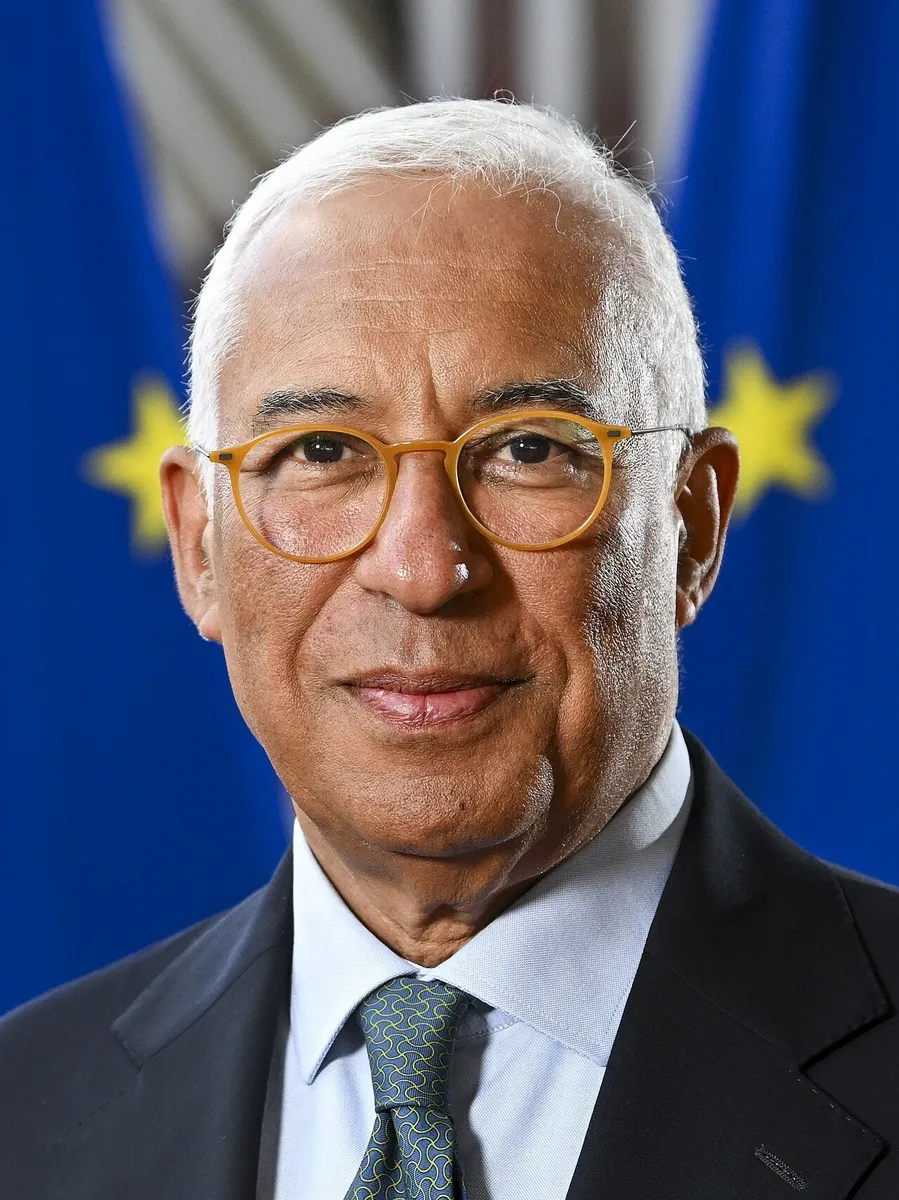
The question Europe had been unable to answer ever since the talks on ending the war in Ukraine began running between the United States, Russia and Ukraine was easy to pose and hard to settle: who speaks for the Europeans. On Friday, 13 November, the president of the European Council, António Costa, delivered the answer, and it has five names rather than one.
Europe will be represented at the next round of negotiations by the United Kingdom, France, Germany, Italy and Poland — the group the bloc's diplomats already call the "E5" — together with the European Union institutions. The announcement came at the close of an informal meeting of the 27 leaders in Dublin, held a day after the European Political Community summit in the same city.
"Europe must speak with one clear and united voice in all discussions that shape the future of Ukraine," Costa said. He described the arrangement as "a team effort" and added that only Ukraine "has the legitimacy" to decide on its own territory.
A team because one name did not hold
Choosing a collective body was not a matter of taste. Several leaders argued that the EU's high representative for foreign affairs, Kaja Kallas, should take on the role of sole interlocutor, and she claimed it herself — arguing that Russia does not want her at the table because it considers her "too strong". The idea did not win unanimous backing, and the formula that advanced was the one that spread the seat around.
Fragmentation is, in fact, part of the diagnosis. Italy's prime minister, Giorgia Meloni, summed up the problem by saying there are "too many different groupings discussing the issue" — between the European Council, NATO, the "coalition of the willing" and ad hoc formats, Europe has been turning up at several tables and with different voices. On the American side, envoy Jared Kushner remarked that identifying a single European spokesperson would be a bigger achievement than persuading Russia to accept Europeans in the negotiation.
German Chancellor Friedrich Merz used the meeting to ask Washington to stay aligned with what he called "Team Europe" and "Team Ukraine", with a short message: "please, no surprises".
Moscow has not said yes
What the Dublin announcement does not settle is the most important part: Russia has not committed to accepting Europeans at the table. After Thursday's talks in Moscow, American envoys said the Europeans would take part in the coming rounds, but the Kremlin denied that any decision had been taken.
Russia's position has been that European countries finance and arm Ukraine and are therefore parties to the conflict rather than mediators. This week Moscow refused to allow EU representatives into the talks held in Abu Dhabi. Kremlin spokesman Dmitry Peskov said Europe must first show it is willing to contribute to the peace process, and compared European leaders to "spiders in a jar".
Ukrainian President Volodymyr Zelensky and Kushner indicated that a European delegation would join the next round, in Abu Dhabi, next week. The Kremlin has not confirmed it.
Sanctions and the 2027 bill
At the same meeting, the president of the European Commission, Ursula von der Leyen, announced that the bloc will shortly put forward its 22nd sanctions package against Russia and will bring leaders a proposal to cover Ukraine's financing gap in 2027.
That is the other open flank. Czechia, Hungary, Slovakia and Bulgaria are refusing to contribute to the financial support for Kyiv. Merz proposed tying German contributions to the EU's long-term budget to all member states supporting Ukraine — an idea Ireland's Taoiseach, Micheál Martin, received with reservations. Martin, for his part, said Ireland would be willing to take part in ceasefire monitoring or a peacekeeping mission.
The meeting also registered friction over how tough Europe's response has been: Latvia's prime minister, Andris Kulbergs, pressed for a firmer line, and Martin defended what the bloc has done since the invasion.
With information from RTÉ, Al Jazeera and public statements by the European Council.