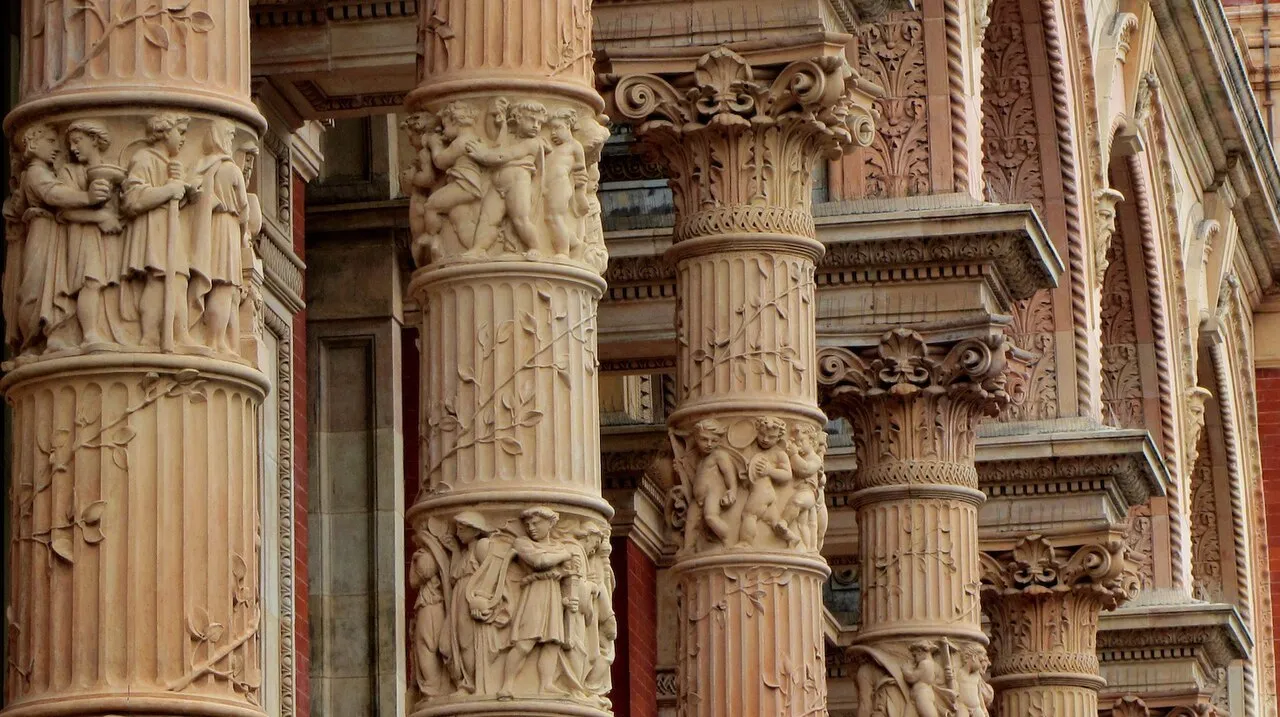
A choreography built to be perceived by touch by blind people, in Poland, and drawing and writing workshops with Ukrainian war veterans, run by a French charity, are among the five projects honoured in the 2026 edition of the Art Explora–Académie des beaux-arts European Award, presented on Tuesday evening at the Victoria and Albert Museum in London.
The award distributes €180,000 in total, in individual grants ranging from €30,000 to €50,000. It is run by Art Explora, a French foundation set up by the entrepreneur Frédéric Jousset and recognised as serving the public interest, in partnership with the Académie des beaux-arts (France's academy of fine arts), in Paris. According to The Art Newspaper, this is the seventh edition.
Entry is open to cultural organisations in any European country and in any artistic discipline, and the award assesses practices in audience access, participation and engagement that can be shared across borders. Candidates compete in three brackets defined by annual expenditure: up to €200,000, from €200,000 to €1 million, and above €1 million.
The five winners
- Jazdaa Polska! (Poland), a performing arts foundation, for "Touch Beyond Sight", a project of touch-based choreography with blind and partially sighted people.
- Cultura en Vena (Spain), an organisation working at the border between art and health, for "Arte Ambulatorio", which brings reproductions of artworks into hospitals — this time an exhibition inspired by Frida Kahlo's world — along with live music and creative writing workshops for children in hospital. It received €40,000.
- Bibliothèques Sans Frontières (France), for "L'autre retour", drawing, reading and writing workshops with Ukrainian veterans aimed at reintegration after military service; the resulting works toured Ukraine and were shown at the European Commission in Brussels. It received €50,000, the largest grant.
- London Writers Centre (United Kingdom), for its project to turn the London borough of Lewisham into the country's first "Borough of Literature".
- RAMAGU (Slovakia), a documentary theatre company working with minority groups in rural areas, winner of the audience award.
Four of the winners were chosen by the international jury; RAMAGU was picked by an open public vote held between 2 and 12 October. The jury met on 14 October, and entries were open from 16 March to 26 June.
Who judged
The jury brought together members of the Académie des beaux-arts, among them the illustrator Emmanuel Guibert, the sculptor Eva Jospin and the choreographer Blanca Li, as well as the institution's permanent secretary, Laurent Petitgirard. Also on the panel were Vanja Kaludjercic, director of the International Film Festival Rotterdam, and the Croatian cultural development consultant Antonija Letinić. Jousset, the president of Art Explora, sat on the jury too.
Speaking about the Spanish organisation, Jousset told The Art Newspaper the jury had been won over by the "rigour" of its work: "They measure their impact and keep improving each exhibition based on patients' and staff feedback." Of the French project, he said: "This project shows art as an act of rebuilding."
An award that changed scale
The early editions were dominated by major institutions: London's National Gallery, the Mucem in Marseille and the Thyssen-Bornemisza Museum in Madrid won in 2020; the Victoria and Albert Museum itself, Tuesday's host, and the Louvre-Lens won in 2021. This year's list is made up of smaller organisations — a dance foundation, a library charity, a regional theatre company — and the two grants that were disclosed went to projects tied to hospitals and war veterans rather than to collections.
With information from The Art Newspaper, USA Art News and the official Art Explora website.