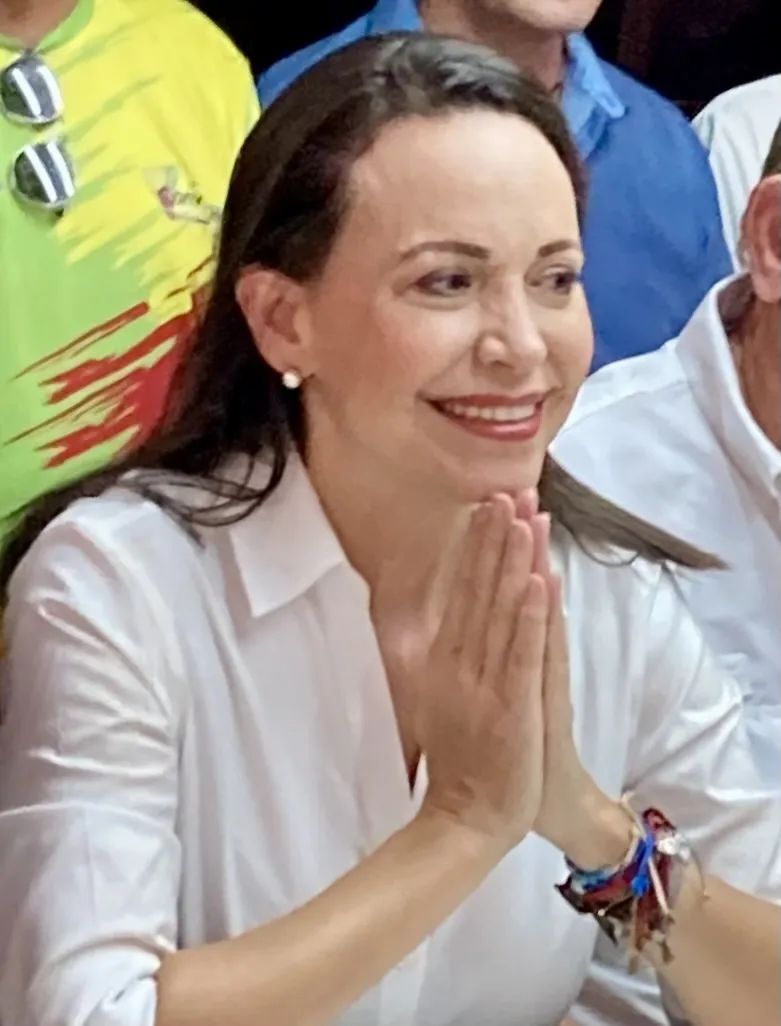
Venezuela's government and opposition resume their political talks on Friday, 13 November 2026, at the Gran Meliá hotel in Caracas, opening the fourth cycle of a process the two sides began in August. It is the first round since María Corina Machado returned to the country on 25 October, and it starts with the recomposition of the judiciary and of the electoral authority as its central issue.
Earlier sessions, held at the same hotel — the third on 14 October — each ran for about a week.
Who is at the table
The opposition delegation is led by Dinorah Figuera and includes former lawmaker Desiree Barboza and Marco Aurelio Quiñónez. On the government side, the news agency EFE and the Colombian daily El Tiempo point to Delcy Rodríguez, the acting president, as the reference figure, though neither source names the government's delegates at the table. Neither mentions outside mediators or facilitators.
Machado is not taking part in the negotiation. According to El Tiempo, the opposition leader has said she will not obstruct the talks but is demanding that an election date be set for 2027. She has said she is willing to hold direct talks with Rodríguez, though no such meeting is scheduled. Machado had left the country in December 2025 to receive the Nobel Peace Prize in Oslo, and had been barred from running in the 2024 election.
The agenda
The items the two sides bring to this round, according to both sources:
- Renewal of the Tribunal Supremo de Justicia (TSJ, Venezuela's supreme court), agreed in the talks themselves and expected to be completed in December. "Everything depends on having a new TSJ," Quiñónez said.
- Formation of a new Consejo Nacional Electoral (CNE, the body that runs the country's elections), ahead of a presidential vote that is meant to lead to a transition. No election date has been set.
- Political and civil guarantees, including a review of the Ley Orgánica de la Contraloría General (the law governing the comptroller general's office) and, in particular, of the procedure for political disqualifications — the same one that barred Machado in 2024. The opposition wants a disqualification imposed irregularly or unconstitutionally to be "automatically annulled".
- Reform of the political parties law, so that parties placed under court-appointed boards by the TSJ can be regularised.
- Human rights, detainees and exile.
- Releases of political prisoners, which Figuera said would be announced, although the point has not yet been taken up at the table. The government says it has already freed more than a thousand people since the talks began.
Barboza summed up the opposition delegation's approach this way: "Rather than working directly with names or starting to handle lists, we are working on the root." That is, the legal framework before individual cases.
What the government wants
On the other side of the table, the government's central demands are the release of Venezuelan gold held at the Bank of England — earmarked, it says, for those affected by the twin earthquakes of 24 June — and the lifting of sanctions.
The order of the items shows the logic of the negotiation: the opposition wants the rules and the institutions changed before names and dates are discussed; the government wants resources and relief from abroad. The renewal of the TSJ, due to be completed in December, is the first verifiable test of whether the agreement moves off paper.
With information from the news agency EFE and El Tiempo.