Honduras's Congreso Nacional (National Congress) approved this week, in a single debate and with 119 votes in favour, the Ley Especial para el Fortalecimiento del Marco Penal y Procesal en el Combate a Asociaciones Terroristas, Maras y Pandillas — a special law strengthening the criminal and procedural framework against terrorist associations and street gangs. It raises sentences for organised-crime offences, cuts prison benefits and widens police powers during operations. According to Televisión Nacional de Honduras (TNH), the state broadcaster, which reported the vote on 28 October, the session ran for more than two hours and lawmakers from the Libre party abstained.
The law amends seven articles of the Código Penal (criminal code) — 30, 81, 193, 195, 570, 587 and 588 — and seven of the Código Procesal Penal (code of criminal procedure): 170, 177, 184, 186, 191, 212 and 285.
What changes in the sentences
The heaviest penalty is life imprisonment, and it reaches three situations: the leaders of criminal structures, anyone who recruits minors for gangs or terrorist associations, and the killing of justice and security officials in connection with their posts. In that last case the sentence runs from 40 years to life.
The two sources consulted describe differently who falls into the 30-to-40-year band. TNH says terrorism sentences rise from 15 to 20 years to between 30 and 40; the news agency EFE places that range for gang members and adds an increase from eight to 10 years for attacks on public authority. The final text of the decree, not yet published, will settle the exact scope.
Those convicted of the offences covered by the law are barred from parole and early release. Terrorist association now carries mandatory pre-trial detention.
More time for prosecutors, and raids without a warrant
The window to file a prosecution request after an arrest grows from 24 to 48 hours. According to EFE, the new window applies to people detained for terrorist association, drug trafficking, kidnapping and extortion. The president of Congress, Tomás Zambrano, said the change is meant to allow more time to gather evidence.
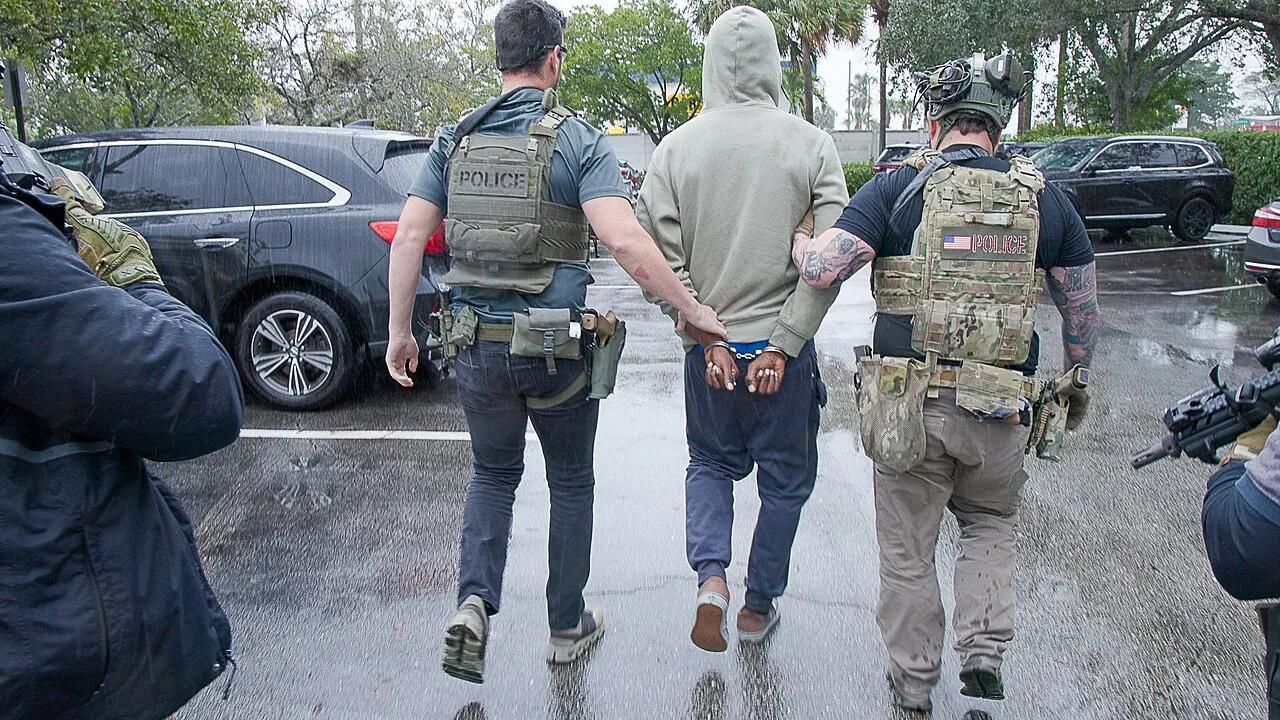
The law also provides for raids without a judicial warrant during joint-agency operations. Zambrano argued that those interventions will be coordinated and accompanied by a prosecutor, and that the power is not "a blank cheque for a police officer". "From this Congress we will not rest until Honduras recovers peace and security," he said, as quoted by TNH.
Inside the prisons, discipline and surveillance are tightened in maximum-security units, with penalties for inmates who disobey instructions from prison authorities. EFE adds the creation of a special prison force and the installation of biometric controls. Some of the changes answer requests from the Instituto Nacional Penitenciario (National Prison Institute).
A prison with Cecot as the model
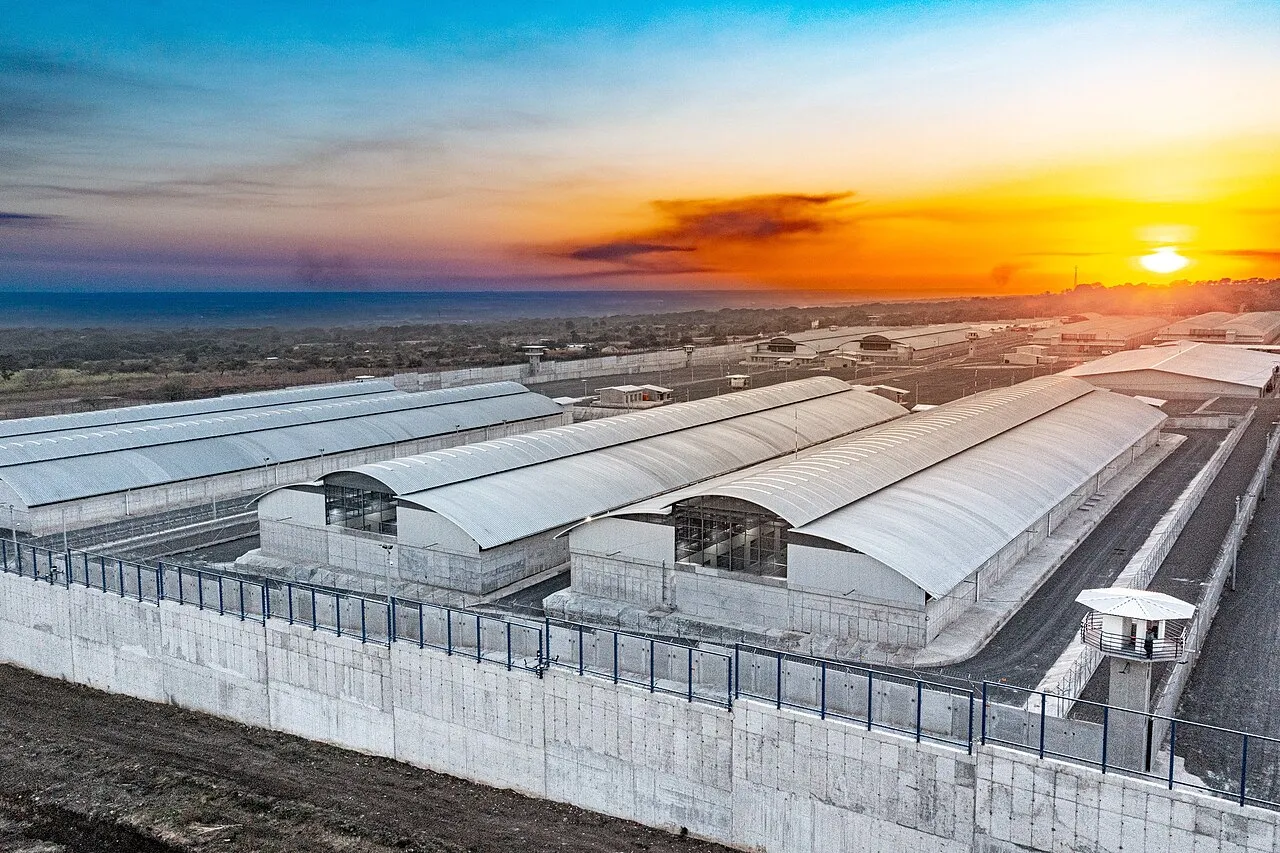
Lawmakers asked the Secretaría de Finanzas (finance ministry) to find funding for a maximum-security prison with room for some 1,300 high-risk inmates. The site has not been settled: among the options under study is the La Acequia prison complex, in the department of Santa Bárbara, where construction began in 2013 and stalled in 2016.
The declared model is El Salvador's Centro de Confinamiento del Terrorismo (Cecot), opened in 2023. A delegation led by Zambrano visited it in mid-October. In September, Honduras had already amended four security laws to retake control of its prisons and had declared gangs "terrorist associations".
The country recorded 2,629 homicides in 2025, according to official figures. Authorities estimate some 40,000 young people and adults are tied to gangs, mainly Mara Salvatrucha (MS-13) and Barrio 18.
The doubts
Juan Carlos Monge, the representative of the UN Human Rights Office (OHCHR) in Honduras, told EFE that "the State has an obligation to respond" to the demand for security, but must do so under the right rules. He warned that the reforms could trigger human rights violations and strain the judicial and prison systems, and criticised a strategy centred on jailing young people without addressing unemployment, education and health. He called for a criminal policy with clear priorities and sufficient resources to be defined first.
Gonzalo Sánchez, a specialist in forensic criminology, called the reforms "more than necessary" against organised crime and drug trafficking, given the weaponry the gangs have accumulated, and argued the sentences can be applied while respecting individual guarantees so long as police and judicial conduct is supervised.
Both objections land on the same point: a law that extends detention without judicial review and allows entry into a home without a warrant depends, if it is not to become abuse, on the oversight capacity of a judicial system the reform itself will overload. The 48-hour prosecution window and the 1,300 places in the future prison are the two figures that will measure whether that capacity exists.
With information from Televisión Nacional de Honduras (TNH) and the news agency EFE.