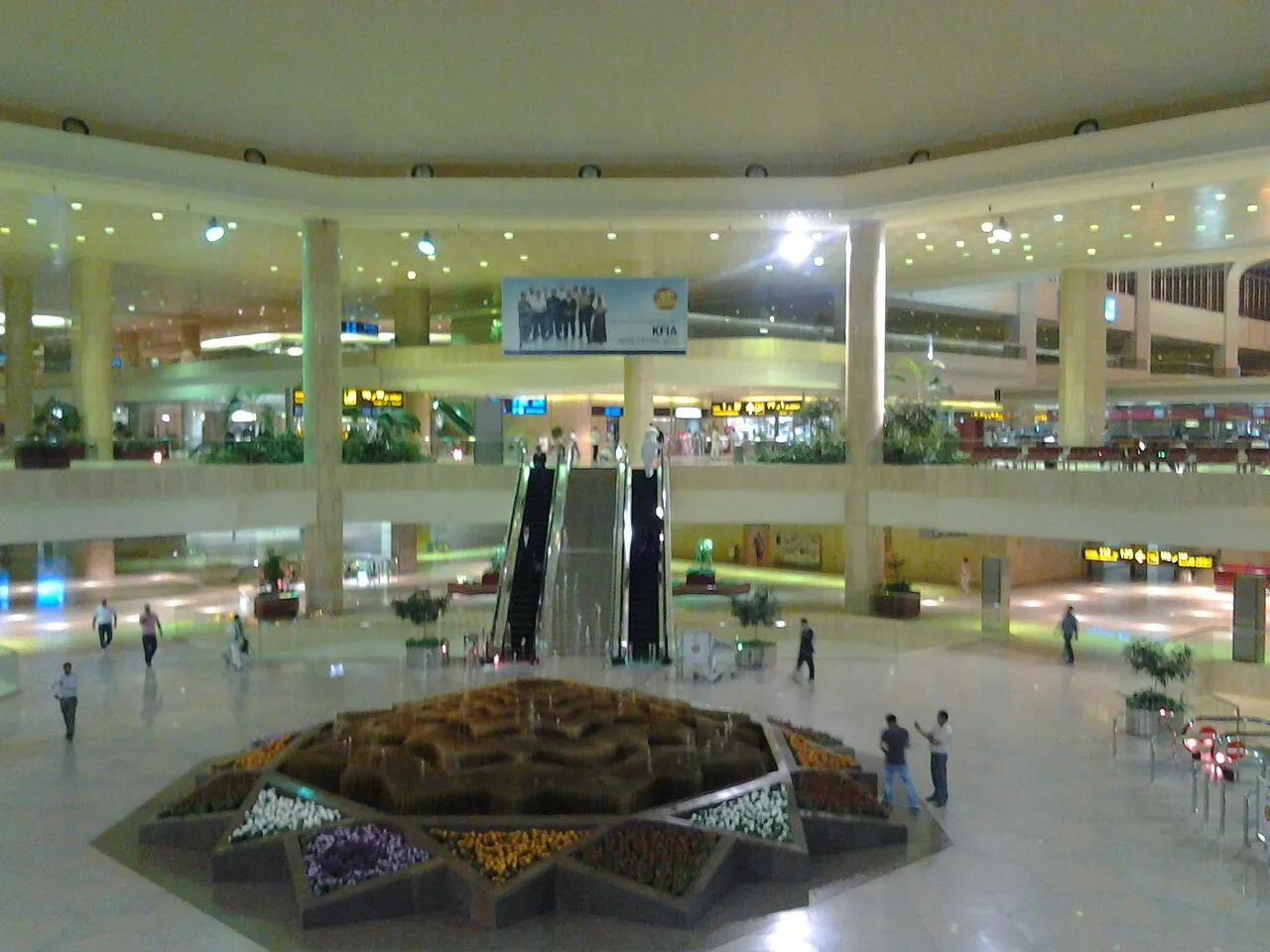
Saudi Arabia's Eastern Province, where most of the kingdom's oil infrastructure sits, was hit by two attacks on Wednesday that killed four people and injured at least ten. One struck King Fahd International Airport in Dammam. The other hit the Shaybah field, in the Rub' al-Khali desert near the border with the United Arab Emirates. Both are attributed to the Houthis, who have not publicly claimed either.
The next day the oil market responded: Brent crude rose 1.7% and climbed past $110 a barrel.
Two killed and eight injured at Dammam airport
The Saudi General Authority of Civil Aviation (GACA), in a statement carried by the state news agency SPA, said the attack on King Fahd killed two people and injured eight. According to the agency, the dead were "a Saudi citizen and a resident of Indian nationality".
Among the injured were one Saudi, two Indians, two Yemenis, two Bangladeshis and one Nepali, with injuries that, in GACA's words, "range from minor to severe". The airport suspended operations and diverted flights, resuming normal traffic only on Thursday, after damage assessments.
At Shaybah, debris from a drone that was shot down
Saudi Arabia's Energy Ministry said the Shaybah field was targeted by a drone brought down by air defences, and that the debris fell near a processing plant, struck a contractor's vehicle and started a fire. A Filipino and a Nepali national were killed, and two other people were injured.
The ministry said production was unaffected. Shaybah pumps about 1 million barrels of crude a day.
The barrel rose on Thursday
On Thursday morning Brent was trading at $110.63 — up 1.7%, or $1.81 — and WTI at $98.52, a 1.4% gain, or $1.37, according to figures compiled by the Emirati newspaper The National.
October's toll at Saudi airports reaches 22
An Agence France-Presse tally reproduced by Arab News puts the number of people killed in attacks on the kingdom's airports in October alone at 22. The worst episodes were in Riyadh: on 10 October a missile hit a terminal at King Khalid International Airport, killing 13 and injuring more than 300; the following day a projectile hit Terminal 4, killing a Pakistani man and injuring 11 others. On 6 October an attack on Abha airport left 2 dead and 28 injured.
Export infrastructure has been hit too. On 5 October, according to The National, flows through the East-West pipeline were halted after a pumping station east of Riyadh was damaged. The line has a capacity of about 7 million barrels a day and exists precisely to carry Saudi crude to Red Sea terminals without passing through the Strait of Hormuz — the alternative route the kingdom would fall back on if Hormuz became unusable.
Interceptions, protests and British jets
The Coalition to Restore Legitimacy in Yemen said on Thursday it had intercepted and destroyed five drones over Riyadh and Madinah, plus four others shot down over the Eastern Province earlier the same day.
India's ambassador in Riyadh, Shri Vipul, condemned both attacks and said they "must cease immediately". Washington has ordered non-emergency US government employees and their families to leave Saudi Arabia, citing attacks on civilian airports and critical infrastructure. The United Kingdom announced this week it would send RAF Typhoon fighters to help defend Saudi airspace.
The escalation goes back to the collapse in July of Yemen's relative calm, the maritime blockade the Houthis declared against Saudi Arabia, and a September offensive in which the group seized Yemeni government territory on the Red Sea coast. The Coalition has launched a counteroffensive.
With information from Arab News, The National and Democracy Now.