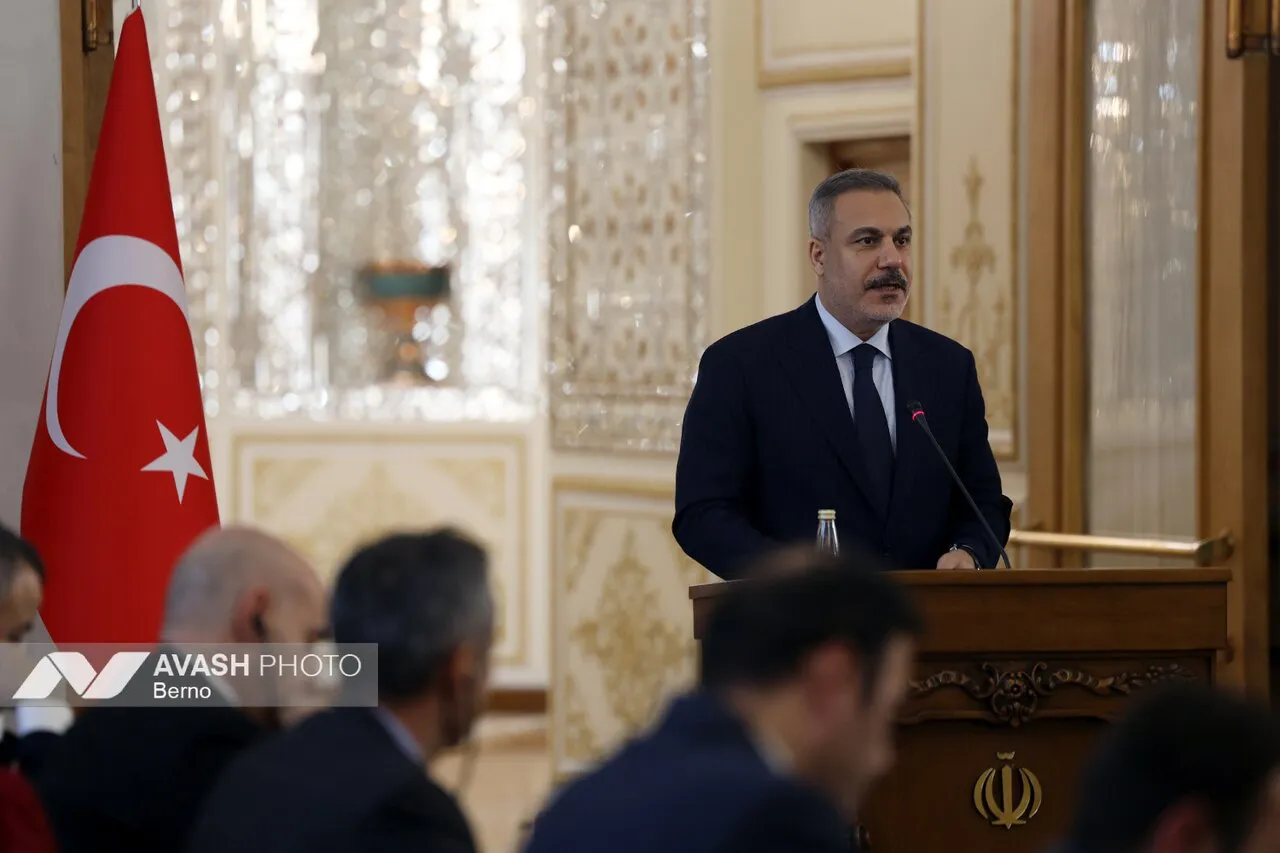
Foreign ministers from seven countries meet in Istanbul on Friday for the first session of a new diplomatic format: R4+E3. On one side, the R4 — Turkey, Saudi Arabia, Pakistan and Egypt. On the other, the E3 — Britain, France and Germany. The gathering comes at Ankara's initiative, and the host is Turkey's foreign minister, Hakan Fidan.
At the centre of the agenda is the Strait of Hormuz, the passage through which a decisive share of Gulf oil moves and which has become the most sensitive point in the confrontation between Iran and the United States.
Who is who in the two groups
The E3 is the older of the two: it was set up more than two decades ago to coordinate European diplomacy around Iran's nuclear programme.
The R4 was formed this year. It joins Egypt to the three signatories of the Mecca Defense Agreement, the mutual-defence pact Turkey, Saudi Arabia and Pakistan signed in August. According to Pakistan's foreign office, "this will be the first meeting of the seven countries in this format".
The list of participants published by the Pakistani newspaper The Express Tribune includes, besides Fidan, Pakistan's Deputy Prime Minister and Foreign Minister Ishaq Dar; Saudi Arabia's Faisal bin Farhan; Egypt's Badr Abdelatty; Britain's Ed Miliband; France's Jean-Noël Barrot; and Germany's Johann Wadephul.
What is on the table
Five subjects have been announced: the Palestinian question, the situation in Yemen, the Strait of Hormuz, ways to end the war between Russia and Ukraine, and security in the Black Sea.
Britain's foreign ministry said traffic through the Strait is sharply down from pre-war levels and that passage "remains under threat". Miliband's office said the talks would focus on "the Strait of Hormuz and the situation in Saudi Arabia". He is expected to press for a diplomatic settlement restoring navigation rights and to warn that Iranian tactics are being copied by other actors in the region.
Fidan is expected to argue that "regional security first and foremost requires countries of the region to assume responsibility". He is also expected to call for pressure on Israel over settlement expansion and what he calls "settler terrorism", to back Saudi Arabia in the face of Houthi attacks, and to demand permanent freedom of navigation through both Hormuz and Bab el-Mandeb.
Two straits and a sea
The choice of topics sketches a map of chokepoints. London said this week it would send RAF Typhoon fighters to help defend Saudi airspace, and the British statement warns that the attacks on Saudi Arabia also threaten Bab el-Mandeb and the Suez Canal.
In the Black Sea, armed attacks on commercial ships — many of them by drone — have multiplied in recent months, and Turkish vessels are being targeted with growing frequency, especially off Romania and Bulgaria. Turkey put a proposal to Russia and Ukraine last month to halt the strikes, with no effect so far. On Tuesday, NATO said it would reinforce the region with additional aircraft, drones and radar.
With information from Al Jazeera, The Manila Times (Agence France-Presse) and The Express Tribune.