North Korean leader Kim Jong-un inspected nuclear material production facilities and a weapons research institute on Wednesday, 25 November, and ordered the country to widen its use of tactical nuclear weapons. The visit was reported on Thursday by the state news agency KCNA, which did not say where the facilities are located.
According to the agency, Kim said the country's nuclear capability "is now a reality" and that North Korea should focus on using tactical nuclear weapons "in diverse areas for various missions" — a task he described as "important and urgent". The quotations come from the English-language version distributed by KCNA and appear with small translation differences across South Korean outlets.
Kim also said nuclear material production capacity is being expanded "systematically and steadily", and that the country's standing as a nuclear power is "irreversible" and "not open to change" — depending, he added, on no "recognition or approval from any other countries". Challenging that status, he said, would amount to "a declaration of war".
Fourth visit in little over two years
It is the fourth time Kim has visited a nuclear facility since September 2024, according to the South Korean news agency Yonhap. The previous trips were in September 2024, January 2025 and June of this year. The inspection served to review progress on the nuclear strategy set out at the ninth congress of the Workers' Party, held in February, which reaffirmed the country's nuclear status and approved a five-year military modernisation plan.
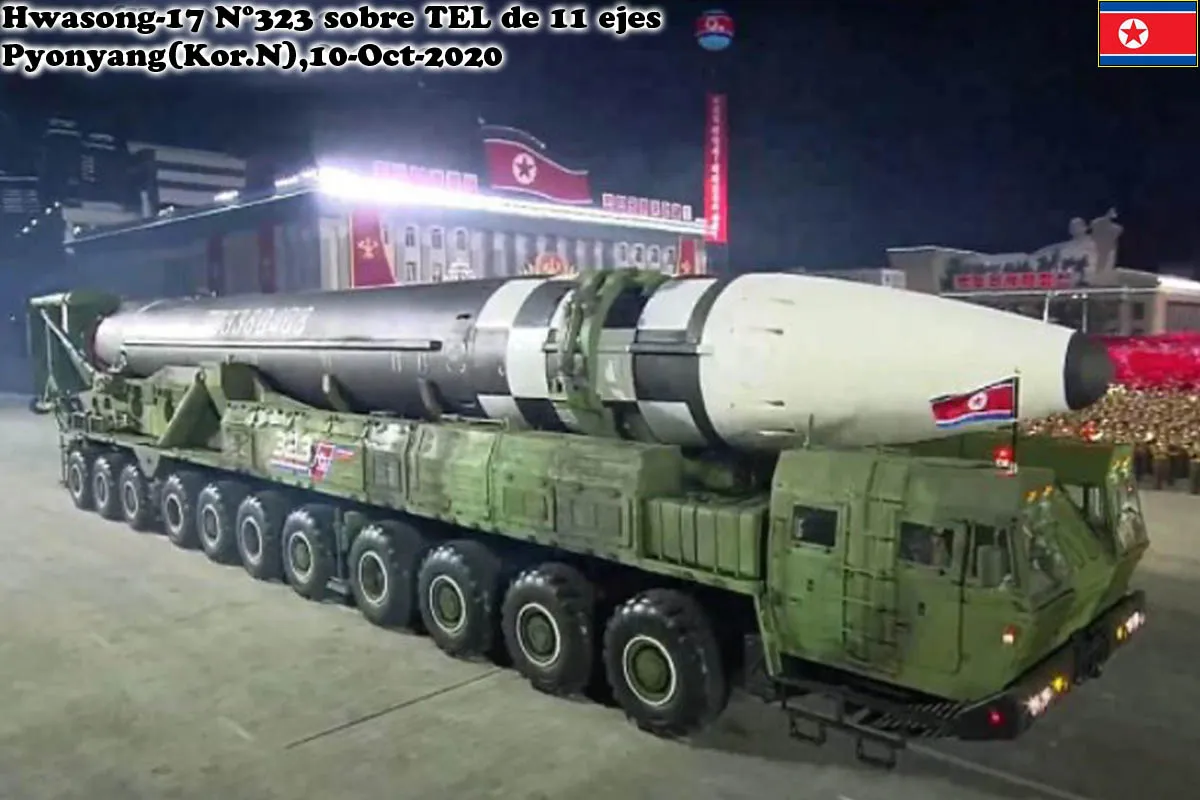
Photographs released by KCNA show equipment that, in the reading of analysts cited by Reuters, resembles gas centrifuges — used to enrich uranium — and miniaturised warheads of the Hwasan-31 type. The state agency did not describe the equipment.
The stated target
Kim justified the expansion by pointing to the threat he attributes to what he called "the most dangerous hostile country" with which North Korea shares a border, and accused Washington of assembling a "global nuclear military alliance system". He also cited the AUKUS pact, through which, he said, the United States had "incited its vassal states" to obtain nuclear-powered submarines. The purpose of the arsenal, he said, is to "deter, control and retaliate against nuclear threats in the worst case scenario".
For Professor Lim Eul-chul of Kyungnam University, the speech closes the discussion about denuclearisation: future negotiations, he judged, would be "nuclear state versus nuclear state". Shin Jong-woo, secretary-general of the Korea Defence and Security Forum, noted that the reference to "multiple domains" may point to targets beyond the peninsula, including the US mainland.
The real size of the arsenal remains officially unconfirmed. In August, South Korea's defence minister cited estimates by private institutes putting it at 80 to 120 warheads. North Korea has carried out six nuclear tests since 2006; the last and most powerful was in 2017.
With information from KCNA, Reuters (via the Korea Times) and Yonhap (via the Korea JoongAng Daily).