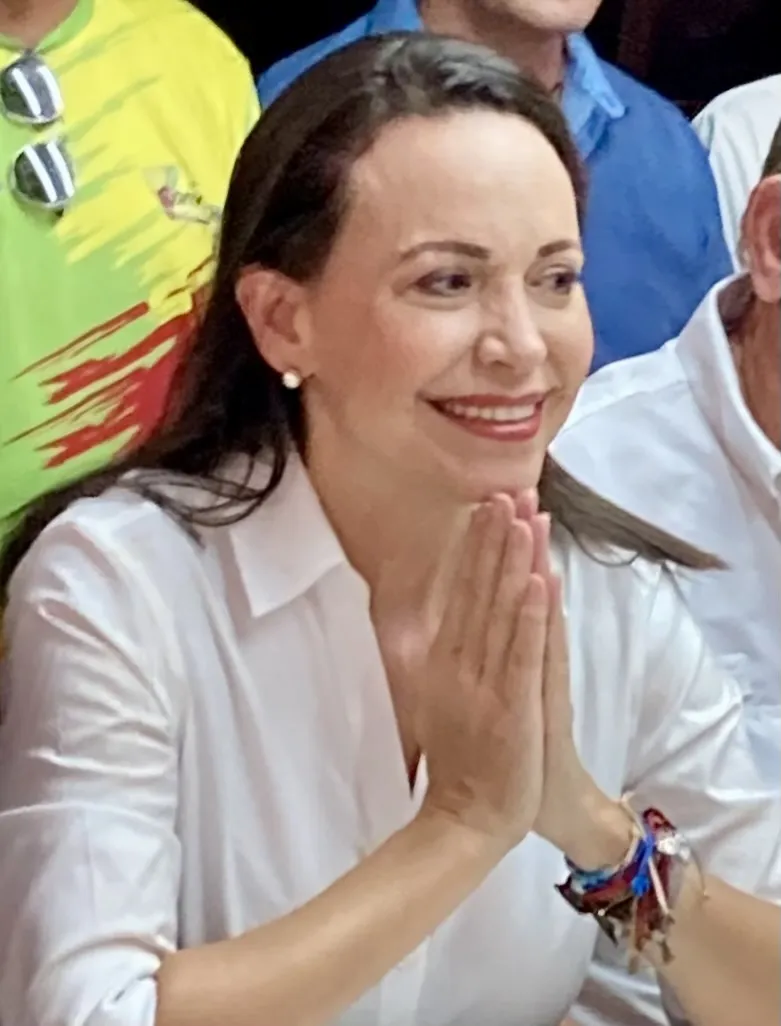
Venezuelan opposition leader María Corina Machado and former ambassador and presidential candidate Edmundo González Urrutia have endorsed the US State Department's plan to declare Venezuela's presidency vacant and call elections. The endorsement was set down in writing in the Madrid Declaration, released on Thursday 5 November at the 30th Ibero-American Summit.
"We endorse this plan as a reasonable path towards the full restoration of constitutional order in Venezuela," the text says. Machado, the Nobel Peace Prize laureate, added that stability will depend on domestic agreement: "We will keep working with the people to reach the great national accords." Both argue that fixing a voting date would bring certainty to the process.
The roadmap's three steps
The sequence Washington has set out is strictly ordered and, for now, carries a firm deadline only on the first step:
- Renew the Tribunal Supremo de Justicia (TSJ, Venezuela's supreme court) before the end of 2026.
- Appoint a new Consejo Nacional Electoral (CNE, the country's electoral council), which would be the body certifying any election call.
- Declare the presidency vacant — the "falta absoluta" under Venezuelan law — and call elections within six months.
On that timetable the vote would fall in 2027; according to the Madrid Declaration, the presidential election could land on 24 July, the anniversary of Simón Bolívar's birth. Secretary of State Marco Rubio has made the election call conditional on the first two reforms being completed first.
The third step is not the opposition's to take but interim president Delcy Rodríguez's, who governs under pressure from Washington. Rodríguez has said elections will be held in line with the constitution and with a renewed electoral authority, but she has named no date.
That is where the plan knots: the first two steps depend on institutions the government controls, and the third on a signature only the interim president can provide. The opposition's endorsement speeds up the political argument, but it does not move the calendar by itself.
How things got here
Nicolás Maduro, in power since 2013, was captured on 3 January 2026 in a US operation and is held in New York awaiting trial on charges that include narcoterrorism. A day later, the TSJ ordered Vice-President Delcy Rodríguez to take over as interim president.
Machado, who spent ten months in hiding and in exile, returned to Venezuela in October to lead the transition and press for elections in 2027.
With information from Infobae, Deutsche Welle, Moncloa and the Madrid Declaration of the 30th Ibero-American Summit.