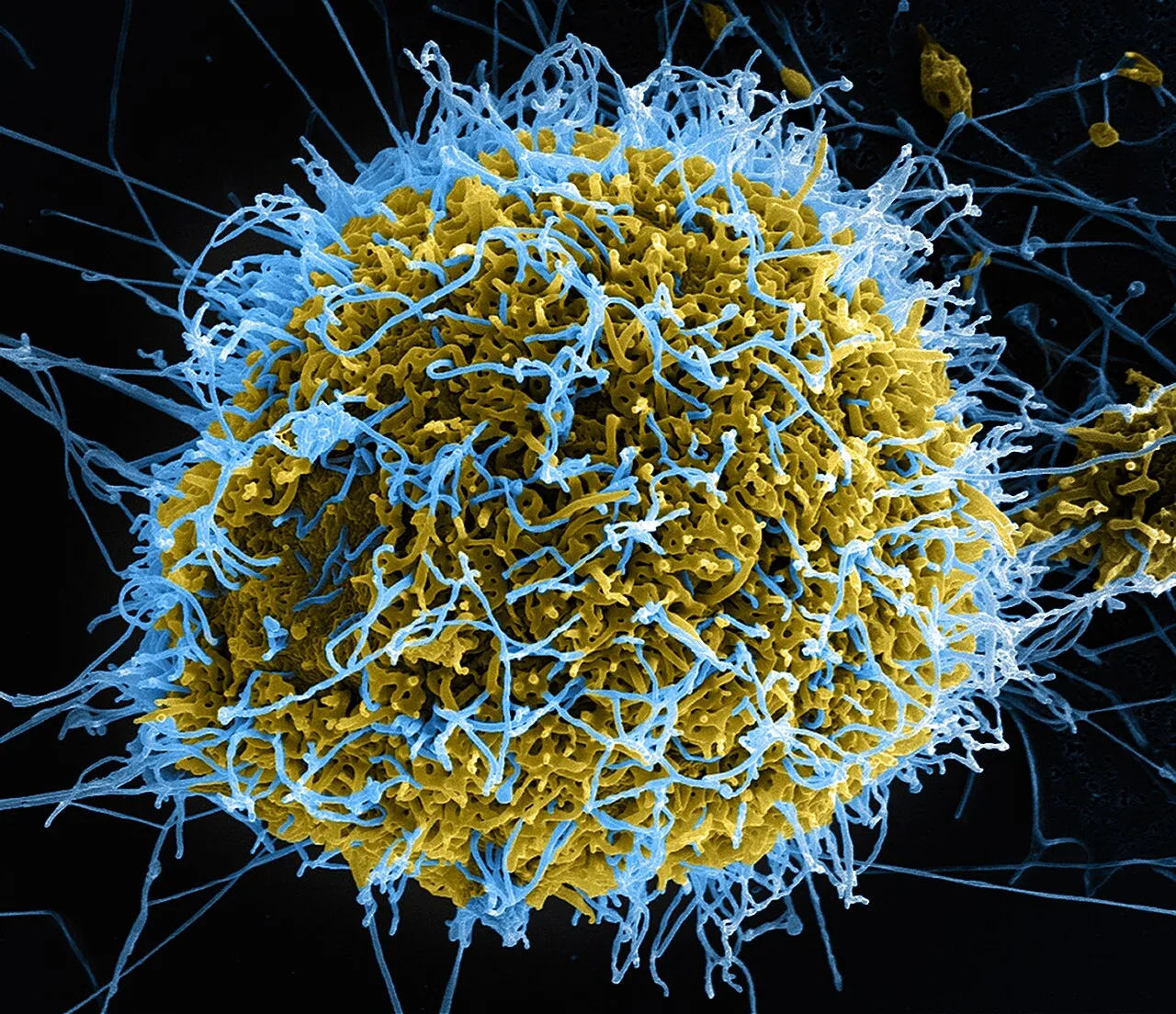
Nigeria confirmed on Wednesday (21) that the first Ebola case detected in the country in 12 years is of the Bundibugyo strain — the same one circulating in the outbreak in the Democratic Republic of the Congo (DRC). It is the first time this outbreak, declared in May, has reached West Africa.
The patient is a woman who arrived in the Nigerian capital, Abuja, from Uganda on 3 October. According to the World Health Organization (WHO), her first symptoms appeared four days later, on 7 October, and she sought care at a private health facility in Abuja on the 11th. She was only tested on the 19th, once authorities learned of her recent trip to Uganda, and the positive result came back on the 20th.
"We did three levels of tests, but all molecular. The strain was Bundibugyo," said Olajumoke Babatunde, director of the public health laboratory service at the Nigeria Centre for Disease Control and Prevention (NCDC), in remarks reported by Al Jazeera.
Health Minister Muhammad Ali Pate told state broadcaster NTA that the patient is isolated and receiving treatment. The NCDC has activated its incident management system, and the WHO said it is supporting the case investigation, contact tracing and the strengthening of infection control measures at the facility where she was seen, including supplying personal protective equipment.
Twelve days between symptom and test
The gap between the onset of symptoms and the collection of the sample is what worries specialists most. Nigerian physician Ayoade Alakija, who co-chairs a G7-linked global health investment committee, counted 12 days between her falling ill and being tested — time in which other people may have been exposed.
Nigerian authorities have identified 44 contacts, most of them health workers, among them the patient's husband, a Swiss national who lives with her in Abuja. Passengers on the flight from Uganda are also being traced, although investigators do not believe she was symptomatic during the journey.
The WHO recommends that countries in the region maintain reinforced disease surveillance and laboratories able to test suspected cases safely. So far, the organisation has not recommended any travel or trade restrictions.
A strain with no approved vaccine
Bundibugyo Ebola has no approved vaccine or specific treatment — unlike the Zaire strain, for which licensed vaccines and monoclonal antibodies exist. That difference is what makes the current outbreak harder to contain than earlier ones: the response rests on isolation, contact tracing and supportive care.
The last time Ebola reached Nigeria, in 2014, the case was detected in Lagos and contained in about three months, with 20 infections and eight deaths. The epidemic that struck West Africa between 2013 and 2016 killed more than 11,000 people.
Fifth country reached by the outbreak
According to the WHO, Nigeria is the fifth country to detect the virus in this wave. The epicentre remains the DRC, where the outbreak was declared in mid-May: by 18 October, Congolese authorities had reported more than 9,500 cases and more than 4,200 deaths, the deadliest episode in the country's history. Uganda's outbreak was declared over at the end of August. Kenya has nine cases since 6 October, and the Netherlands recorded one, all linked to the DRC.
The director-general of the Africa Centres for Disease Control and Prevention (Africa CDC), Jean Kaseya, wrote on the social network X that the outbreak is no longer one country's fight, and called an extraordinary meeting of the continent's health ministers for next week, aimed at strengthening the cross-border response and reviewing hospital capacity.
With information from the World Health Organization, UN News, Al Jazeera and the Africa CDC.