Elon Musk said on Tuesday, October 20, 2026, that Tesla and SpaceX have each formed a special committee of independent directors to examine merging the two companies — a combination that, at current valuations, would be worth roughly $3.5 trillion and would be the largest in corporate history.
"Both SpaceX and Tesla have formed special committees to discuss this idea at the request of shareholders," Musk said on SpaceX's third-quarter earnings call. He also poured cold water on the assumption that a deal is coming: "Some people out there assume that a SpaceX and Tesla merger is a certainty, and I think that would be overstating it."
Asked whether he favors it, he was direct: "Do I think it would be a good idea? Yes."
Musk is shut out of his own companies' talks
Because he is the largest shareholder in both, Musk is a conflicted party and cannot sit in on the committees' discussions. He described the arrangement as "an odd kabuki dance where two groups of people are talking and I can't be in the conversation."
The committees, he said, "have not reached agreement on the terms of any transaction," and there is no guarantee that they will.
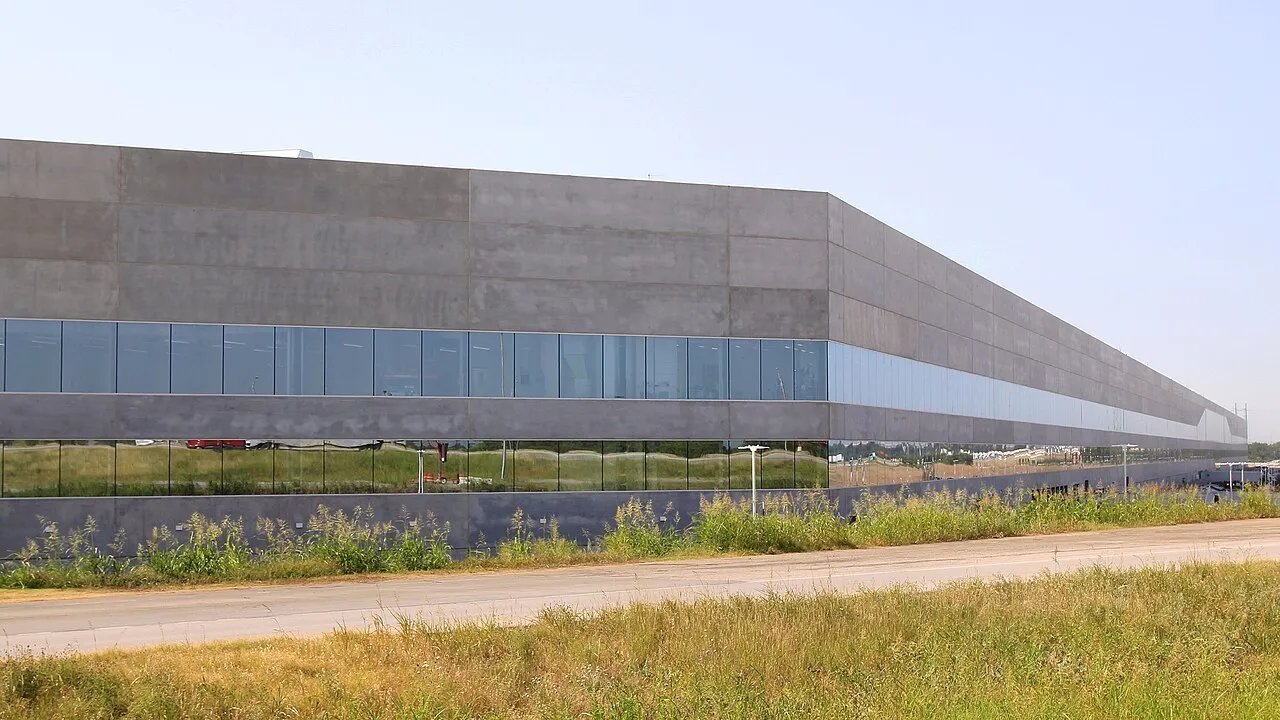
The industrial case he laid out rests on overlap rather than scale: superintelligence software, chip design, the Terafab project in Austin, robotics, mass to orbit and Starlink connectivity. Jerayr Haleblian, a mergers and acquisitions researcher at the University of California, Riverside, told Al Jazeera the logic was "sound," pointing to both companies' manufacturing, robotics and energy-infrastructure expertise.
The arithmetic that decides it
A merger would go to shareholders, and the threshold is the hard part. Tesla would need the approval of 50% of all shares outstanding — not 50% of the votes actually cast — which Musk called "quite a high hurdle to try to achieve."
There is a recent measure of how high. Tesla's 2025 proposal to declassify its board drew 39.4% of outstanding shares and failed. Musk's own voting stake sits near 20% after he exercised his 2018 options in June.
The calendar is tight as well. Tesla filed its proxy statement on Monday for its annual meeting on December 3, and the ballot carries three items — electing directors, a say-on-pay vote and ratifying the auditor. A merger is not among them, so a vote would most likely require a special meeting of its own. Barclays analyst Dan Levy has argued that an announcement would have to land by late October or early November to make the annual meeting at all.
SpaceX's quarter, and what moved
SpaceX reported third-quarter revenue of $14.58 billion, against analyst estimates of $12.74 billion, and earnings of $0.35 per share versus $0.12 expected. Revenue at its Super Intelligence unit rose 830% from a year earlier, to $7.6 billion.
Shares of both companies rose modestly in after-hours trading after the call. According to Al Jazeera, SpaceX's current valuation makes it the world's seventh-largest company and Tesla the eleventh, and SpaceX went public in June in the largest initial public offering on record. A combined company would dwarf Musk's previous deal, the $1.25 trillion SpaceX–xAI merger completed in February.
Tesla reports its own third-quarter results after the close on Wednesday, October 21.
Reporting from Al Jazeera, Benzinga and Teslarati.