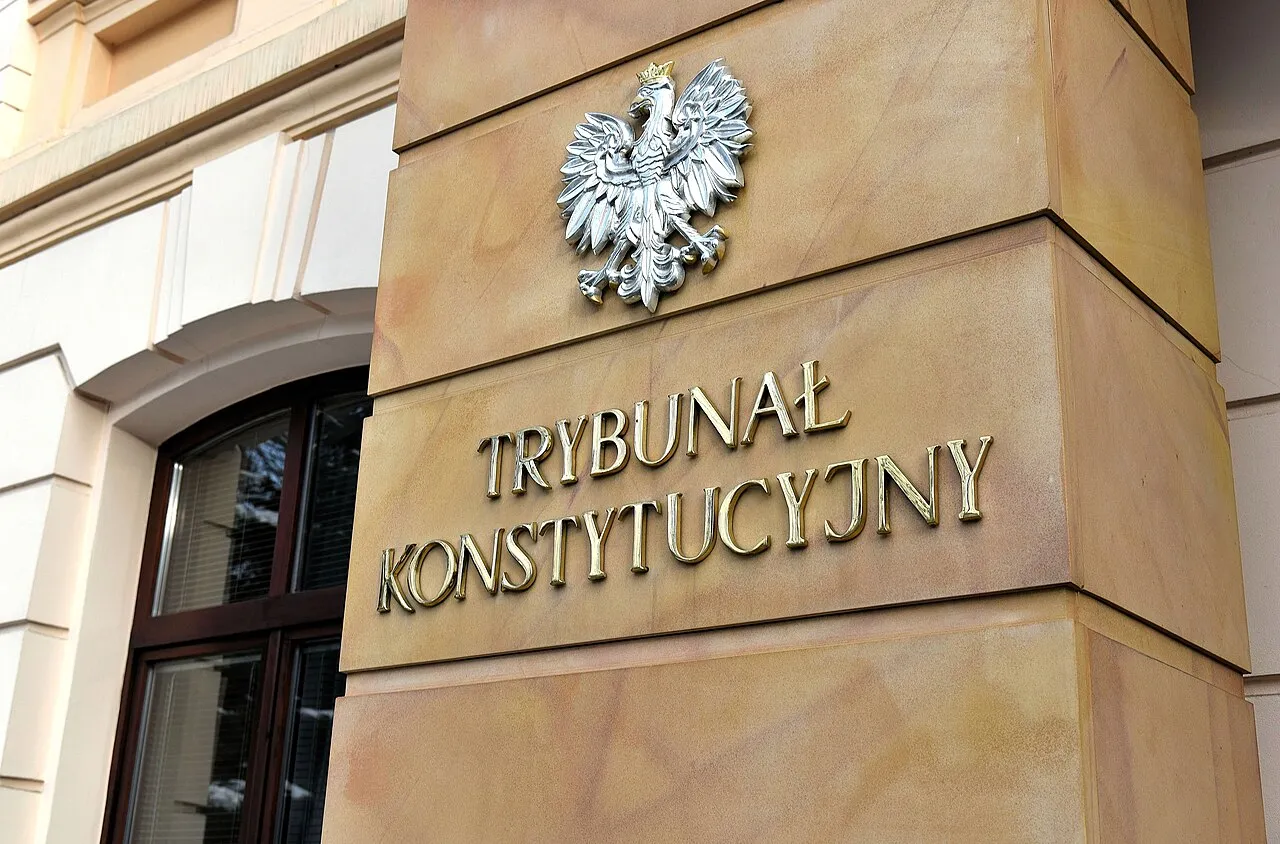
Poland's highest constitutional court has been at a standstill since Friday, when Judge Anna Korwin-Piotrowska announced that she was taking over the leadership of the Trybunał Konstytucyjny (Constitutional Tribunal) and suspending its president, Bogdan Święczkowski. The leadership until then in office disputes the legality of both moves.
The same day, seven people chosen by the Sejm — the lower house of Poland's parliament — to serve as judges of the tribunal entered the building. Security staff were reportedly ordered to leave, and Święczkowski and the court's vice-president, Bartłomiej Sochański, were reportedly refused entry. Justice Minister Waldemar Żurek said he had asked for the immunity of the two men to be lifted, arguing that they had failed to perform their duties.
Protests, riot police and an accusation of a "coup d'état"
On Friday evening, protesters and riot police faced off outside the tribunal in Warsaw; three people were detained after objects were thrown at officers. The rally drew leaders of Law and Justice (PiS), among them Jarosław Kaczyński and Mateusz Morawiecki. Kaczyński called for the protests to continue and warned of a "police state". The tribunal's official account on X described the manoeuvre as a "coup d'état".
President Karol Nawrocki, a PiS ally, cut short a trip to Senegal to return to Warsaw. In a statement read out by his chief of staff, Paweł Szefernaker, he spoke of a "forcible takeover of a constitutional organ of the state" and called for government forces to leave the court's grounds. On Saturday he convened emergency talks, citing a "threat to Poland's internal security": nationalist and far-right parties and part of the governing coalition attended, while the Civic Coalition of Prime Minister Donald Tusk stayed away. The talks ended without agreement.
What is at stake
Tusk defends Święczkowski's removal as a necessary step to restore the rule of law and argues that the court's judges are not politically neutral. On Monday he pressed Nawrocki to recognise the judges elected by parliament. "Resolving the conflict is simple and can be achieved without amending the constitution," he wrote, accusing the president of opting for "a forceful confrontation, which could cost Poland dearly".
PiS governed Poland from 2015 to 2023 and is accused by critics of having politicised the judiciary. Some judges appointed in that period are recognised neither by the Tusk government nor by the European Union. Elected in mid-2025, Nawrocki has been blocking appointments to the court; according to Al Jazeera, Święczkowski, for his part, is accused of using his position over the past six months to prevent judges elected by the current parliamentary majority from taking up their seats.
The deadlock therefore has two locks that feed each other: parliament elects judges the president will not swear in, and the court's leadership blocks those who do arrive. That is the knot that has left the tribunal unable to rule.
The European Commission said Polish authorities must ensure the tribunal "can function in accordance with the Polish constitution" and that the appointment of eight new members "lies within the constitutional power of the Sejm". The US ambassador in Warsaw, Tom Rose, called for calm on all sides.
With information from Al Jazeera and Euronews.